Armenia ahead of the election: between Russia and the West
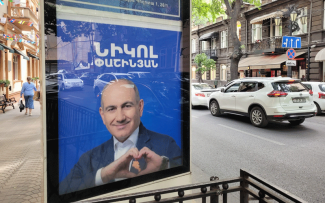
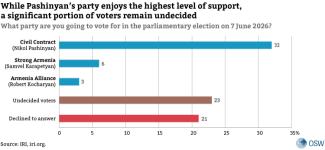
The parliamentary election scheduled for 7 June will determine the future direction of Armenia’s foreign and domestic policy. A likely victory for Prime Minister Nikol Pashinyan’s Civil Contract party would mean the continuation of the country’s rapprochement with the West, the normalisation of relations with Azerbaijan and Turkey, and the fulfilment of the ambitious project of building a ‘Real Armenia’ – strengthening state institutions while curbing the influence of the diaspora, the Karabakh movement, and the Armenian Apostolic Church. At the same time, such an outcome would increase the risk of hostile actions by Moscow, both overt (for example, in the form of sanctions) and covert (including hybrid operations and cyberattacks). Conversely, an opposition victory and subsequent transfer of power would likely return Armenia to Russia’s sphere of influence and to post-Soviet integration frameworks, of which the country formally remains a member despite having effectively ceased participation in their activities more than two years ago. The two largest opposition forces – the Strong Armenia party of oligarch Samvel Karapetyan and the Armenia Alliance led by former president Robert Kocharyan – both espouse a pro-Russian agenda, and their leaders have suggested that they may form a coalition after the election. Although a poll conducted on 22 May showed Civil Contract holding a commanding lead (32%), more than 40% of respondents either stated that they had not yet decided whom to support or declined to answer. This may indicate latent support for the opposition. Should the opposition suffer electoral defeat, it may challenge the legitimacy of the results. Under such a scenario, violent protests and political provocations cannot be ruled out.
The real versus the mythical homeland: eight years of Nikol Pashinyan’s rule
Nikol Pashinyan is the first leader of independent Armenia not to be associated with the Karabakh movement – a broad informal social front that emerged during the final years of the Soviet Union and campaigned for the incorporation of Nagorno-Karabakh (then the Nagorno-Karabakh Autonomous Oblast, NKAO, within Soviet Azerbaijan) into Armenia. Robert Kocharyan and Serzh Sargsyan formed the core of the so-called Karabakh clan.[1] Meanwhile, their predecessor, Levon Ter-Petrosyan, who came from the Syrian Armenian community, was the leader of the Karabakh Committee – the political embodiment of the aforementioned informal movement.
After coming to power in 2018, Pashinyan devoted relatively little attention to the Karabakh conflict, focusing instead on domestic reforms and anti-corruption efforts. He became more active on the issue largely for tactical reasons, fearing a potential alliance between the Karabakh clan – including the elites of the separatist and internationally unrecognised Republic of Nagorno-Karabakh – and the leadership of Armenia’s security structures, whose loyalty he could not take for granted. In August 2019, during a speech in the city of Khankendi (Armenian: Stepanakert), he declared that “Nagorno-Karabakh is Armenia. Full stop”.[2] Despite this unequivocal declaration, following the dissolution of the Karabakh parastate by Azerbaijani forces (2020–2023),[3] Pashinyan recognised Azerbaijan’s territorial integrity and emerged as a leading advocate of the normalisation of relations with both Azerbaijan and Turkey (neither of which currently maintains diplomatic relations with Armenia). In March 2025, Yerevan and Baku announced that they had agreed on the text of a peace treaty. In August of the same year, Pashinyan, together with Azerbaijani President Ilham Aliyev and US President Donald Trump, signed a peace declaration in Washington.[4] This did not amount to peace de jure; however, it significantly advanced peace de facto. A notable manifestation of this was Azerbaijan’s decision to lift its economic blockade of Armenia, which had been in place since 1989.[5]
The measures undertaken by Pashinyan – although preceded by Azerbaijan’s military victories – constitute part of the relatively coherent concept of a ‘Real Armenia’, which the prime minister outlined in an address to the nation on 12 February 2025.[6] In this address, he equated the notion of the ‘homeland’ with the contemporary Armenian state within its internationally recognised borders. For centuries, these concepts had remained distinct for Armenians who lacked their own statehood – much as they do today for the Armenian diaspora. He contrasted this ‘Real Armenia’ with a ‘Historical Armenia’ nourished by national myths. Pashinyan returned to this theme several months later in a speech marking the 35th anniversary of the adoption of Armenia’s Declaration of Independence. On that occasion, he argued that “we should not continue the Karabakh movement, as it means the abolition of the independence of the Republic of Armenia”.[7]
The loss of control over Nagorno-Karabakh was, and remains, a profound trauma for Armenians, compounded by the mass exodus of the region’s Armenian population,[8] recurring reports of the destruction of Armenian material cultural heritage, and the sentencing in early 2026 by a court in Baku of several former leaders of the Karabakh parastate to lengthy prison terms. Supporters of the ‘Karabakh clan’, alongside representatives of nationalist circles linked, among other groups, to the Armenian Apostolic Church, repeatedly accused Pashinyan of betraying the interests of the nation, and several attempts were made to remove him from power.[9] Meanwhile, there is widespread awareness in Armenia that the country’s long-standing entanglement in the conflict constrained its development opportunities by excluding it from major infrastructure projects implemented across the South Caucasus. Despite Armenia’s defeat in the war with Azerbaijan in autumn 2020, Pashinyan secured a decisive victory in the snap parliamentary election held in June 2021.[10] He and his party have continued to enjoy a comfortable lead in opinion polls, partly due to the absence of a credible alternative. The ‘Karabakh clan’ remains closely associated in the public mind with corruption and nepotism, while the party led by Karapetyan – a businessman who amassed his fortune in Russia – appeals primarily to voters with an unequivocally pro-Russia orientation.
In the event of a decisive victory for Civil Contract, Pashinyan would retain the office of prime minister, the most powerful position in Armenia’s political system. Assuming that the newly elected parliament serves its full term, he would thereby become the longest-serving political leader in the country’s modern history. Pashinyan has held the premiership since May 2018, while members of the Armenian parliament are elected for five-year terms. Under the presidential system that existed prior to the constitutional reforms, Robert Kocharyan and Serzh Sargsyan each served as head of state for ten years.
The (un)expected realignment of alliances
A major component of the building a ‘Real Armenia’ project is the reorientation of the country’s foreign policy. In the programme speeches mentioned above, the prime minister emphasised the importance of maintaining good relations, above all, with Armenia’s neighbours – Azerbaijan, Georgia, Iran, and Turkey. The cooling of relations with Russia observed in recent years, alongside the intensification of ties with the West (the EU and individual member states, particularly France, as well as the United States, but also India), has often been interpreted either as a shadow play or as a tactical move designed to expand Armenia’s room for manoeuvre. In reality, however, Pashinyan had been distancing himself from Moscow and advocating Armenia’s withdrawal from post-Soviet integration frameworks even before coming to power. At the same time, he consistently stressed the need to honour existing international commitments – a position he continues to uphold today. For example, he has not suggested closing the Russian military base in Gyumri.[11]
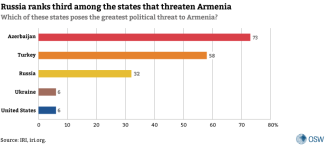
A profound crisis in Armenian–Russian relations can be traced back to September 2022. During another escalation of tensions related to the Karabakh conflict, Azerbaijan launched attacks against targets in Armenia. Despite its alliance commitments, neither Russia nor the Collective Security Treaty Organisation (CSTO) responded to the assault.[12] Since then, Russia has increasingly appeared in Armenian public opinion surveys among the countries perceived as posing a threat to Armenia’s security (see Appendix). Over the following months, Armenia effectively suspended its participation in the CSTO, while simultaneously publicising its growing military cooperation with the United States and other states. Among Yerevan’s gestures perceived as hostile by Moscow were the visit of Pashinyan’s partner to Kyiv and the ratification of the Rome Statute of the International Criminal Court, which in theory obliges Armenia to arrest Vladimir Putin should he enter the country, pursuant to the arrest warrant issued by the ICC.[13] Previously, in an address to parliament, the prime minister challenged the interpretation of Armenian history presented in Soviet-era textbooks, describing it as “contrary to the concept of sovereignty” and implicitly suggesting that it had been written from the perspective of a colonial metropole.[14]
The European Union responded to the 2022 attack on Armenia by swiftly deploying an ad hoc civilian mission to the country’s border with Azerbaijan. In February 2023, this was replaced by the European Union Mission in Armenia (EUMA), whose mandate was subsequently extended for a further two years in February 2025.[15] The deployment of the mission prompted a hostile reaction from Moscow, which has long claimed a leading role in the peace process. A symbolic manifestation of Yerevan’s pro-Western turn as a strategic choice was the trilateral Armenia–EU–US summit held in Brussels in April 2024. On that occasion, the EU and the United States pledged support for Armenia’s reform agenda and economic development, while also announcing financial assistance for the country.[16] In April 2026, the EU decided to deploy a two-year European Union Partnership Mission (EUPM) to Armenia, tasked with strengthening the country’s resilience to external threats. In addition to the support previously agreed under the Resilience and Growth Plan (€270 million) and the investments envisaged through the Global Gateway initiative (€2.5 billion), Armenia was also included in the European Peace Facility (EPF), from which it is expected to receive €30 million in assistance for the acquisition of non-lethal weapons.
On 26 March 2025, Armenia’s parliament adopted a law initiating the country’s accession process to the European Union. In December 2025, a new Strategic Agenda for the EU-Armenia Partnership was approved, while earlier, in January 2025, Armenia signed a Strategic Partnership Agreement with the United States.
Carrots from the West and the threat of a stick from Moscow
The significance of the upcoming election is underscored by the unprecedented level of activity and engagement displayed by external actors, who have aligned themselves, almost openly, either with Pashinyan (the EU and the United States) or with his opponents (Russia). In early May 2026, Yerevan hosted the first-ever EU–Armenia summit, preceded by a meeting of the European Political Community (EPC), which brought together Europe’s leading political figures, as well as individuals viewed unfavourably by Moscow, including Ukrainian President Volodymyr Zelensky and Belarusian opposition leader Sviatlana Tsikhanouskaya. Other participants included, among others, NATO Secretary General Mark Rutte.
The timing of these events, held just one month prior to the election, as well as the announcements made during the meetings, represented a clear expression of support for Pashinyan and his political course. The EU and Armenia adopted a joint declaration reaffirming their commitment to further strengthening bilateral relations and deepening cooperation, particularly in the fields of the economy, including connectivity and security, with a special emphasis on enhancing Armenia’s resilience to hybrid threats. The European Union also acknowledged the European aspirations of Armenians.[17] Similar support for Pashinyan from the United States was reflected in the visits of Vice President J.D. Vance and Secretary of State Marco Rubio on 9 February and 26 May respectively. The agreements signed during these visits – including those on cooperation in the fields of nuclear energy and critical raw materials and minerals, as well as specific arrangements concerning the TRIPP transit corridor – are likely to be fully implemented only in the event of an electoral victory for Civil Contract, although the current opposition also supports the reopening of regional transport routes.
In contrast to the West, which offers Armenia tangible benefits, Moscow has sought to influence the outcome of the election through the intimidation of both the Armenian authorities and society, exerting an unprecedented level of pressure. Under the guise of concern for the ‘brotherly Armenian people’ and their prosperity, leading Russian politicians have repeatedly highlighted the alleged dangers associated with Yerevan’s rapprochement with the EU and the United States. In the final days of May alone, critical statements regarding Armenia were issued by, among others, Russian Security Council Secretary Sergei Shoigu, Foreign Minister Sergei Lavrov, and State Duma Speaker Vyacheslav Volodin. At the same time, Russia’s sanitary authorities suspended imports of Armenian fruit, vegetables, flowers, mineral water, and alcoholic beverages. On 27 May, the Armenian Ministry of Foreign Affairs received a notice indicating that Russia might unilaterally terminate agreements governing the supply of natural gas, petroleum products, and rough diamonds. Putin, for his part, threatened Armenia with a drastic increase in the price of Russian gas, for which Yerevan currently pays US$177.5 per 1,000 cubic metres, compared with a prevailing European market price of approximately US$450–500. When Pashinyan suggested that Armenia could purchase gas from Azerbaijan, Russian Deputy Prime Minister Alexei Overchuk responded that Armenia had no practical means of receiving gas other than that supplied by Russia. This statement can be interpreted as a form of blackmail, given Armenia’s continuing deep dependence on Russia in the energy sector.
On 29 May, the leaders of the Eurasian Economic Union (EAEU) gathered in Astana – the presidents of Belarus, Kazakhstan, and Kyrgyzstan, together with Russia’s leader, while Armenia, despite being a member of the organisation, was represented only by its deputy prime minister – called on Yerevan to hold a referendum on whether to continue its membership either in the EAEU or pursue integration with the European Union. They argued that, in the long term, cooperation with both structures simultaneously would be unsustainable. On the same day, Putin declared, with an explicit reference to Armenia’s current policy, that the crisis in Ukraine had begun when Kyiv sought to deepen its relations with Brussels – a remark that may be interpreted as an implicit threat of intervention. The following day, 30 May, the Russian Ministry of Foreign Affairs summoned Russia’s ambassador to Armenia for consultations in response to steps allegedly taken by Yerevan that were “damaging cooperation within the EAEU”. In diplomatic practice, such a move indicates a serious deterioration in bilateral relations.
It is highly likely that, irrespective of its hostile rhetoric and public declarations, Russia is already conducting hybrid operations against Armenia, including cyberattacks and disinformation campaigns. Such activities may also encompass efforts to influence the electoral process, for example by transporting up to 100,000 Armenians residing in Russia to Armenia in order to vote for Strong Armenia, as Armenian electoral law does not provide for voting from abroad.[18] The figure cited above is not realistic, although the arrival prior to the election of several thousand Armenians residing in Georgia, who support the opposition, cannot be ruled out.
Outlook
Although opinion polls point to a clear victory for Pashinyan’s Civil Contract party, one that would enable it to form a government, the less likely scenario in which the opposition parties collectively secure a larger share of the vote cannot be entirely ruled out. Should the opposition be defeated, it is reasonable to expect that it will reject the election results and mobilise its supporters to take to the streets, potentially accompanied by various forms of provocation. Such protests would likely receive support from Moscow. It is difficult to assess whether Russia is genuinely determined to bring about a change of power in Armenia at any cost, or whether its threats exceed its actual ability to influence political developments in the country.
In the event of a victory by Strong Armenia – a highly unlikely scenario – its leader, Samvel Karapetyan, would be unable to assume the office of prime minister, as he holds Russian citizenship in addition to Armenian citizenship. Under such circumstances, amendments to the relevant legislation would be required.
The text was completed on 2 June 2026
APPENDIX
[1] The ‘Karabakh clan’ is a colloquial term used to describe the network of politicians originating from the Nagorno-Karabakh Autonomous Oblast (NKAO) who played a pivotal role in the First Karabakh War (1992–1994), which ended in an Armenian victory, and subsequently occupied the highest offices in Armenia, governing the country from 1997/1998 to 2018. Although they were removed from power as a result of Pashinyan’s largely peaceful ‘velvet revolution’, the clan continues to retain substantial financial resources and significant influence, including within the media sector.
[2] W. Górecki, ‘The Gordian knot of the Caucasus. The conflict over Nagorno-Karabakh’, OSW, Warsaw 2020, osw.waw.pl.
[3] As a result of the Second Karabakh War (autumn 2020), Azerbaijan regained control of the territories previously held by Armenian forces outside the former Nagorno-Karabakh Autonomous Oblast (NKAO), as well as the southern part of Nagorno-Karabakh itself. In autumn 2023, following a swift military operation, Baku established control over the remainder of Nagorno-Karabakh.
[4] W. Górecki, ‘The Washington Declaration: moving closer to peace in the South Caucasus’, OSW, 12 August 2025, osw.waw.pl. The document referred, among other things, to the intention to reopen regional transport links, including a route connecting mainland Azerbaijan with its Nakhichevan exclave through Armenian territory. This corridor is to operate within the framework of the project known as TRIPP – Trump Route for International Peace and Prosperity.
[5] Idem, ‘Azerbaijan lifts transit blockade to Armenia: a step towards lasting peace’, OSW, 22 October 2025, osw.waw.pl.
[6] ‘The ideology of the Real Armenia: the statement of the Prime Minister in address to the nation’, The Prime Minister of the Republic of Armenia, 19 February 2025, primeminister.am/en.
[7] ‘Prime Minister Nikol Pashinyan’s message on the occasion of the adoption of the Declaration of Independence of Armenia’, The Prime Minister of the Republic of Armenia, 23 August 2025, primeminister.am/en.
[8] W. Górecki, ‘No special status, no Armenians? The prospects for Nagorno-Karabakh in a unitary Azerbaijan’, OSW Commentary, no. 535, 30 August 2023, osw.waw.pl.
[9] K. Strachota, ‘The archbishop’s revolt: the culmination of anti-government protests in Armenia’, OSW, 28 May 2024, osw.waw.pl.
[10] W. Górecki, ‘Armenia: a contested success for Pashinyan’, OSW, 21 June 2021, osw.waw.pl.
[11] Idem, ‘A revolution in instalments. Whither Pashinyan’s Armenia now?’, OSW Commentary, no. 285, 10 September 2018, osw.waw.pl.
[12] Most likely, Russia was unwilling to jeopardise its relations with either Azerbaijan or its ally Turkey. For similar reasons, Moscow also refrained from responding to the blockade of the route linking the remnants of the Karabakh parastate with Armenia.
[13] W. Górecki, ‘A serious crisis in Armenian-Russian relations’, OSW, 11 September 2023, osw.waw.pl.
[14] ‘Prime Minister Nikol Pashinyan’s speech in the National Assembly when presenting the report on the implementation process and results of the Government Action Plan 2021–2026 for the year of 2022’, The Prime Minister of the Republic of Armenia, 18 April 2023, primeminister.am/en.
[15] W. Górecki, ‘The EU’s ambivalent neighbours. Brussels on the South Caucasus’, OSW Commentary, no. 582, 15 March 2024, osw.waw.pl.
[16] Idem, ‘Armenia: between the West and the threat of war’, OSW, 10 April 2024, osw.waw.pl.
[17] Idem, ‘EU–Armenia summit: more Europe in the Caucasus’, OSW, 7 May 2026, osw.waw.pl. Moreover, the EU–Armenia summit signalled that Brussels does not regard the South Caucasus as part of Russia’s exclusive sphere of influence.
[18] T. Balmforth, G. Slattery, H. Pamuk, L. Papachristou, ‘Imported voters, fake websites: Russia’s covert efforts to stop Armenia's pivot West’, Reuters, 29 May 2026, reuters.com.