Rising tensions within Russia’s ruling elite: a mounting challenge for the Kremlin
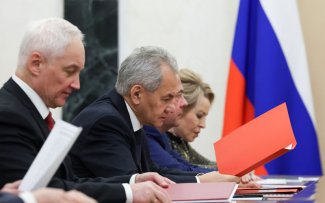
In early May 2026, Western media reported that Vladimir Putin’s position within Russia’s power structure had weakened significantly and that plans for his removal were allegedly taking shape within the ruling elite. Adverse trends affecting the Kremlin have been intensifying in Russia across several domains: economic (deteriorating macroeconomic performance), financial (a widening budget deficit), social (declining public support for Putin and his policies), and military and security (the Russian military’s failure to break through the front line and intensifying Ukrainian attacks deep inside Russian territory). Discontent with the Kremlin’s policy is growing among the country’s political and business elites, driven by a gradual shift in the balance of costs and benefits associated with maintaining the current regime.
Although signs of systemic erosion are mounting, there is insufficient evidence to suggest that a crisis of power or an elite revolt is imminent. The likelihood of such a scenario would increase significantly in the event of Russia’s defeat in the war, a severe economic crisis or Putin losing the physical capacity to govern the country; however, none of these developments appears likely in the near future. At present, European security interests require weakening Russia to the greatest extent possible and exacerbating internal tensions within the country in order to reduce its capacity to conduct multi-domain warfare against Ukraine and NATO member states.
Speculation concerning rifts and conspiracies within Russia’s ruling elite
Between 4 and 6 May, several major Western media outlets published reports concerning a crisis at the highest levels of power in Russia. The Economist published an article[1] by a ‘former senior official in the Russian government’, who argued that Putin had been gradually losing control over Russia and that discontent among the elites was increasing, with each move by the authoritarian leader bringing the regime closer to collapse. CNN[2] and the Financial Times,[3] citing a report provided by a ‘European intelligence agency’ (which had also been obtained by the independent Russian outlet Vazhnye istorii)[4], offered detailed accounts of drastically tightened security procedures at the Kremlin amid fears of an assassination attempt against Putin involving members of his inner circle and the use of a drone. The two reports also suggested the possibility of a palace coup involving Sergei Shoigu, the current Secretary of the Security Council and former Defence Minister.
Meanwhile, The Washington Post, citing ‘a well-informed source within the Russian authorities’, reported a widening rift within Putin’s inner circle between the domestic policy bloc of the Presidential Administration and the Federal Security Service (FSB). Some commentators have speculated that Denis Butsayev, the former Deputy Minister of Natural Resources who was dismissed from his post, could be behind some of the leaks. He reportedly left Russia on 22 April, fearing arrest on corruption charges and, according to media reports, may now be residing in the United States.
The publications coincided with an intensification of effective Ukrainian attacks on key energy infrastructure and with preparations for the Victory Day celebrations on 9 May, a cornerstone of the regime’s ideological legitimacy. These developments unfolded against the backdrop of Russia’s deteriorating macroeconomic and fiscal situation, rising public discontent and the Russian military’s failure to achieve significant battlefield success in the fifth year of the war.
The end of Putin’s run of good luck
In the fifth year of Russia’s full-scale invasion of Ukraine, trends unfavourable to the Kremlin are becoming increasingly apparent – and they are structural rather than temporary. The very nature of the Putinist system – a kleptocratic and militarised regime seeking to impose a neo-totalitarian order on Russia[5] – makes it incapable of adopting effective measures to address these challenges.
First, these include the mounting costs of the war and economic sanctions affecting both the economy and society. In the first quarter of 2026, Russia’s GDP fell by 0.3% year-on-year according to preliminary estimates, marking the first contraction in three years and potentially signalling a gradual transition from stagnation to recession (according to official data, the economy grew by only 1% in 2025). Almost all sectors and industries serving civilian needs have recorded declining economic activity; growth has also slowed in defence-related sectors. Real inflation as experienced by the public remains in the double digits on an annual basis, with the sharpest price increases affecting services, utilities and food products. The budget deficit continues to widen: in the first four months of this year alone, it reached 5.9 trillion roubles (approximately $80 billion), exceeding the deficit planned for the entire year (3.8 trillion roubles). Even the temporary uptick in oil prices driven by the war in Iran cannot resolve the economy’s systemic problems,[6] although it has provided a short-term boost to Putin’s image.
At the same time, the Kremlin is rapidly boosting war-related spending, increasingly shifting the burden onto the business sector. To this end, it has raised taxes, eliminated tax breaks and secured so-called voluntary contributions to the state budget from the wealthiest businessmen. For example, in March 2026, Suleiman Kerimov and Oleg Deripaska each pledged around 100 billion roubles (approximately $1.3 billion) in such contributions.[7] In addition, intensified Ukrainian attacks on production facilities in Russia have compelled business owners to invest in measures aimed at protecting their assets, including counter-drone defence systems.
For most of the elite, opportunities to extract corrupt rents are diminishing, while a Darwinian struggle for power and income is intensifying. Meeting the leader’s expectations regarding macroeconomic performance poses an increasingly difficult challenge, thereby raising the risk of repercussions for individual senior officials. Technocrats responsible for economic and financial performance have only limited influence over Putin’s decisions that directly affect their areas of responsibility. For months, leading figures within the government’s ‘economic bloc’ – including Putin’s adviser Maksim Oreshkin,[8] Economic Development Minister Maksim Reshetnikov[9] and Central Bank Governor Elvira Nabiullina – have been openly warning about the economy’s weakening growth drivers and structural problems.
Second, a major source of tension is the near-total freedom Putin has granted the FSB to discipline members of the elite and strengthen its position within the power structure at the expense of other groups’ interests. The informal rules that previously allowed members of the elite to operate safely and accumulate wealth by meeting the Kremlin’s expectations – such as unconditional loyalty and adherence to established norms governing corruption – have been dismantled. This is reflected in a wave of arrests among the elites (primarily at the regional and local levels)[10] as part of the so-called ‘anti-corruption campaign’, which in practice serves to centralise financial flows in the hands of Putin’s most powerful allies. Unexplained deaths among political and business figures targeted by law enforcement agencies and the FSB also point to behind-the-scenes power struggles; several dozen such cases have been recorded since the start of the full-scale invasion.[11] The ‘anti-corruption campaign’ has been accompanied by the largest wave of nationalisation and asset redistribution since the 1990s,[12] carried out through reprivatisation or hostile takeovers across various sectors of the economy in violation of established procedures and property rights, thereby prompting protests from the business community.[13] According to figures released by the Prosecutor General’s Office in March 2026, the value of nationalised assets has so far reached 4 trillion roubles (more than $54 billion).
Third, the pursuit of total control over Russia’s information space in the name of regime security,[14] particularly through large-scale internet restrictions,[15] has generated significant economic costs, causing serious disruptions to the daily lives of citizens and members of the elite, while also inflicting reputational damage on the government. It has also reduced the effectiveness of propaganda relying on blocked platforms, including the Telegram messaging app, and has even created communication problems for front-line military units (see below). The prioritisation of censorship and digital surveillance by the FSB, law enforcement agencies (the Prosecutor’s Office and the Investigative Committee) and civilian bodies (primarily Roskomnadzor) is increasingly coming into conflict with the responsibilities of other state institutions, including officials and propagandists tasked with maintaining high levels of public support for Putin and ensuring the smooth conduct of the so-called parliamentary elections in September 2026. Their role is to engineer an overwhelming victory for the ruling United Russia party through the effective mobilisation of the loyal electorate and the suppression of public discontent.
Meanwhile, the state-run public opinion research centre VTsIOM has recorded a steady decline in support for and trust in Putin, with both indicators falling to their lowest levels since the start of the full-scale war. In mid-April, 65.6%[16] of respondents approved of his performance as president (a decline of nearly 10 percentage points since January 2026) while only 29.5%[17] expressed trust in him in response to an open-ended question. A similar trend was recorded with regard to the prime minister and the government. Support for United Russia fell below 28% in April.[18] The independent Levada Center has also reported a decline in Putin’s approval rating,from 84% in January to 79%.[19] The proportion of Russians who believe that the country is heading in the wrong direction has risen to 28%, while 55% take the opposite view.[20] More than 60% would favour peace negotiations, while only 27% support continuing the war.[21]
Current ratings remain well above the low levels recorded in the second half of 2021,[22] before the full-scale invasion of Ukraine reversed the trend unfavourable to the regime. However, given the systemic nature of the crisis and the diminishing effectiveness of the ideological ‘rally-round-the-flag’ narrative, which frames the costs of the war as necessary in order to fight ‘all of NATO’, trends unfavourable to the Kremlin are likely to deepen further.
Fourth, intensified Ukrainian strikes against strategic military and energy facilities deep inside Russia, exposing the regime’s inability to protect its own territory, may raise serious doubts as to whether Putin can still be regarded as an effective leader and guarantor of the country’s security. Since early March, the Ukrainian Armed Forces have carried out at least 40 strikes against Russian refineries, oil terminals and other facilities, forcing some of them to suspend operations. In the case of the Rosneft-owned refineries and terminal in Tuapse, the attacks have caused an environmental disaster.[23] Ukrainian forces have also demonstrated the ability to successfully eliminate Russian military commanders operating far behind the front lines. The most recent such assassination took place in December 2025, when General Fanil Sarvarov was killed in a car bombing in Moscow, reportedly triggering tensions between the General Staff and the FSB, which is responsible for counterintelligence.[24] The growing number and range of drone attacks have forced the government to introduce far-reaching changes to the Victory Day celebrations on 9 May, an event of major ideological and symbolic importance to the regime.
Finally, the Russian military’s failure to achieve significant gains on the battlefield, the growing number of fatalities (352,000 as of late 2025)[25] and wounded personnel, and reports of widespread corruption among commanders reaching at least part of the public have raised uncomfortable questions for the government regarding the competence of those responsible for conducting the war. The near-total blocking of the Telegram messaging app as part of the ‘sovereignisation’ of the Russian internet has created another source of tension, as it has severely hampered communication among Russian soldiers on the front lines and disrupted fundraising efforts for the military (almost all such initiatives were conducted via Telegram)[26]. Consequently, the Kremlin is now facing criticism not only from anti-war and democratic circles, but also from pro-war ‘ultrapatriots’, including so-called Z-bloggers, whose scepticism about Russia’s chances of victory and frustration directed personally at Putin are increasingly spilling out into the open. In March 2026, Ilia Remeslo, a figure associated with these circles, attracted widespread attention across the Russian information space when he criticised Putin for incompetence, described him as a thief and a criminal,[27] and predicted that he would lose power later this year.[28] Many other commentators and propagandists holding radically anti-Western and anti-Ukrainian views share these sentiments.
The regime’s problems: erosion, but no imminent collapse
While the reports published this month concerning rifts within the elite and tightened security measures around Putin should be regarded as credible – confirming earlier reports regarding his obsession with protecting his own life and health, as well as the fact that he trusts only a few members of the elite – claims of a possible coup involving Sergei Shoigu appear highly improbable. Such a conspiracy would most likely have been quickly uncovered and thwarted by Russian counterintelligence before information about it could reach foreign intelligence services. It is difficult to determine whether these media leaks form part of a planned disinformation operation aimed at weakening the Putin regime, an attempt to warn Putin that continuing current policies risks destabilising the system, or instead an internal power struggle intended to sideline Shoigu, who lacks an independent power base within the security apparatus, remains unpopular within the military and was significantly weakened by his dismissal as defence minister in May 2024. The faction he had supported within the ministry has since been dismantled, many of his close associates have lost their positions, and two deputy ministers, Timur Ivanov and Pavel Popov, have received lengthy prison sentences on corruption charges. Shoigu’s closest aide, Ruslan Tsalikov, has also been arrested on embezzlement charges.
Russia’s ruling elite is undoubtedly entering a period of growing tensions which, under certain conditions, could evolve into a crisis of the power structure. So far, however, there have been no signs of serious turbulence threatening Putin’s position or the model of governance he has established. Despite mounting indications of an approaching economic crisis and the deterioration of Putin’s image, it would be premature to anticipate the regime’s imminent collapse or an attempt by one of the influence groups to seize power by force. For at least several more years, the system may continue to function in its current state, characterised by a gradual weakening of Putin’s position, intensifying factional and inter-institutional struggles, and growing repression directed against both the elites and society. However, a number of factors could undermine the system’s stability, Putin’s legitimacy as a leader and arbiter, and the elite’s loyalty to the Kremlin in the months and years ahead. In this context, factional infighting is likely to intensify gradually, taking the form of information warfare between rival influence groups through media leaks and disinformation, alongside heightened repression against the elites and society as dissatisfaction with the leader’s policies continues to deepen.
The erosion of the regime – a desirable outcome from the perspective of European security[29] – could accelerate in the event of a severe economic and fiscal crisis, Russia’s defeat on the battlefield or Putin losing the physical capacity to govern the country. A key catalyst for change would be the emergence of a political rival: a figure acceptable to most of the establishment and capable of offering credible guarantees of personal and financial security to its members. However, this scenario appears highly unlikely as long as the Kremlin remains capable of securing the loyalty of the repressive apparatus and eliminating potential contenders for Putin’s succession. Fear, including concern about the ‘long arm’ of the Russian security services reaching beyond the country’s borders, remains an important component of the elite’s loyalty to Putin.
Implications for the EU and NATO
The prospect of a deteriorating internal situation in Russia presents both opportunities and risks for the policies of EU and NATO member states. On the one hand, it creates opportunities to exacerbate tensions within the elite and undermine Putin’s image in the eyes of both the establishment and ordinary Russians. External influence over how the Russian elites and society perceive Putin and the system he has built could play a supporting role in eroding the regime and reducing its capacity to continue the war. Political change in Russia conducive to securing lasting peace should be the strategic objective for members of both organisations.
Examples of such methods of influence include an assertive information policy targeting audiences within Russia and the establishment of a mechanism for lifting sanctions on individuals willing to publicly condemn the regime, provide substantial support to Ukraine, or give testimony enabling the prosecution of war criminals, including Putin himself. The perception that there is no credible alternative to the current leadership constitutes one of the foundations of its legitimacy and its ability to effectively suppress protest sentiments amid the deteriorating economic, fiscal and social situation. Therefore, rumours concerning possible conspiracies and a palace coup weaken Putin’s position regardless of their credibility – which remains low, particularly when specific names of potential successors are mentioned – or the intentions of the sources behind them, which may not necessarily align with European security interests.
On the other hand, as Russia’s economic, political and social problems continue to mount, speculation regarding developments within the ruling elite, including rumours deliberately fuelled by rival domestic influence groups, is likely to intensify. While such claims may partly reflect real processes and tensions, there is a serious risk that many of them will in fact serve the interests of current decision-makers by helping them remain in power and secure impunity for crimes they have committed.
In particular, Western countries and organisations are likely to face intensified Russian influence operations aimed at persuading decision-makers – contrary to the West’s strategic security interests – to ‘save’ the Putin regime from the consequences of its own policies in the name of preserving the internal stability of a nuclear power. The Kremlin will seek to exploit the West’s deep-seated fear of destabilisation in Russia, which became evident, for example, during Yevgeny Prigozhin’s mutiny in mid-2023. The Russian regime appears to view peace negotiations concerning Ukraine as a potential lifeline in the event of a serious crisis. Its feigned willingness to reach a compromise agreement, coupled with staged displays of internal debate and divisions within the Russian leadership, is intended to weaken EU and NATO solidarity, secure the lifting of the most damaging sanctions and ultimately neutralise the most pressing problems while temporarily strengthening the regime once again. This would facilitate a further escalation of hostile actions targeting Western countries.
Under the current circumstances, the only realistic means of strengthening European security is to increase pressure on Russia[30] in order to compel it to present a peace proposal acceptable to Ukraine. Pressure should be applied militarily (through continued military and financial assistance to Ukraine and demonstrations of NATO’s military capabilities), economically (by tightening the sanctions regime, as exemplified by the EU’s 20th sanctions package) and politically (through measures such as accelerating the work of international courts dealing with Russia’s aggression and war crimes).
[1] ‘Vladimir Putin is losing his grip on Russia’, The Economist, 6 May 2026, economist.com.
[2] N.P. Walsh, ‘Unsettled Kremlin tightens security around Putin amid assassinations and coup fears, intel report says’, CNN, 7 May 2026, edition.cnn.com.
[3] A. Stognei, M. Seddon, L. Abboud, ‘Vladimir Putin hunkers down for fear of assassination’, Financial Times, 4 May 2026, ft.com.
[4] Р. Анин, ‘Владимир Путин боится покушения и переворота, между силовиками нарастает конфликт, пишет разведка одной из стран ЕС’, Важные истории, 4 May 2026, istories.media.
[5] M. Domańska, ‘Putin’s neo-totalitarian project: the current political situation in Russia’, OSW Commentary, no. 489, 17 February 2023, osw.waw.pl.
[6] I. Wiśniewska, ‘Rosyjska gospodarka: w kierunku recesji’, OSW, 14 May 2026, osw.waw.pl.
[7] Ibid.
[8] ‘Орешкин назвал экономическую ситуацию в РФ «очень непростой»’, KM.RU, 26 April 2026.
[9] Л. Капустина, ‘Решетников назвал сегодняшнюю ситуацию в экономике непростой для бизнеса’, RG.RU, 17 April 2026.
[10] See: M. Domańska, The Kremlin’s Loyal Praetorians. Russia’s ruling elite in wartime Putinism, OSW, Warsaw 2026, osw.waw.pl.
[11] Ibid.
[12] Ibid.
[13] ‘«Любая собственность может быть обращена в государственную». Миллиардеры написали письмо Путину с жалобами на массовую национализацию’, The Moscow Times, 26 December 2025, ru.themoscowtimes.com.
[14] M. Domańska, K. Chawryło, The Great Russian Firewall. The Kremlin’s ultimate crackdown on internet freedom, OSW, Warsaw 2025, osw.waw.pl.
[15] M. Domańska, I. Wiśniewska, ‘Russia accelerates internet shutdowns’, OSW, 17 March 2026, osw.waw.pl.
[16] ‘Деятельность государственных институтов’, ВЦИОМ, wciom.ru.
[17] ‘Доверие политикам’, ВЦИОМ, wciom.ru.
[18] ‘Рейтинг политических партий’, ВЦИОМ, wciom.ru.
[19] ‘Рейтинги апреля 2026 года: настроения, оценки положения дел в стране, одобрение органов власти’, Левада-Центр, 30 April 2026, levada.ru.
[20] Ibid.
[21] ‘Конфликт с Украиной в апреле 2026 года: внимание, поддержка российских вооруженных сил, мнение о необходимости переговоров’, Левада-Центр, 7 May 2026, levada.ru.
[22] ‘Одобрение институтов, положение дел в стране, рейтинги политиков и партий’, Левада-Центр, 23 December 2021, levada.ru.
[23] F. Rudnik, M. Bartosiewicz, ‘Ukrainian attacks on Tuapse: a threat to Russia’s fuel sector and the environment’, OSW, 8 May 2026, osw.waw.pl.
[24] N.P. Walsh, ‘Unsettled Kremlin tightens security around Putin…’, op. cit.
[25] ‘352,000 deaths in four years. Mediazona and Meduza’s new estimate of Russian losses in Ukraine’, Mediazona, 9 May 2026, en.zona.media.
[26] ‘"Путин потеряет власть". Z-блогеры критикуют Путина после блокировок Telegram в России’, Настоящее Время, 18 March 2026, currenttime.tv.
[27] ‘Пять причин, по которым я перестал поддерживать Владимира Путина’, Telegram, 17 March 2026, t.me/ilya_remeslaw.
[28] See comments published on the Telegram channel, 18 March 2026, t.me/ilya_remeslaw.
[29] OSW’s Russian Department, Russia’s vulnerabilities. How the West can exploit them and win the systemic war, OSW, Warsaw 2026, osw.waw.pl.
[30] Ibid.