Mutual escalation of air strikes. Day 1546 of the war

Ukrainian forces carried out a series of counterattacks on several fronts, regaining control of some positions in the grey zone and expanding it at Russia’s expense. This occurred in the Kharkiv, Donetsk, Dnipropetrovsk and Zaporizhzhia oblasts. According to some sources, Ukraine regained control of the village of Odradne in Kharkiv Oblast, located in the border zone, and Stepnohirsk in the western part of Zaporizhzhia Oblast. However, it is most likely that neither settlement is currently under the control of either side.
The Russians continued their offensive, making further minor territorial gains in the Donetsk and Zaporizhzhia oblasts and in the border areas of the Kharkiv and Sumy oblasts. In Kharkiv Oblast, they advanced from the north-east into Borova, the second most important transport hub after Kupiansk, featuring a crossing over the Oskil River. Within about 24 hours, however, they were driven out and pushed back from the city limits.
Western media reports began to emerge stating that Ukrainian forces had seized the initiative on the front line and were recapturing territory at a pace significantly outstripping the Russian advances. On 17 May, The Economist published a report stating that, since the start of this year, the Russians had occupied a mere 220 km² of Ukrainian territory, whilst over the past month the Ukrainians have recaptured 189 km². According to the editorial team, this may mark a turning point in the course of the war. For several weeks, the US Institute for the Study of War has reported on regular Ukrainian advances or the lack of Russian advances. These reports are not corroborated by any OSINT sources, including Ukrainian ones. The Ukrainian army command, which conducted a similar information campaign in February and March this year, is also uninvolved in shaping the narrative – at least publicly. According to DeepState, the leading Ukrainian research group focusing on the war, changes in territorial control during the first four months of 2026 amounted to 672 km2 in Russia’s favour. Between 1 and 18 May, the territory held by Russia is said to have increased by a further 22 km2. Although a slowdown in the pace of the advance is evident, the initiative remains firmly with the advancing Russians, as the Pentagon noted in a briefing to the US Congress on 18 May.

From the evening of 12 May to the morning of 14 May, the Russians carried out a series of massive air strikes across the whole of Ukraine, targeting mainly critical infrastructure, industry and logistics. According to the Ukrainian Air Force Command, they deployed a total of 1,567 strike drones and their decoys (including 892 during the first 24 hours of the attacks) as well as 64 ballistic and cruise missiles. On 13 May, the greatest damage was recorded in the western oblasts. The most concentrated attack since the start of the full-scale aggression hit Zakarpattia, and Uzhhorod was targeted for the first time. As a result of strikes on energy infrastructure, power was partially cut off in, among others, Ivano-Frankivsk (where a residential building was also hit and nine people were injured), Kolomyia, Lviv, Rivne and Zhovkva. In Korosten, Kovel, Rivne and Stryi, railway infrastructure was damaged. According to Ukrzaliznytsia (Ukrainian Railways), 23 strikes were recorded on security substations, bridges and railway stations, as well as locomotive and carriage depots, not only in western Ukraine but also in the Kharkiv and Dnipropetrovsk oblasts. In Lutsk, the local headquarters of the Security Service of Ukraine was hit. Meanwhile, Naftogaz reported damage to its extraction facilities in Kharkiv Oblast and to a company in Zhytomyr Oblast. Damage to critical and industrial infrastructure was also reported from Kharkiv and the Odesa and Poltava oblasts. President Volodymyr Zelenskyy announced that six civilians had been killed and dozens injured as a result of the strikes across Ukraine.
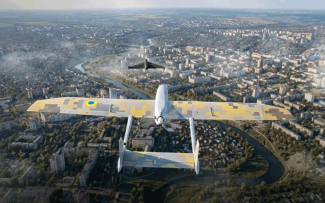
On 14 May, the main target of the attack was Kyiv. Damage was reported in several areas of the Ukrainian capital, and water supplies were cut off in the city’s left-bank district. Among the targets damaged were a power substation, petrol stations and the headquarters of the drone manufacturer Skyeton. One of the missiles struck a block of flats, which partially collapsed. Twenty-four people were killed, including three children, and 48 were injured. In Kyiv Oblast, Bila Tserkva and Vasylkiv were among the targets. According to some sources, Kyiv’s air defence positions were hit. It is most likely that the Kinzhal hypersonic missiles were aimed precisely at these positions and none of them were successfully intercepted. Kharkiv was also hit in the attack, with 28 people injured (including three children); Kremenchuk, where a refinery still partially used by the defenders was among the targets; and Chernihiv Oblast (an energy facility was damaged) and Odesa Oblast (port infrastructure was damaged). The latter was targeted again in the evening, and the strike on the energy infrastructure cut off power to 32 towns. In the following days, the targets of the strikes were businesses in Kyiv Oblast – on 16 May near Vyshhorod, and on 17 and 19 May in Brovary.
The Russians continued to destroy critical infrastructure and Ukrainian logistical facilities in frontline and border oblasts. Kharkiv was attacked daily from 15 to 19 May and, on all these days except 17 May, Odesa Oblast, where port infrastructure remains the main target. On 18 May, a drone struck the bulk carrier ‘KSL DEYANG’, flying the Marshall Islands flag but representing a Chinese shipowner and with a Chinese crew. Further damage to facilities was reported in Zaporizhzhia (15 and 16 May), Kryvyi Rih (16 and 17 May) and Dnipro (twice on 17 May and on 18 May, when the attack on the city was of a concentrated nature), Sumy (17 May) and Chernihiv (18 May). As a result of a missile strike on the centre of Pryluky on 19 May in Chernihiv Oblast, two people were killed and 17 were injured.
Between 17 and 19 May, Russia launched massive attacks on gas extraction and processing infrastructure. Naftogaz reported the destruction of extraction facilities and damage to plants in the Chernihiv (17 and 19 May) and Dnipropetrovsk (twice on 18 May) oblasts. According to Ukrainian military sources, from the evening of 12 May to the morning of 19 May, the Russians deployed a total of 3,022 drones – the highest number in a single week since the start of the full-scale invasion – and 92 missiles. Ukraine claimed to have neutralised 2,834 drones and to have shot down 46 missiles (including 41 of the 56 that attacked Kyiv on 14 May).
The actual percentage of Russian drones neutralised by the defenders ranges from 50% to 75% – depending on the attack. This information was provided by Defence Minister Mykhailo Fedorov in an interview given alongside his German counterpart Boris Pistorius to UNITED24media, published on 16 May. Four days earlier, during Pistorius’s visit to Kyiv, Fedorov stated in a media briefing that this percentage was around 90%, and in the case of cruise missiles – almost 80% (he did not mention ballistic missiles, for which the declared effectiveness of Ukrainian air defence does not exceed 10%). Fedorov’s statement, confirming that the Air Force Command and the General Staff of the Ukrainian Army have been inflating the official statistics on the interception of enemy air attack assets, marks the second instance of this kind at such a high level since the start of the full-scale aggression (in August 2024, during a briefing for Western military officials, the Commander-in-Chief of the Armed Forces of Ukraine, General Oleksandr Syrskyi, did the same). This highlights the scale of disinformation by the warring parties in their reporting on their operations.

On the night of 17 May, Ukrainian forces carried out the largest drone attack on Moscow to date. They also set a daily record for this war by sending over a thousand drones into Russian territory and deep into the occupied areas. At least one broke through the Russian capital’s air defences and exploded at a refinery, causing a fire. The burning wreckage of another drone fell on Sheremetyevo Airport. According to Moscow Mayor Sergei Sobyanin, 81 drones were shot down in the city’s area, and 12 residents were injured, mainly refinery workers. More serious damage occurred in Moscow Oblast, where the impact of drones caused fires at the Elma technology park and the Angstrem plant in Zelenograd, as well as at a fuel depot at the oil pumping station in Durykino. According to a statement by the Security Service of Ukraine (SBU), a second pumping station was also hit, though this has not been confirmed by other sources. The SBU also reported that a facility at Belbek Airport in occupied Crimea had been hit, whilst the Unmanned Systems Forces reported a communications hub on the peninsula and an FSB Border Guard Service patrol vessel in Kaspiysk had been struck. According to the Russian Ministry of Defence, 556 Ukrainian drones were shot down during the night of 17 May, and a total of 1,054 over the course of the day (according to Ukrainian data, the Russians have not yet exceeded 1,000), as well as individual Flamingo and Neptune cruise missiles. On average since the beginning of May this year, this figure is said to be around 300, confirming that Ukrainian attacks on Russia have taken on a massive scale. However, this has not translated into a significant increase in their effectiveness, which – especially in the case of Moscow, which is attacked almost daily – remains low.
Russian fuel sector businesses have remained the main targets of Ukrainian drones. Hits and fires occurred on 13 May at the refinery in Yaroslavl (according to the Ukrainian General Staff, the processing plant was damaged), the Tamanneftegaz oil terminal in Krasnodar Krai, the Nurlino pumping station in Bashkortostan, and a gas processing plant in Astrakhan, which suspended production as a result of the attack. In total, the Ukrainians are reported to have used at least 572 drones over the course of 24 hours (this is the number of drones neutralised, as reported by the Russian Ministry of Defence). On 15 May, a Ukrainian drone caused a fire at a refinery in Ryazan (the Ukrainian General Staff reported damage to four processing facilities), whilst another struck a residential block in the city, killing four people (including a child) and injuring 12. A day later, a strike occurred at the Azot chemical plant in Nevinnomyssk in the Krai, and on 18 May – at a refinery in Kstovo in Nizhny Novgorod Oblast. According to some sources, on 19 May a Ukrainian drone struck the Yaroslavl-3 oil pumping station in Yaroslavl Oblast. The Ukrainian General Staff also reported strikes on further vessels in Kaspiysk (a missile boat and a minesweeper on 15 May, and an anti-sabotage boat on 18 May), whilst the SBU reported the destruction of a seaplane and a helicopter at the airport in Yeysk in Krasnodar Krai (15 May).
On 15 May, the Russian Foreign Intelligence Service (SVR) reported that Ukrainian special services were attempting to take over Russian propaganda channels on the Telegram messaging app in order to use them to discredit the Russian authorities and army. Since the end of April this year, the owners of channels described as “military and patriotic” have reportedly been receiving offers to sell their information resources. According to the Russian side, the offers were allegedly made via fake accounts posing as “public opinion leaders”. Russian security services maintain that the SBU is behind these actions, and is allegedly planning to use the seized channels to “destabilise the situation” in Russia and spread disinformation.

According to Ukrainian estimates, on 1 April this year, the total number of Russian soldiers involved in unmanned systems operations reached 100,000. A statement on the development of the Unmanned Systems Forces within the Russian Armed Forces was presented on 14 May by the commander of the Ukrainian Unmanned Systems Forces, Robert Brovdi “Madyar”. At the beginning of May, their total strength stood at 114,000 (an increase of 28,000 over four months), and is set to reach 168,000 by the end of 2026. According to “Madyar”, this figure could be raised to as many as 200,000, though he considered the previously stated number to be achievable. He also reported that the Russians are testing an equivalent to the Starlink system. He described the prototype terminals as poor quality, easily detectable and too large. However, he considered that it would take Russia just one year to deploy its own fully operational system along the entire front line.
On 13 May, the State Duma of the Russian Federation passed a law authorising the use of the Armed Forces outside the country’s borders to protect Russian citizens. The decision to apply the new provisions will rest with Vladimir Putin. The law was drafted with a view to protecting the rights of citizens of the Russian Federation in cases of detention, arrest or criminal prosecution by foreign courts and international judicial bodies whose jurisdiction Russia does not recognise. The new regulations apply, among other things, to situations where proceedings are conducted by international institutions acting without a mandate under an international agreement signed by Russia or without a relevant UN Security Council resolution.
On 14 May, the Ukrainian government’s Centre for Countering Disinformation noted that Russia is stepping up the recruitment of students into unmanned aerial vehicle units, offering, among other things, the cancellation of student loan debt in return. Recruitment activities, which had previously been observed mainly in the temporarily occupied territories of Ukraine, have now spread to universities and higher education institutions across Russia.
On 15 May, the Russian authorities implemented a law allowing for the cancellation of student loan debt for those signing a contract with the army. The law provides for the cancellation of up to 10 million roubles (approx. $125,000) of debt. Soldiers and their spouses will be eligible for this scheme, provided that the contract with the army is signed after 1 May 2026. A further requirement for debt cancellation is that a court judgement regarding debt enforcement must have been issued previously, or that enforcement proceedings against the debtor must have commenced.
On 18 May, the Politico news website reported that the German authorities had dismantled a vast smuggling network that supplied dual-use technologies to Russia. The hub of the operation was the Global Trade trading firm, whose activities were allegedly indirectly controlled by the sanctioned Russian company Kolovrat. Following the start of Russia’s full-scale invasion of Ukraine, this company acted as an intermediary in the procurement and shipment of electronic components from Europe to Russia, using transit countries, including Turkey. The exported items included microprocessors, bearings and measuring equipment. The operation was uncovered by the German foreign intelligence service, the BND, following months of surveillance. As a result, several people have been arrested and charged with violating export regulations and circumventing sanctions. According to investigators, the scale of the operation involved around 16,000 shipments worth over €30 million.

On 15 May, the head of the President’s Office, Kyrylo Budanov, stated that Ukraine must continue mobilisation, as the recruitment of volunteers is insufficient for the army’s requirements. He also announced a crackdown on abuses committed by staff at military mobilisation centres. He opposed extending mobilisation to younger age groups (men aged 18–24), stating that the inclusion of this age group in mobilisation could have serious demographic and social consequences for the state.

On 12 May, Ukrainian local authorities indicated that the Russian occupation administration in Mariupol plans to transfer nearly 900 flats to the so-called ‘compensation housing fund’. These are properties belonging to Mariupol residents who left the city following the Russian invasion. The occupying administration intends to classify the abandoned properties as ‘municipal property’. At the end of 2025, Russia adopted legislation allowing the seizure of abandoned flats in the occupied territories until 2030. According to available information, the properties are being transferred to Russian soldiers and officials.

On 15 May, Ukraine and Russia carried out the next phase of a prisoner-of-war exchange on a 205-for-205 basis. According to the government in Kyiv, this is the first phase of the planned 1,000-for-1,000 exchange. Most of the Ukrainian prisoners had been held in Russian captivity since 2022.

On 12 May, German Defence Minister Boris Pistorius announced that his country would allocate over €10 million to the construction of military training centres in Ukraine. He also stated that 27,000 Ukrainian soldiers had been trained in Germany to date.
On 13 May, the US news website CBS News reported that the US and Ukraine are in the final stages of preparing a new agreement that could enable Ukraine to export military technology to the US, as well as to launch drone production as part of joint ventures with American companies.
On 13 May, during the B9 summit in Bucharest, the presidents of Lithuania and Ukraine signed a defence cooperation agreement, including a ‘Drone Deal’. A Ukrainian team of experts is to be sent to Lithuania to develop Vilnius’s capabilities in the production and operation of unmanned systems, thereby enabling even larger donations of these systems to Kyiv.
On 13 May, the Ukrainian Ministry of Defence presented an overview of German military aid to Kyiv, which shows that Berlin has allocated €300 million more to the Czech ammunition initiative than had previously been thought, bringing the total to €900 million.