Build with Ukraine: Kyiv’s new approach to defence industrial cooperation with European partners
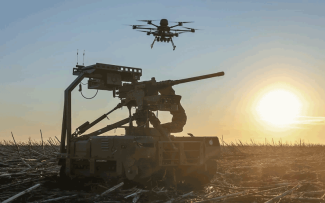
Since mid-2025, Kyiv has intensified its efforts to develop defence industrial cooperation with European countries, focusing on the co-production of weapons, particularly unmanned aerial systems, within EU territory. The preferred model involves joint ventures, in which European partners finance the expansion of serial production for Ukraine’s needs and provide technology and manufacturing capacity, while Ukrainian companies contribute know-how and integration expertise, mainly in reconnaissance, interceptor and strike drones, as well as electronic warfare systems and systems for identifying, coordinating and eliminating targets. This cooperation is shaped both by the operational requirements of the Armed Forces of Ukraine and by the strategic interests of the parties involved: Ukrainian firms aim to enter the European market, while EU states seek to enhance their own production capabilities. By exercising greater control over defence industrial cooperation, the authorities in Kyiv aim to limit the outflow of Ukrainian expertise and prevent the migration of skilled personnel in this sector to European countries.
Current joint arms production within the EU is largely directed towards Kyiv’s needs and funded through partner countries’ support for Ukraine, although over time it will likely expand to serve European and third-country markets as well. Ukraine’s most developed, albeit still limited, bilateral cooperation involves Germany, the United Kingdom and Denmark, and is gradually extending to other European states.
Polish–Ukrainian cooperation intensified in 2022 following the start of Russia’s full-scale invasion, driven by the relocation of Ukrainian defence companies from Ukraine, primarily to EU and NATO countries in Central Europe. However, the intergovernmental agreements concluded at the turn of 2025 and 2026 on expanding Polish–Ukrainian defence industrial cooperation under the Build with Ukraine programme have not yet been implemented.
Kyiv’s approach to Ukrainian–European defence industrial cooperation
Since 2025, Kyiv has sought to deepen cooperation with European partners in response to the sustained demand of the Armed Forces of Ukraine for the arms and military equipment required to defend against Russia’s invasion. Given limited funding, the domestic defence industry, despite its growing production capacity, cannot meet these needs alone.
One response has been the launch in 2024 of the so-called Danish model, under which EU member states invest in arms production within Ukraine.[1] However, not all of Kyiv’s European partners are willing to invest directly in Ukraine without involving their own companies, and the continued risk of Russian drone and missile attacks introduces further uncertainty.
At the same time, some Ukrainian defence firms relocated production after 2022 to safer EU and NATO countries, mainly through partnerships with local companies. These firms have worked primarily with partners in Poland, Slovakia and the Czech Republic, reflecting earlier ties and technological compatibility inherited from the Soviet period. Such cooperation has rarely been publicised, with joint projects typically kept confidential with regard to their nature, scale and production locations.
The Build with Ukraine initiative, launched in June 2025, aims to establish production lines in European countries through joint production agreements implemented by joint ventures between Ukrainian and Western defence companies, based on intergovernmental arrangements. Under this model, Ukraine provides skilled personnel and specialised knowledge, while Western partners contribute capital, technology, production infrastructure and certification capabilities that facilitate access to EU and broader international markets.
In February, President Volodymyr Zelensky announced plans to establish ten overseas defence export hubs by the end of 2026, including in London, Berlin and Copenhagen. Alongside promoting Ukrainian arms exports, these centres are intended to facilitate contacts between foreign and Ukrainian entities and provide information on the conditions for joint production. The initiative is directed at partners that provide military support to Kyiv, primarily those already engaged in defence industrial cooperation with Ukraine and participating in the Build with Ukraine programme, namely Germany, the United Kingdom and Denmark; it is now being expanded to include the Baltic states, Romania, Norway and the Netherlands. In recent months, Kyiv has also signed relevant agreements with Warsaw to implement joint defence industrial cooperation projects.
Joint production is intended primarily to meet the needs of the Armed Forces of Ukraine, with any surplus potentially being sold on foreign markets. It focuses in particular on unmanned aerial and ground systems, technologies for identifying, coordinating and eliminating targets, as well as electronic warfare capabilities. The model allows Ukrainian companies to secure long-term Western financing and to engage in co-production in European countries while retaining contracts to supply the Armed Forces of Ukraine. This approach enables the authorities in Kyiv to maintain control over the development of defence industrial cooperation, while limiting the outflow of Ukrainian expertise and skilled personnel from the domestic defence sector to Western entities.
The establishment of such cooperation is expected to follow political criteria. Agreements with Ukrainian producers may be concluded by companies from countries that are signatories to security cooperation agreements with Ukraine,[2] as well as by those that have provided sufficient support to Ukraine in its war with Russia. In this way, Kyiv seeks to leverage wartime capabilities for political purposes and to strengthen its international position. Ukraine also sees an opportunity to integrate into the European defence industrial base through participation in projects financed under the EU’s SAFE instrument. According to a statement made in early January by the then defence minister Denys Shmyhal, Ukraine is involved in projects with European partners worth a total of $5 billion.
The main advantage of cooperation with Ukraine lies not in any technological edge, but in the ability to develop and refine production based on direct battlefield experience. Ukrainian defence companies rely almost entirely on foreign components, as highlighted by Kyrylo Budanov, head of the Presidential Office, during a meeting with business representatives on 11 April. He noted that “the component base of all current technologies, including drones, is not Ukrainian”, and that Ukraine effectively acts only as a “user” of these production elements. At the same time, the sector’s added value derives from its capacity to rapidly adapt weapons systems – particularly aerial and ground-based unmanned platforms – to the evolving needs of the armed forces and to test them in combat conditions.[3] Ukrainian firms also combine different elements of arms and military equipment in innovative ways, for instance by integrating electronic warfare systems, acoustic detection, mobile fire units and interceptor drones within counter-drone defence.
Denmark, the United Kingdom and Germany: advanced co-production and greenfield investments
Denmark has led the way in developing government-level mechanisms to support Ukraine’s defence industry. In June 2024, Kyiv and Copenhagen signed an agreement to reimburse orders for military equipment produced by Ukrainian companies.[4] A major challenge to this model, known as the Danish model of military assistance, has been the intensity of Russian air strikes on Ukrainian industrial facilities. This prompted the launch of the Build with Ukraine programme in June 2025, under a bilateral agreement that allocated 500 million Danish kroner to support Ukrainian firms planning to establish production in Denmark. In October 2025, a further agreement was signed for the production of fuel for drones and long-range missiles by the Ukrainian company FirePoint near Fighter Wing Skrydstrup airbase in Denmark. The company is currently seeking environmental approvals to construct its first plant, with the initial production line expected to open later this year, however, ongoing corruption investigations in Ukraine involving individuals linked to the firm have cast uncertainty over the project. In March this year, Denmark’s Ministry of Defence also reported talks on opening a drone factory by SkyFall, Ukraine’s largest drone manufacturer, known for systems such as the Vampire (often referred to as Baba Yaga) and the P1-Sun interceptor.
The United Kingdom and Ukraine signed a confidential agreement on defence industrial cooperation in April 2024, followed by a supplementary declaration in March this year.[5] The framework focuses on establishing joint production lines and developing new technologies, particularly in unmanned systems, air defence and long-range strike capabilities. Since 2024, the two countries have cooperated on very short-range air defence systems, with Thales’s Belfast branch supplying LMM guided missiles and Ukraine providing launchers as well as command-and-control vehicles. These systems are delivered to the Armed Forces of Ukraine, with orders financed through a £3.5 billion loan from UK Export Finance supporting procurement from the British defence sector. In February this year, the Ukrainian company Ukrspecsystems, through its UK subsidiary, opened a production facility and testing centre in eastern England for PD-2 and Shark reconnaissance drones, representing an investment of £200 million. The plant is intended both to supply Ukraine and to support the company’s expansion into other markets. Since January, under the Build with Ukraine programme, the United Kingdom has also been producing Octopus drones for Kyiv, based on a Ukrainian design refined by British engineers, to intercept Iranian-Russian Shahed drones, with planned output of up to 1,000 units per month; however, the companies involved have not been disclosed. There are also plans for BAE Systems to produce 105 mm ammunition and L119 light guns in Ukraine, as well as for the United Kingdom to develop a new ballistic missile, Nightfall, with a range of over 500 km, and to supply Ukraine with up to ten units per month, although details of industrial involvement remain unclear.
Defence cooperation between Germany and Ukraine began in October 2025 with a memorandum of understanding signed by the two countries’ defence ministers to deepen bilateral ties. In December 2025, President Volodymyr Zelensky and Chancellor Friedrich Merz agreed on a ten-point cooperation plan, including the identification of joint projects, particularly in drone technologies.[6] At the same time, Germany’s Quantum Systems and Ukraine’s Frontline Robotics announced the creation of Quantum Frontline Industries (QFI), a joint venture to produce multi-role drones for the Armed Forces of Ukraine under the Build with Ukraine programme. In February this year, the company announced the commencement of serial production of the Linza 3.0 unmanned system, with planned output of 10,000 units annually.[7] Another initiative is Auterion Airlogix Joint Venture GmbH (AAJV), established in February by Germany’s Auterion GmbH and the Ukrainian drone manufacturer Airlogix, which is to produce AI-guided medium-range strike drones in Germany for Ukraine.[8] Cooperation has also been established with the German drone manufacturer Helsing, which by July 2025 had delivered approximately 2,000 of the 4,000 HF-1 combat drones ordered by Kyiv and developed jointly with Ukraine’s Terminal Autonomy, with the Ukrainian side providing the airframe and Helsing the software. Both projects are likely to be supported through German military assistance programmes that finance deliveries to partner countries, including Ukraine.[9] In February this year, the Ukrainian producer of drones and electronic warfare systems TAF Industries and the German drone manufacturer Wingcopter also signed a memorandum of understanding to establish a joint venture for drone production.
In April this year, during German–Ukrainian intergovernmental consultations, defence companies from both countries signed six memoranda of cooperation. These envisage the establishment of two joint ventures focused on interceptor drones, the joint production of medium-range drones and three projects related to the development of cruise and/or ballistic missiles.[10] At this stage, however, it remains unclear how far these initiatives, particularly those based in Germany, have progressed.[11]
An early stage of cooperation with other European partners
At the beginning of the year, the Baltic states, particularly Latvia and Lithuania, also moved to strengthen defence cooperation with Ukraine through bilateral agreements. In March, Latvia’s ministries of economy and defence, together with the Latvian Investment and Development Agency, signed a memorandum with Ukrainian business organisations and defence industry representatives.[12] Under the arrangement, Latvia will support Ukrainian companies entering its market, while seeking access to Ukrainian technologies in return, and expects Kyiv’s involvement to contribute to its economic growth.
During a meeting between Presidents Gitanas Nausėda and Volodymyr Zelensky in February, Lithuania and Ukraine signed an agreement,[13] to deepen cooperation between their defence industries, focusing on the co-production of systems for both countries’ armed forces. The agreement envisages investments through Lithuanian–Ukrainian joint ventures, with partial funding from the SAFE programme. Projects may also receive support from the Lithuanian state, although investors are expected to become self-sufficient over time and align production with Lithuania’s needs as well as those of its partners.
On 25 April, Estonia signed a letter of intent establishing a framework for defence industrial cooperation with Ukraine. The Ministry of Defence announced that €15 million from this year’s aid package for Kyiv will be allocated to support joint production projects. Ukrainian companies have shown interest in setting up production facilities in Estonia, while Tallinn aims to assist domestic technology firms and defence start-ups in entering the Ukrainian market.
Defence cooperation between Romania and Ukraine remains at an early stage and has not yet resulted in the establishment of joint ventures or Ukrainian investments in Romania. During a visit to Bucharest in March, President Volodymyr Zelensky and President Nicușor Dan signed a declaration outlining plans for the joint production of defence materials. Romania committed to supporting the establishment of joint ventures, partnerships and co-production agreements. The first planned project involves the joint production of drones, to be financed through the SAFE programme with up to €200 million. Ukraine is expected to contribute technological expertise, while Romania will provide industrial capacity and production facilities. The exact location has not been confirmed, although Brașov, where the state-owned defence company Carfil S.A. operates, has been mentioned in the media. Cooperation is also developing at the company level, as demonstrated by the Romanian firm Qognifly, which has signed memoranda with three Ukrainian partners and is currently constructing a production facility for drones and counter-drone systems in Bucharest.
In April, during President Zelensky’s visits to several European countries, including Norway, the Netherlands and Italy, further intergovernmental agreements regarding defence industrial cooperation were concluded, with a strong focus on drone production. Ukraine and Norway signed a declaration to deepen cooperation in defence and security, enabling Norwegian companies to produce Ukrainian unmanned systems under licence. Ukraine and Italy agreed to cooperate on the exchange of experience in the use of unmanned systems, while Ukraine and the Netherlands signed a declaration to begin work on a comprehensive intergovernmental agreement covering the joint development of such systems.
In recent months, political engagement between Poland and Ukraine regarding defence industrial cooperation has intensified. In September 2025, the two countries’ defence ministers signed a declaration to strengthen cooperation in security and defence, including joint initiatives under the SAFE programme. This was followed in October by a letter of intent to expand cooperation between their defence industries. In February 2026, Prime Minister Donald Tusk and President Volodymyr Zelensky signed another letter of intent covering the joint production of ammunition and military equipment, as well as the development of defence technologies. Since the start of Russia’s full-scale invasion, at least several dozen Polish and Ukrainian companies have entered into defence cooperation, most often involving the relocation of Ukrainian production and/or technology to Poland. At the same time, the Polish company WB Electronics, a producer of unmanned systems, continues to maintain production capabilities in Ukraine. Overall, this cooperation remains largely confidential, with information on joint projects typically emerging only through unofficial channels.
Conclusions
Since 2025, Ukraine’s cooperation with individual European countries has been shaped both by the needs of the Armed Forces of Ukraine and by the interest of partners seeking to expand their own production capabilities, particularly in drone technologies. Kyiv treats this rapidly developing cooperation, especially its battlefield-tested expertise and the capabilities of its defence industry workforce, as leverage in discussions with Western decision-makers on integration into their military and political structures. The preferred model involves joint ventures, in which Western partners finance the expansion of serial production, provide manufacturing capacity and contribute technological input. For the time being, most output is directed towards Ukraine’s needs and funded through national support programmes, although over time production is expected to expand to European and third-country markets.
The Build with Ukraine programme is best illustrated by the German–Ukrainian model of joint drone production for Ukraine in Germany, where Berlin finances deliveries to Kyiv while simultaneously strengthening its own industrial and technological base. In the United Kingdom, co-production enhances domestic technological capabilities and enables Ukrainian designs to reach serial production with strong support from British engineers. Variants of the German model are beginning to emerge in other European countries, although so far without clear results in the form of operational joint production. Polish–Ukrainian cooperation intensified following Russia’s full-scale invasion in 2022, driven by the relocation of Ukrainian defence companies to safer EU and NATO countries in Central Europe. However, within the Build with Ukraine framework, bilateral intergovernmental agreements between Poland and Ukraine have yet to be implemented. At the same time, the depth of existing company-level cooperation between the two countries has already significantly limited the scope for additional joint projects.
Ukrainian greenfield investments in Europe remain relatively limited and are concentrated primarily in Denmark, which offers financial support to firms that establish production on its territory and frames this as a contribution to both national and European security. In the United Kingdom, Ukrainian investment, combined with defence procurement for the Armed Forces of Ukraine, is intended not only to support Kyiv’s military needs but also to create jobs in less developed regions, while providing Ukrainian companies with a platform for expansion into other markets.
[1] K. Nieczypor, ‘A trusted ally? Denmark’s involvement in helping Ukraine’, OSW Commentary, no. 681, 25 July 2025, osw.waw.pl.
[2] J. Gotkowska, K. Nieczypor, J. Graca, ‘The West and Ukraine: agreements on security cooperation’, OSW, 19 January 2024, osw.waw.pl.
[3] K. Nieczypor, S. Matuszak, ‘Game of drones. The production and use of Ukrainian battlefield unmanned aerial vehicles’, OSW Commentary, no. 694, 14 October 2025, osw.waw.pl.
[4] K. Nieczypor, ‘A trusted ally? Denmark’s involvement in helping Ukraine’, op. cit.
[5] ‘UK-Ukraine joint statement: Enhanced Security and Defence Industrial Collaboration Declaration’, UK Prime Minister’s Office, 17 March 2026, gov.uk; ‘Detailed timeline of UK military assistance to Ukraine (February 2022–present)’, UK Parliament, 13 February 2026, commonslibrary.parliament.uk.
[6] F. Specht, L. Al-Serori, ‘Deutschland legt Zehn-Punkte-Plan für Kooperation mit Ukraine vor’, Handelsblatt, 15 December 2025, handelsblatt.com.
[7] ‘Ukrainian President Zelenskyy receives first Ukrainian drone manufactured in Germany by Quantum Frontline Industries’, Quantum Systems, 13 February 2026, quantum-systems.com.
[8] ‘Auterion and Airlogix Launch German-Ukrainian Joint Venture to Scale Autonomous Drone Production for Ukraine and NATO Allies’, Auterion, 13 February 2026, auterion.com.
[9] According to a January report by Bloomberg, the Armed Forces of Ukraine reportedly suspended further orders for HX-2 strike drones after the systems encountered launch issues during military testing. Helsing has denied these reports. C. Kyriasoglou, J. Rudnitsky, J. Leonard, ‘Ukraine Holds Off on New Helsing Drone Orders After Setbacks’, Bloomberg, 19 January 2026, bloomberg.com.
[10] Declaration on a strategic partnership between Germany and Ukraine, Presse- und Informationsamt der Bundesregierung, 14 April 2026, bundesregierung.de.
[11] L. Gibadło, K. Sienicki, ‘Germany-Ukraine intergovernmental consultations: security as the foundation of a strategic partnership’, OSW, 16 April 2026, osw.waw.pl.
[12] ‘Latvija un Ukraina stiprina stratēģisko partnerību aizsardzības industrijas attīstībai’, Ministry of Defence of the Republic of Latvia, 23 March 2026, mod.gov.lv.
[13] ‘The Presidents of Lithuania and Ukraine signed an agreement on the production of defense materiel for Ukraine in Lithuania’, President of the Republic of Lithuania, 24 February 2026, lrp.lt.