A mutual ceasefire on Victory Day. Day 1539 of the war
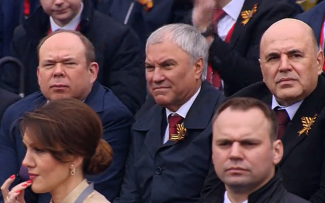

Due to US pressure, Ukraine and Russia agreed to a ceasefire from 9 to 11 May. The decision to halt the fighting was announced on 8 May by US President Donald Trump. Although there was not a complete cessation of hostilities on the front line, and both sides accused each other of violating the agreement, the intensity of clashes and shelling decreased significantly. The Ukrainians and Russians used the relative calm to carry out reorganisation, rotations and the deployment of reinforcements to the combat zones. Kyiv reportedly proposed extending the ceasefire, as announced by Foreign Minister Andrii Sybiha on 12 May, but the Russians rejected this, resuming strikes on targets deep inside Ukrainian territory.
In the days leading up to the ceasefire, there were no significant changes on the front line. The Russians made further minor territorial gains in Donetsk Oblast, the eastern part of Zaporizhzhia Oblast, and in the border regions of the Kharkiv and Sumy oblasts. The Ukrainians launched a counter-offensive in Zaporizhzhia Oblast, where, according to some sources, they recaptured further positions in the Stepnohirsk area and east of Orikhiv, as well as – without significant results – in Donetsk Oblast.

Between 8 and 11 May, Russian forces suspended air strikes on targets deep within Ukrainian territory, following up on Vladimir Putin’s announcement (the previous week he had unilaterally declared a ceasefire for 8–9 May). They also significantly reduced the use of strike drones’. According to Ukrainian data, on 9 and 11 May Russia did not deploy any large-scale air strike assets, whilst on 10 May, 27 strike drones and their decoys were recorded in the frontline zone. The previous three-day pause in attacks had taken place in May 2025 – also to coincide with Victory Day, celebrated by the Russians.
Before the ceasefire, the Russians continued to attack the defenders’ rear areas in the border and frontline regions. From the evening of 5 May until midnight on 7 May, further damage to critical, transport and industrial infrastructure occurred twice in Kharkiv, Dnipro, Zaporizhzhia and Kryvyi Rih (as a result of the attacks, the local ArcelorMittal steelworks complex suspended operations once again), and once in Mykolaiv and Odesa Oblast (the port of Pivdennyi was attacked). Power cuts caused by ongoing attacks involving drones, guided aerial bombs and artillery fire are a persistent problem in the regions behind the front line (among the larger cities, this affects Kherson).
Russia resumed air strikes on the night of 12 May, targeting locations across Ukraine. The most extensive damage, including to railway infrastructure, was reported from Dnipro and Dnipropetrovsk, whilst minor damage occurred in Kyiv, Zhytomyr and Mykolaiv Oblast, amongst others. However, the attack was on a much smaller scale than previous massive strikes. According to data from the Ukrainian Air Force Command (UAFC), 216 drones were used in the attack, whilst no missiles were deployed. In total, from the evening of 7 May to the morning of 12 May, the Russians deployed 563 strike drones or their imitators, of which 490 were neutralised, and seven missiles (all between 5 and 7 May; none were shot down). According to UAFC spokesperson Yuriy Ihnat, the Russians are increasingly using jet-powered strike drones capable of speeds of at least 400–500 km/h, meaning that missiles or interceptor drones are required to shoot them down. He emphasised that in their contacts with partners, the Ukrainians are increasingly asking for even a small number of missiles for the Patriot, NASAMS and IRIS-T systems, in the quantities of 5–10 units, as the shortage of these is most acute.

The Ukrainians struck facilities of the Russian fuel complex in Perm and Yaroslavl. The Transneft refinery and oil pumping station in Perm were hit on 7 and 8 May, and the refinery in Yaroslavl on 8 May. A fire broke out at the latter facility, but it is difficult to assess whether the attacks on the facilities in Perm were successful. A fire had been burning at the pumping station since 29 April and was only extinguished on 11 May (satellite images confirmed that six tanks had burned down), whilst no significant damage occurred at the refinery.
On 8 May, Rostov-on-Don was the target of a massive Ukrainian attack. A fire broke out at one of the industrial sites, and an air navigation facility in southern Russia was damaged – as a result, 13 airports were temporarily paralysed. Reports of Ukrainian drones being shot down also came from Grozny, where the targets were said to be the local FSB headquarters and one of the barracks complexes of the 42nd Mechanised Division. On 6 May, the headquarters of the FSB Border Guard Service in Armiansk in occupied Crimea was hit. The Ukrainian General Staff also reported that a Karakurt-class missile corvette in Kaspiysk, Dagestan, had been hit (7 May) and a military logistics complex in Naro-Fominsk in Moscow Oblast (8 May), though this has not yet been confirmed.
According to official Russian data, Ukrainian drones were said to have attacked targets on Russian territory during the night of 9 May, whilst the ceasefire was already in effect. The main targets of the attacks were reportedly Moscow and Dagestan. In total, over the course of 24 hours (up to the morning of 9 May), the Ukrainians are said to have deployed at least 467 unmanned aerial vehicles – this is the number of neutralised drones reported by the Russian Ministry of Defence. The following day, it reported the destruction of 57 Ukrainian drones, and 85 on 11 May. This information was not confirmed by local Russian sources. A few instances of Ukrainian drones striking or crashing on Russian territory were recorded only in the early hours of 9 May, which should be linked to attacks from the previous day and a delay.
On 5 May, Deputy Head of the Security Service of Ukraine Iryna Mudra stated that the first verdicts of the special tribunal on Russian aggression against Ukraine could be handed down in 2028. The final step towards the formal establishment of the tribunal will be the signing of a relevant ‘partially expanded agreement’ during the Council of Europe ministerial meeting, which will take place on 14–15 May in Chișinău. The tribunal will be based in The Hague. The process of selecting judges is set to begin by the end of this year, and the states participating in the project will be able to nominate candidates for the positions of judges and prosecutors. According to Mudra, proper investigative and prosecutorial activities will begin at the earliest at the turn of 2027 and 2028. The tribunal will examine the responsibility of around 30 representatives of the Russian Federation’s highest political and military leadership, including the President, Prime Minister and Minister of Foreign Affairs of the Russian Federation.

According to Kyiv’s assessment, Russia plans to produce 7.8 million unmanned aerial vehicles of various types and 7.3 million FPV drones by 2026. This was announced on 8 May by the Commander-in-Chief of the Armed Forces of Ukraine, General Oleksandr Syrskyi. Russia is set to increase deliveries of attack drones equipped with turbojet engines. They are also developing further, previously unplanned units to combat Ukrainian drones: four regiments, 24 squadrons and 162 batteries. Syrskyi did not specify whether the squadrons and batteries in question are sub-units within the aforementioned regiments or independent units. The expansion is primarily intended to bolster the air defences of Moscow and Krasnodar Krai. The Russians are reportedly copying the technical, tactical and organisational solutions previously employed by the Ukrainian army.
On 8 May, the Ukrainian website Slidstvo.info published an article describing Belarus’s involvement in supporting Russia’s military capabilities. According to the journalists’ findings, between February 2022 and August 2025, the value of Belarusian supplies to the Russian defence industry amounted to at least $1.2 billion, with 58 local companies supplying products to 41 Russian defence industry plants. Journalists have also established that some Belarusian companies use components sourced from Western countries, including Germany, Switzerland, the UK and the US, in their production.

On 5 May, Kyrylo Budanov, Head of the Office of the President of Ukraine, highlighted the need to establish a coordination centre responsible for recruiting foreign nationals and stateless persons to serve in the Armed Forces of Ukraine and the National Guard. In his view, Ukraine needs a centralised structure to handle all stages of the recruitment process for foreign volunteers – from identifying and selecting candidates, through transport, to training, equipping and logistical support. Work on establishing a dedicated unit within the Ukrainian Ministry of Defence is set to begin as early as May this year. According to earlier data provided by ministry representatives, volunteers from 75 countries around the world have already joined the Ukrainian Land Forces. Every month, around 600 foreign volunteers sign up for military service.
On 7 May, during the “Defence24 Days” conference in Warsaw, Valerii Zaluzhnyi, former Commander-in-Chief of the Armed Forces of Ukraine and currently Ukraine’s Ambassador to the United Kingdom, pointed out that the demobilisation of Ukrainian soldiers should be preceded by a thorough reform of the mobilisation system and the rules of military service. He emphasised the need to create a system of “smart mobilisation”, taking into account the development of military technology, the protracted nature of the war, and Ukraine’s worsening demographic crisis. He did not rule out the need to implement “temporary mobilisation”, involving the partial transfer of certain functions in this process to private companies.
On 6 May, President Volodymyr Zelensky announced that work was underway on regulations governing the activities of private military companies. The new measures are intended to allow veterans to be legally employed in the security sector and to utilise the combat experience they have gained after completing their military service. According to Zelensky, these regulations are intended to provide former soldiers with a stable source of income and to establish transparent rules for the operation of private security structures. On 8 May, Ukraine’s Minister of Internal Affairs, Ihor Klymenko, confirmed that work is underway to establish a legal framework for the activities of so-called military companies after the war ends. He noted that the aim is to develop a transparent and regulated model for the operation of private security and protection structures, which will enable Ukraine to participate in the international security services market.

According to data released on 8 May by the Ukrainian Prosecutor General’s Office, since the start of the Russian invasion of Ukraine in February 2022, over 17,400 civilians (including more than 700 minors) have been killed, and over 43,000 people have been injured. The Prosecutor General’s Office also highlighted the enormous scale of damage to civilian infrastructure. In total, over 320,000 civilian structures have been damaged or completely destroyed, including 86,000 residential buildings.

On 5 May, the US Department of State approved the possible sale to Ukraine of up to 1,200 joint direct attack munition (JDAM) tail kits, as well as 332 JDAM-ER (extended-range) tail kits, for a maximum price of $372.6 million.
On 6 May, Norway announced that it would provide Ukraine with $305 million under the mechanism for the procurement of US armaments – the so-called Prioritised Ukraine Requirements List (PURL). These funds will be used to strengthen air defence and procure long-range artillery ammunition. Oslo’s total contribution to the programme now stands at $1.36 billion.
On 8 May, the Belgian Ministry of Defence announced that it would transfer 52 F-16AM/BM fighter jets by 2029. The delivery of the first seven aircraft is scheduled to take place later this year.
In its annual report to the UN on the export and import of arms and military equipment for 2025, the Netherlands declared that it transferred 18 F-16AM fighter jets to Ukraine (bringing the total to 24 aircraft), whilst Portugal has delivered 15 M113 armoured personnel carriers and four M114A1 howitzers.
On 11 May, during a visit to Kyiv, German Defence Minister Boris Pistorius signed a letter of intent with his Ukrainian counterpart Mykhailo Fedorov regarding cooperation in the field of military technological innovation. The document provides for the creation of a joint grant programme for Ukrainian and German start-ups developing solutions in key areas of defence technology. This applies in particular to unmanned technologies, artificial intelligence, high-power lasers, new communication systems, rocket technology and other promising developments.