Magyar’s first 100 days in office: Hungary’s transformation gathers pace
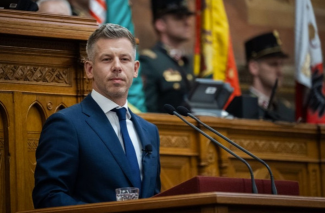
Péter Magyar’s first hundred days in office have marked Hungary’s most significant political shift since Fidesz came to power in 2010. A constitutional majority, combined with high levels of public trust, has allowed the new government to move quickly to reshape the state. Its main objectives have been to dismantle the institutional foundations of the system built by Viktor Orbán and to restore the rule of law. Legislative reforms have been accompanied by symbolic changes and reshuffles, as well as efforts to develop a new political narrative centred on national unity, rebuilding trust in state institutions and increasing transparency in public life. At the same time, the government has begun gradually reorientating its foreign policy priorities. It believes that rebuilding relations with Western partners and normalising ties with the European Union are essential to unlocking frozen EU funds, restoring Hungary’s international credibility and laying the groundwork for economic stabilisation. Sustained high levels of public support have enabled the government to pursue these measures rapidly and on a broad scale. This has become the new government’s most important political asset and a key condition for pursuing its ambitious reform programme.
However, the success of TISZA’s political project and its ability to maintain strong public support will not only depend on its legislative effectiveness. Above all, it will need to deliver lasting and tangible improvements in the functioning of the state and in citizens’ living standards.
A new narrative and symbolic politics
Symbolic politics played an important role in the first hundred days of the new government. It was deliberately used both to highlight the break with 16 years of Fidesz rule and to strengthen the new government’s legitimacy. The inauguration itself was framed as a civic event. Alongside the prime minister’s swearing-in, a public gathering was held in Kossuth Square, emphasising that TISZA’s victory was the result of popular mobilisation. The EU flag, removed more than a decade earlier, was once again displayed on the parliament building to symbolise the declared ‘Hungarian return to Europe’. At the same time, the Székely flag remained in place (the Székelys are a Hungarian-speaking ethnic group seeking autonomy in Romania). Keeping the flag signalled that the turn towards the West would not come at the expense of Hungary’s national identity policy. This included maintaining ties with ethnic Hungarian communities beyond the country’s borders. A Roma children’s ensemble also performed at the opening of the new parliamentary term, singing the unofficial Roma anthem. The gesture was intended to symbolise the state’s openness towards marginalised groups and to mark a departure from the exclusionary rhetoric of the previous government.
Symbols associated with the exercise of power played an equally important role. The prime minister’s office was moved from the former Carmelite Monastery in the Castle District to a government building near parliament. The rooms previously occupied by Orbán and his closest associates were also opened to the media and visitors. These steps were intended to highlight the scale of the privileges enjoyed by the former ruling elite and to reinforce the government’s narrative that society is ‘reclaiming the state’, as well as its republican vision of government. The removal of the security cordon around the former prime minister’s office carried a similar message. The barrier had been portrayed as a symbol of the government’s isolation from citizens. The government also announced plans to declassify documents relating to the presidential pardon scandal[1] and to conduct Hungary’s first vetting of former security service officers from the communist dictatorship. These measures were intended to mark a symbolic break with the culture of impunity among the elite and to begin the establishment of new standards of transparency in public life.
The government held its first meeting outside Budapest in Ópusztaszer, a site regarded as the cradle of Hungarian statehood, where the first assembly of Hungarian tribal leaders took place after the conquest of the Pannonian Basin. The choice of location was intended to emphasise the new government’s commitment to the traditions and continuity of Hungarian statehood, while challenging Fidesz’s monopoly over the interpretation of patriotism and national symbols. In this way, TISZA sought to demonstrate that a pro-European orientation was compatible with a strong attachment to national identity and historical heritage.
Constitutional and institutional reforms
The most far-reaching measures taken during TISZA’s first months in office concerned Hungary’s constitutional order and the functioning of its key public institutions. With a two-thirds constitutional majority, the government began implementing one of its key election pledges: to dismantle the political and legal mechanisms that had entrenched Fidesz’s influence and to restore the rule of law. The new government moved quickly to adopt a broad package of constitutional changes. It argued that an overhaul of key institutions was necessary to prevent the state from becoming paralysed. The changes were also intended to limit the ability of officials appointed by the previous parliamentary majority to obstruct government action.
The first symbolic step came in June, when a constitutional amendment introduced an eight-year limit on serving as prime minister, with previous terms counting towards the limit. In practice, this prevents Orbán from becoming prime minister again, as he has already served five terms, totalling 20 years. More significant, however, was the 17th amendment to the constitution, adopted in mid-July. It represented the most comprehensive change to Hungary’s constitutional system since the current constitution was adopted in 2011. The amendment covered the presidency, constitutional review, the organisation of the judiciary and the rules governing so-called cardinal laws. For years, these laws had been one of the main instruments used to safeguard Fidesz’s political legacy.
The early termination of President Tamás Sulyok’s term in office was the most controversial element of the reform. Under the constitutional amendment, his successor will serve as head of state during a transitional period until a new constitution is adopted, but for no longer than five years. The government justified the decision by citing a loss of confidence in Sulyok. It accused him of failing to fulfil his role as guardian of the constitution and of accepting measures adopted by the previous parliamentary majority that weakened checks and balances. The decision to cut short Sulyok’s term sparked a wider debate over the limits of using a constitutional majority to change the composition of the country’s highest state institutions.
Until a new head of state is elected, parliamentary speaker Ágnes Forsthoffer has assumed the president’s duties. Magyar announced that the presidential candidate would be selected through broad consultations and would be a figure above party divisions, capable of restoring the authority of the presidency. However, this commitment was partly undermined when the prime minister publicly named chess grandmaster Judit Polgár as his preferred candidate before the consultations had begun. The move was widely seen as a serious communication error by Magyar and contributed to the first decline in support for the governing party in opinion polls. TISZA ultimately nominated András Baka, a former president of the Supreme Court and judge at the European Court of Human Rights. Baka’s term as head of the Supreme Court was cut short in 2011 under Orbán’s government. Baka, 73, has expressed no political ambitions and is seen primarily as a respected legal authority who could provide stability to the presidency during the period of constitutional change.
The second pillar of the reform entailed an overhaul of the judiciary, focusing primarily on the Constitutional Court (CC).[2] The government restored rules that had been in place before 2012. Judges once again gained the right to elect the court’s president from among their own ranks, and their terms were shortened from 12 to nine years, with no possibility of re-election. An upper age limit of 70 was also reinstated. As a result, four of the court’s 15 serving judges, including its president, lost their seats. The government also lifted restrictions which had been introduced in 2010 on the CC’s power to review legislation concerning public finances, restoring its ability to fully assess the constitutionality of budgetary and tax laws. The reform also changed the rules for selecting presidents of the Supreme Court (Kúria), giving the judiciary a greater role in the nomination process. These institutional changes were accompanied by personnel changes. Prosecutor General Gábor Bálint Nagy resigned after repeated calls from Prime Minister Magyar to step down. The government presented his departure as necessary to ensure accountability for abuses committed under Fidesz and to unblock ongoing proceedings.
The reform also reduced the range of issues governed by cardinal laws. The number of areas requiring a two-thirds parliamentary majority had expanded significantly under Fidesz. This was intended to allow the party to retain influence over the policies of future governments even after losing power. The reform moved some areas – including fiscal policy, public finances, the management of state assets and transactions involving agricultural land – into the ordinary legislative process. It also abolished the Budget Council’s power to veto the budget. Previously, this council’s refusal to approve the budget could have led to the dissolution of parliament. In practice, this gave a body staffed by Fidesz appointees significant leverage over the new government.
The reform package also covered other elements of the political system. It introduced a 12-year limit on serving as an MP, with previous terms counting towards the limit. The rule will take effect from the next parliamentary elections. The measure is unprecedented in Europe and, in practice, will prevent a significant proportion of current Fidesz MPs from standing again. It has also proved controversial because it restricts the right to stand for election.
Experts and organisations dealing with the rule of law have offered differing assessments of the reforms. Supporters argue that, after 16 years of increasingly concentrated power, swift action was needed to dismantle mechanisms that would have allowed the former governing camp to retain influence over the state despite it having lost its parliamentary majority. Critics, however, argue that some of the measures – particularly the early termination of the incumbent president’s term – undermine legal certainty. They also warn that this could set a precedent allowing future constitutional majorities to interfere just as extensively in the functioning of state institutions. Government representatives, meanwhile, stress that the changes introduced so far are only the first stage of the transformation.
Magyar’s first hundred days in office have therefore brought in the most extensive overhaul of Hungary’s constitutional system in years. They have also opened a debate about the limits of constitutional transformation following a change of government and the balance between restoring the rule of law and preserving constitutional continuity. The government plans to draft a new constitution in the coming months and to pursue further institutional reforms, including changes to the electoral system, the method of electing the president and measures to strengthen media pluralism.
A comprehensive reckoning with Fidesz rule
Holding Fidesz to account for its 16 years in power is one of the pillars of TISZA’s political agenda and a key demand of its electorate. The new government presents this process as part of its efforts to restore the rule of law, re-establish accountability among public officials and to recover assets and institutions that, in its view, were subordinate to the interests of the previous government. These efforts go beyond investigating possible violations of the law. They also aim to weaken Fidesz’s political, economic and media base over the long term by limiting the influence of affiliated foundations, businesses, media outlets and personal networks within the state administration.
The establishment of the National Asset Recovery and Protection Office (NVH) was a key instrument in this process. This body is responsible for auditing public assets, reviewing decisions taken by the previous government and recovering assets transferred in recent years to entities outside direct state control. Furthermore, the government launched a review of major public procurement procedures and contracts concluded by the Fidesz administration. It also announced investigations into corruption, the misuse of public assets and other actions deemed harmful to the interests of the state. Hungary’s accession to the European Public Prosecutor’s Office (EPPO) was intended to further strengthen the credibility of these efforts by enabling independent investigations into abuses affecting the EU’s financial interests.
The accountability process also extended to the business and institutional networks associated with the previous government. The new authorities announced audits of companies and investments involving business groups linked to oligarchs close to Fidesz, above all Lőrinc Mészáros, who is regarded as the main beneficiary of public contracts and state investment under Orbán. The government also began reviewing the legality of infrastructure contracts, acquisitions of state assets and projects financed with public funds, including EU funds. New legislation allows the state to recover assets acquired unlawfully or through privileged access based on political connections. At the same time, the government announced plans to abolish the public interest foundations (KEKVA) that had taken control of numerous universities, including Mathias Corvinus Collegium (MCC), an institution regarded as central to educating Fidesz’s intellectual elite.
A reform of the media system is another important part of the accountability process. The new government identified the public media as one of the main instruments used to entrench Fidesz’s political dominance. It began the reform by replacing the management of MTVA, the company responsible for financing and managing the public media, and by suspending news broadcasts on M1 television and Kossuth Radio. For several days, the news was replaced by a message apologising for years of disseminating propaganda and a pledge to build an independent public media. News broadcasts resumed under new editorial rules once the reorganisation was completed. At the same time, the government began reforming media legislation. The changes include dismantling the existing MTVA structure, restoring the independence of the state news agency MTI and changing the rules governing oversight of the public media. The government also announced plans to weaken the financial base of Fidesz’s media network by ending state advertising in outlets grouped under the KESMA foundation and reviewing the rules for public funding of the media. These measures are intended to weaken the economic foundations of the media dominance built under Orbán and create a more competitive media market.
Foreign policy: rebuilding ties with the West
The first months of Magyar’s government brought a clear shift in both the direction and style of Hungary’s foreign policy. The new authorities focused on rebuilding relations with the country’s Western partners, particularly the EU, and restoring Hungary’s credibility as a predictable international actor. They also sought to end the country’s long-standing political isolation. The shift has not, however, extended to all areas. On issues regarded as strategic to Hungary’s economic and energy security, the government has maintained a pragmatic approach. It has so far retained some elements of Orbán’s policies towards Russia and China. Magyar’s government has therefore sought to combine a pro-European foreign policy with the protection of Hungary’s key economic interests.
Unlocking €16.4 billion in EU funding from the Cohesion Fund and the Recovery and Resilience Facility (RRF) has been a key priority for the new government. To this end, it pledged full cooperation with the European Commission on reforms concerning the rule of law, transparency in public spending and the independence of state institutions. The European Commission concluded that Budapest had presented a credible institutional framework for the gradual release of the funds. The government also announced steps towards ending the procedure launched against Hungary under Article 7 of the Treaty on European Union over the risk of a breach of EU values, including the rule of law. For years, the procedure had symbolised Hungary’s conflict with EU institutions. Hungary’s approach within the European Council has also changed significantly. The government has moved away from frequently blocking decisions and using its veto as a tool of political pressure. Instead, it has prioritised a return to constructive cooperation.
At the same time, the government took steps to rebuild relations with Hungary’s key European partners. Prime Minister Magyar made his first foreign visits to Poland, Austria, Germany and France, signalling his intention to re-anchor Hungary in the European integration mainstream and to restore trust in Budapest after years of tensions with key EU member states. The talks focused on strengthening political and economic cooperation and increasing Hungary’s role in shaping common EU policies, particularly on security, competitiveness and the energy transition. The new government also abandoned the rhetoric that portrayed Brussels and the largest EU member states as threats to Hungarian sovereignty. Instead, it emphasised cooperation, dialogue and compromise as the main tools for advancing the country’s interests.
Reviving cooperation within the Visegrád Group (V4) has become a pillar of the government’s regional foreign policy. Magyar’s government concluded that differences among the V4 countries over Russia and Ukraine, combined with the previous government’s confrontational policies, had marginalised the group. It therefore sought to restore the V4’s role as a platform for coordinating the positions of the Central European countries. These ambitions were symbolised by Magyar’s first foreign visit, to Poland, and by the V4 summit in Gödöllő, held under the slogan ‘The V4 is back’. Regular consultations between prime ministers ahead of European Council meetings also resumed, as did meetings of defence ministers. Furthermore, Magyar proposed either expanding the Visegrád Group or developing cooperation through a V4+ format. This would involve partners from outside the group in selected initiatives, with Austria, Croatia, Germany and Slovenia among the countries mentioned.
Hungary’s policy towards Ukraine has also undergone a clear shift. The new government has abandoned its predecessor’s confrontational rhetoric while maintaining a firm stance on protecting the rights of the Hungarian minority in Transcarpathia. An agreement reached with Kyiv in June to expand these rights laid the groundwork for improving bilateral relations and allowed Ukraine’s EU accession negotiations to move forward. Hungary subsequently supported the opening of the first (and then the second) negotiating cluster, which Orbán’s government had blocked for months. At the same time, Magyar’s government opposes placing Ukraine on a ‘fast track’ to EU membership. It argues that progress in the negotiations should depend on meeting the accession criteria, including full respect for the rights of national minorities. This marks a shift away from routinely blocking initiatives concerning Kyiv, but preserves Budapest’s ability to use EU instruments to protect its interests.
Relations with Moscow have also shifted. The new government has abandoned the pro-Russian rhetoric associated with Orbán, has unequivocally identified Russia as the aggressor in the war against Ukraine and consistently condemned Russian attacks, including those targeting Transcarpathia. Unlike its predecessor, it has also raised no objections to EU sanctions against Russia. Hungary nevertheless remains the country most dependent on Russian energy. So far, the government has continued importing Russian energy resources and has not suspended the expansion of the Paks nuclear power plant. However, it has begun to gradually diversify its energy supplies and deepen its cooperation with its Western partners, particularly the United States, in the field of nuclear energy. Magyar’s government also plans to review the agreement with Rosatom to build new reactors. The partial shutdown of the Paks plant in August due to record-low water levels in the Danube strengthened the case for reassessing the project. Magyar argued that facilities so heavily dependent on the availability of cooling water are no longer being built today.
The policy on China has remained pragmatic. So far, the new government has not withdrawn from major investments by Chinese companies such as BYD and CATL. However, it has announced a review of existing agreements, tighter requirements on transparency and environmental protection, and an end to preferential treatment for Beijing. The first test of this approach came when operations at Semcorp’s plant in Debrecen were suspended after breaches of environmental regulations were identified. The move signalled the government’s willingness to enforce regulations in line with EU standards on foreign investors, regardless of their economic importance. As a result, cooperation with China has continued primarily in the economic sphere, but without the special political dimension it acquired under Orbán.
Challenges and prospects
Strong support for the governing party – 68% according to a July poll by Medián – stems primarily from the perception that the new parliamentary majority has moved quickly to fulfil its key election promises. In just one hundred days, the government launched a broad overhaul of state institutions, began rebuilding relations with the EU and countries in the region, took steps to unlock EU funds, and initiated a process of political and legal accountability for figures associated with the previous government. For now, public perceptions of the government are therefore shaped mainly by the pace of change and the sense that it is consistently implementing its agenda, rather than by tangible results. The government’s first months in office have thus been a classic political ‘honeymoon’, with high public expectations and trust granting it a broad mandate to take swift and far-reaching decisions. The weakness of Fidesz has also worked in its favour. The party remains on the defensive, focusing mainly on defending its achievements and criticising the government’s efforts to hold the previous administration to account.
TISZA’s political advantage rests largely on sustained high levels of public trust. In the coming months, this support will need to be underpinned by lasting improvements in the functioning of the state and in household finances. The economy is likely to be the main test of whether the government can maintain its current popularity. Magyar’s government inherited a budget deficit forecast by the European Commission to reach 6.2% of GDP in 2026, public debt of around 75% of GDP and the highest debt-servicing costs in the EU. This leaves the government with limited room for manoeuvre. It will make it difficult to pursue ambitious social reforms and investment while also consolidating public finances. In the coming months, the government will have to balance public expectations of higher wages, better public services and increased spending on healthcare and education with the need to maintain fiscal stability and credibility with investors and EU institutions. Improved relations with Brussels increase the prospects of unlocking EU funds and could provide an impetus for economic growth, but they will not resolve the structural problems facing the Hungarian economy.[3]
While Magyar’s first hundred days in office were dominated by constitutional reforms and efforts to rebuild Hungary’s international standing, in the coming months the focus will inevitably shift towards economic policy. Whether the government can sustain its current high level of support will depend on its ability to reduce the deficit, stimulate economic growth, increase investment and deliver tangible improvements in citizens’ living standards. Otherwise, the political importance of its successes in institutional reform and holding Fidesz to account will gradually diminish. Instead, the new government will increasingly be judged on its ability to address citizens’ everyday concerns.
[1] See I. Gizińska, ‘Hungary: resignation of President Novák’, OSW, 13 February 2024, osw.waw.pl.
[2] See eadem, ‘Amending Hungary’s Constitution to dismantle Fidesz’s grip on power’, OSW, 14 July 2026, osw.waw.pl.
[3] See eadem, ‘Stable stangnation: Hungary’s economic standing after 16 years of Orbán’s rule’, OSW Commentary, no. 719, 20 March 2026, osw.waw.pl.