The Russians are regrouping their forces. Day 1434 of the war

Over the past week, Russian troops have intensified their offensive activity in the area of Vovchansk. Russia continues its attempts to break through along the eastern bank of the Donets River towards the south, thanks to which it has taken control of Synelnykove, Tsehelne, Vilcha and Symynivka, and also most likely Starytsia on the other side of the river. These actions are facilitated by low temperatures and frozen waterways, which facilitate the efficient movement of infantry. The Russians’ progress is supported by a special drone unit of the Russian forces, “Rubicon”, which effectively limits the logistical capabilities of the defenders. At the same time, fighting continues south-east of Vovchansk, where the invaders are trying to advance towards the village of Bilyi Kolodiaz.
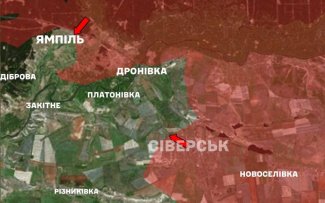
Ukrainian sources report that the Russians are concentrating their military forces in the area of Siversk and the Serebriansky Forest in order to intensify their offensive towards Sloviansk. However, this has not yet resulted in any significant progress. Russia’s key task in this direction remains to capture the southern bank of the Donets River and occupy the dominant heights east of Rai-Oleksandrivka.
The Russians have partially withdrawn from their positions on Oleksiivska Island near Oleshky on the left bank of the Dnipro River in Kherson Oblast. This area, located in the immediate vicinity of Kherson, was used by the occupiers as a location for artillery positions, military equipment and a logistics point. According to the Ukrainian Defence Forces “South”, the enemy is preparing to transfer units to the Orikhiv area in order to maintain the rapid pace of offensive operations in Zaporizhzhia Oblast.

The Russian militery continues its massive combined attacks on energy infrastructure. From the evening of 20 January to the morning of 27 January, it used a total of 1,072 drones, including 965 strike “Shaheds”, and 24 ballistic and cruise missiles. Ukraine declared that they had neutralised 929 unmanned aerial vehicles and shot down 14 missiles.
The largest attack took place on the night of 23–24 January, when Russia used over 375 drones and several types of missiles (including Zircon anti-ship missiles). The targets were energy and residential infrastructure facilities in Kyiv (one person was killed, several were injured, and over 800,000 consumers were left without electricity), in Kharkiv (the attack lasted two and a half hours, 30 people were injured, and a maternity hospital was among the targets) and other cities (a total of over 170 facilities, including 80 residential buildings). The attack on the capital damaged buildings of the Kyiv Pechersk Lavra monastery complex, a UNESCO World Heritage Site and other buildings. As Prime Minister Yulia Svyrydenko emphasised on 25 January that the effects of the strike, due to the damage caused in previous days and the extremely difficult weather conditions, were the most serious for the energy sector since 2022. As many as 85% of consumers throughout Ukraine are thought to have been deprived of access to electricity (so far, power has been restored to 60% of users).
Over the past week, Russian attacks have targeted energy infrastructure facilities across Ukraine, affecting Zaporizhzhia (20, 21, 25 January – the attack lasted a total of several hours), Kryvyi Rih (21 January), Kharkiv (20, 21, 23, 25, 26 January – over 1.1 million residents of the city and the entire Kharkiv Oblast were left without electricity), Kherson (21 and 27 January – a residential tower block in the city centre was among the targets hit), Dnipro (22 January), Sumy (23 January), Odesa (26 and 27 January) and towns in the Zhytomyr (23 January), Chernihiv (24 January), Mykolaiv (26 January) and Lviv (27 January) oblasts.

On the night of 22–23 January, the Ukrainian Defence Forces carried out an attack with unmanned aerial vehicles on fuel storage facilities in Penza belonging to the Penzanefteprodukt company. Published satellite images show that at least one fuel tank was completely destroyed, while several others show signs of damage. This base is part of the Rosneft corporation and one of the largest fuel facilities in the region. It consists of 18 tanks with a total capacity of approximately 21,600 m³. The facility is responsible for supplying fuel to the civilian sector and military units of the Russian Federation and serves as a regional transhipment and distribution point. Penza is located more than 500 km from the border with Ukraine.
On the night of 25–26 January, Ukrainian strike drones attacked the infrastructure of the Slavyansk EKO refinery in Slavyansk-on-Kuban, Krasnodar Krai. According to a statement released by the General Staff of the Armed Forces of Ukraine, elements of the oil processing facility were hit. However, the extent of the damage remains unknown.

On 20 January, the US Army placed an order for 65 COMMANDO armoured personnel carriers to be delivered to Ukraine. The contract is worth $163.4 million. It is part of one of the aid packages under the Ukraine Security Assistance Initiative (USAI), announced by the Joe Biden administration. No delivery date has been disclosed.
On 22 January, during a visit to Kyiv, Norwegian Defence Minister Tore Sandvik announced that his country had provided Ukraine with a significant number of anti-aircraft missiles for NASAMS air defence systems, but did not provide specific details. He also declared further deliveries this year.
On the same day, summarising its activities in 2025, the French Ministry of Defence announced that it would expand its participation in the EUMAM mission to train Ukrainian soldiers in Poland. A new module has been added to the existing modules run by French trainers (reconnaissance, command, marksmanship, hand-to-hand combat, infantry sub-unit tactics) – training in the technical maintenance of VAB armoured personnel carriers, of which Paris has supplied a total of 414.
On 26 January, during a press conference, German Defence Minister Boris Pistorius admitted that Berlin is unable to supply Ukraine with additional Patriot air defence systems from its own resources (Germany has promised a total of three complete batteries and six launchers). So far, the Bundeswehr has transferred 3 of the 12 Patriot batteries it had to Ukraine.

From 1 January to 31 July, compulsory military registration is underway in Ukraine for young men turning 17 this year. Their details are entered into the Unified State Register of Conscripts and Reservists. No military medical examinations are required at the registration stage. These will be carried out later, before conscription into basic military service or the start of basic training. Failure to meet the registration deadlines may entail an administrative liability, including a fine of up to 25,000 hryvnia (approximately $580).
On 23 January, Ukrainian Defence Minister Mykhailo Fedorov announced the launch of the Mission Control project, an integrated digital system that will connect all drone operations to a central command centre. The project assumes that each crew will enter operational data into the system: the type of unmanned aerial vehicle, the launch site, the flight route, the target and the nature of the mission. According to the minister, the next stage will be the implementation of a similar command system for artillery.
On 26 January, Fedorov announced that military units that joined the “Army of Drones. Bonus” programme eliminated 240,000 Russian soldiers last year, as well as making 62,000 hits on light enemy military equipment, 29,000 hits on heavy equipment and 32,000 hits on unmanned aerial vehicles. In total, Ukrainian drones are responsible for nearly 820,000 hits on enemy targets. Among the most effective formations were the Madyar’s Birds, the SBU Alpha Special Unit and the Lazar Group.

On 21 January, Ukrainian military intelligence (HUR) published data on companies involved in the production of Russian 9M727 manoeuvrable missiles used in the Iskander-K missile system. According to the intelligence findings, the key company in the production cycle is the Novator Research and Design Bureau, which belongs to the Almaz-Antey corporation. HUR also disclosed data on 39 Russian companies and one Belarusian one involved in the production of warheads, turbojet engines and their components, satellite and inertial navigation systems, as well as other electronic components used in Iskander-K missiles. HUR drew particular attention to the fact that eight of the 41 companies listed have not yet been subject to sanctions by any of the countries belonging to the sanctions coalition. These include Tambov Elektropribor, JSC High Technologies and Volzhsky Electromechanical Plant.
On 24 January, the deputy head of the Foreign Intelligence Service of Ukraine, Oleh Luhovskyi, pointed out that the Belarusian military-industrial complex has become strongly integrated with the Russian one, and that over 80% of Belarusian companies participate in the implementation of the Russian State Defence Order and the Russian State Armament Programme for 2025–2034. Belarusian companies are involved in, among other things, the repair of armoured and rocket and artillery weapons, the maintenance of communications equipment and automatic control systems, the servicing of aviation equipment, and the supply of artillery shells and unmanned systems.
During his speech at the Davos Forum on 22 January, President Volodymyr Zelensky argued that Russia is currently losing 35,000 soldiers per month. According to him, this is a significant increase compared to estimates from a year ago, when it was losing 14,000 soldiers per month. He emphasised that the Russian army is mobilising between 40,000 and 43,000 men per month, but about 10–15% of them desert or are wounded in combat.
On 24 January, during an attack on helicopters in the Kropyvnytskyi area, Russian forces used “Shaheds” equipped with Starlink satellite terminals for the first time. This allows the Russians to coordinate the flight of unmanned aerial vehicles in real time and hit their targets with precision.

On 23 January, the Ukrainian Foreign Intelligence Service reported that the Kremlin had approved the so-called Strategy for the Sustainable Development of the Azov Region until 2040. This document, under the guise of long-term socio-economic planning, aims to justify the illegal annexation of the temporarily occupied territories of Ukraine and their incorporation into the Russian legal, administrative and economic space. The strategy formally covers seven entities of the Russian Federation, including the Autonomous Republic of Crimea and the occupied oblasts of Donetsk, Luhansk, Kherson and Zaporizhzhia. The document is another step towards legitimising the occupation through bureaucratic and economic means. It provides, among other things, for improving the quality of municipal services for 2.58 million people, creating “comfortable living conditions” for 750,000 residents, and achieving 23.6 million tourist arrivals per year. The disposal of sunken ships in the Sea of Azov and far-reaching changes in the water management systems of the Don and Dnipro rivers have also been announced. The document does not include information on the sources of financing the strategy.

On 21 January, the mayor of Kyiv, Vitali Klitschko, announced that, since the beginning of the year, approximately 600,000 people had left the Ukrainian capital. The mayor’s press office explained that this figure is based on data from mobile phone operators. The current situation is in part influenced by residents leaving for other cities, extended holidays, and distance learning – many students are participating in online classes while residing outside the capital. On 23 January, Klitschko appealed to residents – both those who remain in the city and those who have the opportunity to leave – to stock up on food, water and essential medicines. He stressed that the situation is very difficult and may deteriorate further.
The Kyiv City Military Administration has not confirmed the reports that more than half a million people have left, saying that if such a large number of electricity consumers had left the capital, the situation in the energy sector would probably not be so critical. On 26 January, President Zelensky announced that almost 60% of consumers in Kyiv remain without electricity, and approximately 1,200 apartment blocks in the capital still have no heating. He also pointed out that the most difficult situation is in the Kyiv, Kharkiv, Sumy, Chernihiv and Dnipropetrovsk oblasts. The Ministry of Internal Affairs is increasing the number of support and heating points for residents (there are currently over 1,300 so-called steadfastness points in Kyiv, providing residents with access to basic services in crisis conditions). Zelensky stressed that it is crucial to keep mobile communication base stations operational. The Prime Minister and the Minister of Defence are to verify data on the exemption from military service for employees of energy companies and municipal enterprises dealing with the aftermath of Russian attacks.