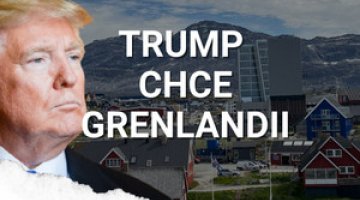
Trump escalates dispute over Greenland by targeting European allies with tariffs
On 17 January, US President Donald Trump announced that he will impose 10% tariffs on products from eight European countries: Denmark, Norway, Sweden, Finland, Germany, France, the Netherlands, and the United Kingdom. The tariffs are set to take effect on 1 February and rise to 25% from 1 June; they will remain in place until Greenland is sold to the United States. Trump’s move comes in response to the deployment of troops from these countries to the island. He argued that acquiring Greenland is necessary to protect it from Russian and Chinese influence, citing Denmark’s perceived weakness. Stephen Miller, the President’s Homeland Security Advisor, stated that Denmark cannot effectively control a territory it is incapable of defending.
In response to President Trump’s decision to impose new tariffs, the ambassadors of the EU’s member states held an extraordinary meeting in Brussels on 18 January; an emergency session of the European Council is also scheduled for 22 January. The EU is considering how to respond to the US move, but it is yet to muster a majority in favour of the most robust measures, such as triggering the Anti-Coercion Instrument (ACI; see ‘Right of retaliation: the EU rolls out a tool to protect itself against economic blackmail’). The European Parliament is likely to withhold ratification of the instruments required to implement the trade agreement negotiated with the United States in August 2025.
President Trump is seeking to take control of Greenland, rather than to ensure greater European involvement in the island’s defence, and is willing to exert significant pressure on Europe to compel it to accept US intentions. The EU possesses tools for responding to external economic coercion, but there is currently no consensus on deploying them against the United States. Direct talks between the EU’s leaders and President Trump will prove decisive. Russia, for its part, has welcomed the soaring transatlantic tensions, hoping that the rift widens further and can be exploited to advance its policy objectives regarding Ukraine, Europe, and the United States.
Commentary
- Trump’s actions indicate that he is seeking to take control of Greenland and is prepared to use various instruments of pressure to bring European allies into line. The president’s approach to this issue is largely driven by his personal ambition, while some of his advisers may view it as a tool for undermining European unity. As the dispute continues to escalate, any concessions by Trump would deal a heavy blow to his image. The International Emergency Economic Powers Act (IEEPA) will most likely form the legal basis for the new tariffs, although this law is the subject of a constitutional dispute between the president and the US Congress. At present, it remains unclear how the tariffs will be implemented. In the past, the US president has either withdrawn previously announced tariff hikes or failed to follow through on them. A forthcoming ruling by the US Supreme Court on the administration’s use of the IEEPA to impose tariffs may prove significant. The court could strike down the president’s authority to take such action, thereby invalidating the proposed tariffs. However, its ruling may be more limited in scope, given the serious implications for the current administration’s overall trade policy. Congress is also considering a resolution that would restrict the use of US Armed Forces in Greenland. A similar proposal relating to Venezuela recently failed in the Senate; in the case of Greenland, forming a coalition capable of overriding a probable presidential veto appears unlikely.
- European leaders hope to persuade Trump to soften the US position during direct talks in Davos on 21 January. While the EU has the tools to deliver a robust economic response to actions of this kind, both the European Commission and major member states – with the exception of France, which has taken the most assertive stance – continue to treat the possibility of using these instruments primarily as leverage in negotiations. France’s call to trigger the Anti-Coercion Instrument (ACI), which could include measures such as blocking US investments in the EU, has failed to gain majority support among the member states. The European Parliament’s likely decision to suspend ratification of the regulations required to implement the trade agreement with Washington would signal that the member states and the Commission could also impose retaliatory tariffs on US goods, as foreseen in the event that the agreement fails to enter into force. Europe’s negotiating position will largely depend on the degree of coordination between the EU, the United Kingdom, and Norway, and on the stance of Italy, which is currently positioning itself as a mediator in talks between the Trump administration and the governments affected by Washington’s actions. The dependence of many European countries on the United States in matters of security and energy supply remains a key constraint on the EU’s room for manoeuvre.
- Russia has welcomed the deepening transatlantic crisis with barely concealed satisfaction, as this outcome has long been one of its key strategic objectives. Kirill Dmitriev, Vladimir Putin’s envoy who has participated in talks with the United States, described Trump’s decision as a sign of the collapse of the Western alliance and suggested that Europe will yield to US pressure. He also stated that Putin had expressed understanding of Washington’s pursuit of the annexation of Greenland. Kremlin spokesperson Dmitry Peskov said that Moscow was closely following developments and added that, should the United States annex Greenland, Trump would go down in world history. Russia has refrained from condemning US moves, hoping that actions grounded in a sphere-of-influence logic will widen the rift among Western allies and lay the groundwork for talks between Washington and Moscow, including on the status of Ukraine. Russia is likely to intensify its missile strikes on Ukraine, aiming to trigger a humanitarian crisis during the winter months. Regarding Europe, Russia is expected to escalate its so-called hybrid operations, partly to test the US response.