Sometimes it is better not to talk. Pitfalls of potential dialogue between Europe and Russia
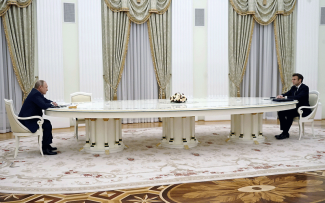
In recent weeks, discussions have intensified regarding the possible resumption of dialogue – including at the highest political level – between the European Union, its Member States, and the Russian Federation. This debate has unfolded in the context of ongoing peace negotiations involving the United States, Ukraine, and Russia. The need to return to such talks was articulated, for example, by the President of France, Emmanuel Macron, in autumn 2025 and again in January 2026. On the latter occasion, he was supported by the Prime Minister of Italy, Giorgia Meloni. Positive statements in this regard were also made by representatives of Austria, the Czech Republic, Greece, and Luxembourg, as well as – traditionally – the leaders of Hungary and Slovakia. By contrast, critical positions were expressed by representatives of Germany and the Baltic States, as well as by the EU High Representative for Foreign Affairs and Security Policy, Kaja Kallas.
During informal discussions, a proposal emerged to appoint an EU Special Envoy for Dialogue with Russia. Among those mentioned as potential candidates for this position were the President of Finland, Alexander Stubb, his predecessor Sauli Niinistö, and the former EU Commissioner for Competition, Margrethe Vestager of Denmark. At present, however, the European Union lacks the consensus required to proceed with such a decision.
Contrary to the intentions of those advocating dialogue with Russia, attempts to resume it will not strengthen Europe’s position vis-à-vis Moscow – instead, they will likely weaken it. It will also hamper efforts to bring the conflict in Ukraine to an end and encourage Russia to continue or even escalate its so-called hybrid war. It might also hinder further support to Ukraine and generate political divisions in Europe. The defence of Europe’s interests and security would require any future negotiations with Moscow to be conducted from a position of strength, following the prior weakening of Russia as a result of sustained European sanctions pressure and continued support for Ukraine.
Arguments advanced by proponents of resuming dialogue with Moscow
To date, direct contacts between Europe and Russia have largely remained frozen since February 2022. Notable exceptions include telephone conversations between President Macron and Vladimir Putin in July 2022 and July 2025, as well as similar exchanges involving Chancellor Olaf Scholz in December 2022 and November 2025. Limited contacts have also been maintained within multilateral forums, notably under the auspices of the United Nations and the Organization for Security and Co-operation in Europe (OSCE).
The principal argument advanced by proponents of resuming dialogue with Moscow concerns the need to safeguard Europe’s interests within the framework of the ongoing US–Ukraine–Russia negotiations. There is a widespread conviction that the European Union and European states cannot permit Washington and Moscow to dictate the terms of a peace settlement in Ukraine in a manner that would affect Europe’s fundamental security interests. Particular emphasis is placed on the issue of arms control in the post-war period and the necessity of engaging Russia directly in discussions on this matter. A number of Member States maintain that it is important to demonstrate to Washington that Europe has its own channels of direct communication with Moscow and is not merely a passive observer. In the background lies the concern that a peace settlement might lead not only to the normalisation of US–Russian relations but also to the resumption of intensive economic cooperation between the two states at the expense of European economic interests. This apprehension is reinforced by lobbying efforts in certain European states by segments of the business community advocating a return to trade and energy cooperation with Moscow. Finally, in some Member States there is growing fatigue with the costs associated with sanctions imposed on Russia, coupled with apprehension regarding the risk of direct confrontation.
Russia’s attitude towards Europe
To analyse the consequences of attempts to resume dialogue with Russia, it is necessary to recapitulate Moscow’s attitude towards Europe.
The objectives of Russia’s policy towards Europe have remained unchanged for decades. They include:
- the acquisition of strategic control over Eastern European states formerly constituting part of the USSR (primarily Ukraine), as well as the establishment of a buffer security zone in Central Europe, entailing partial demilitarisation, the withdrawal of allied forces, and far-reaching limitations in the military sphere and on military activity more broadly;
- the removal of the United States’ military presence and influence;
- the opening of Europe to Russian political and economic penetration.
These objectives were reflected in Moscow’s publicly articulated demands (including in December 2021)[1] as well as in its earlier initiatives.[2]
For over two decades, Russia has been conducting a so-called hybrid war against European states, which has escalated markedly in recent years.[3] Its objectives include the weakening and destabilisation of states and institutions, the intimidation of societies and elites, the exacerbation of internal divisions and distrust of governments, armed forces, and other public institutions, as well as the potential preparation of the ground for Russian military aggression. The most conspicuous manifestations of this hybrid war include:
- waves of major cyberattacks (including in Estonia in 2007; Germany in 2015, 2021; the Netherlands in 2017 and 2018; Poland in 2025);
- attempts to interfere in elections and referendums, as well as efforts to exacerbate political crises (in the United Kingdon in 2016; Germany in 2016; Montenegro in 2016; France in 2017; Spain in 2017; Greece/North Macedonia in 2018; Moldova in 2025);
- bomb attacks, acts of arson, and other terrorist attacks (in Bulgaria in 2011, 2015, and 2020; the Czech Republic in 2014; Germany and the UK in 2024; Poland in 2024–2025);
- damage to subsea critical infrastructure in the Baltic Sea (2024–2025);
- attempts to trigger or sustain artificially induced migration crises (in Finland and Norway in 2015; Poland and Lithuania since 2021);
- attacks involving the use of chemical weapons (in the UK in 2006 and 2018; Bulgaria in 2015);
- political assassinations (UK in 2012–2017; Germany in 2019);
- major violations of airspace by combat aircraft and unmanned aerial vehicles (including in Poland, Estonia, Romania, and Moldova in 2025);
- large-scale disinformation campaigns conducted across numerous European states.
For approximately two decades, Russia has been preparing its armed forces for an armed confrontation with NATO. These efforts intensified in 2013 and again in 2021. Changes introduced in both organisational structure and training routine, as well as investments in equipment and combat assets, the expansion of military structures, and increases in force strength testify to Moscow’s intensive preparations for potential offensive operations in the European theatre. Despite the substantial engagement of the Armed Forces of the Russian Federation in the war against Ukraine and the heavy human losses incurred (over 300,000 killed and approximately one million wounded), these undertakings appear to be proceeding according to plan. For example, according to official information, in 2025 the Armed Forces of the Russian Federation established five new divisions, 13 brigades, and 30 regiments; the creation of a further four divisions, 14 brigades, and 39 regiments is planned for 2026.[4]
Russia perceives European states as largely hostile, yet at the same time weakened by internal challenges (political polarisation, social tensions, and economic difficulties), regarding this as a window of opportunity in the context of its own aggressive actions.
The hallmarks of European political culture, such as a search for compromise, the inclination to avoid conflict and the use of force, the preference for de-escalation, and the desire to minimise risk are perceived by Russia’s elites as manifestations of structural weakness. The immediate assessment of Europe’s significance depends, among other factors, on the state of transatlantic relations: Europe’s weight increases when the continent adopts a more assertive stance vis-à-vis Washington, although internal divisions within these relations are considered an element of its perceived weakness.
At present, Moscow regards key European states – including those on NATO’s north-eastern flank – as the principal obstacle to achieving victory in Ukraine. This assessment is linked to the United States’ withdrawal from financial support for Kyiv and from the provision of direct arms deliveries, as well as to Moscow’s expectations of engaging Washington in dialogue on the resumption of economic cooperation. In this context, the European Union and the United Kingdom have assumed the primary burden of supporting Ukraine and progressively expanding sanctions against Russia, thereby increasing the costs of aggression for Moscow and complicating its ability to secure a favourable turning point in the war. This, in turn, has contributed to a rise in the aggressiveness of Moscow’s rhetoric and actions towards selected European states.
Russia does not approach the prospect of negotiations on arms control in good faith, including in the context of a potential settlement of the conflict in Ukraine. For Moscow, this issue represents an instrument for pursuing its aggressive objectives vis-à-vis Europe and generating divisions among European states. Russia has no intention of making concessions regarding the deployment of forces on its own territory and regards the absence of military transparency as one of the instruments of its policy. Moreover, it was actions undertaken by the Russian Federation in violation of the principal arms control agreements – including the Treaty on Conventional Armed Forces in Europe (CFE), the Intermediate-Range Nuclear Forces (INF) Treaty, and the Open Skies Treaty – as well as confidence- and security-building measures (notably the Vienna Document) that led to their erosion.[5]
The consequences of resuming dialogue with Moscow
A potential return to dialogue with Russia, especially if conducted at the highest level, will have a number of negative consequences for the situation in Europe.
First, it would strengthen the internal legitimacy of the Putin regime and facilitate the continuation of its aggressive foreign policy. One of the principal sources of the regime’s relative stability lies in the perception among Russia’s elites that its policies are effective, while the actions of states regarded as hostile are seen as unsuccessful. Against this backdrop, the resumption of dialogue would be interpreted by these elites as evidence of the failure of Western attempts to isolate Russia and to induce a change in its policy. It would constitute a further significant step in this direction, following the reopening of such dialogue by the Trump administration.
Consequently, certain internal resistance – on the part of certain segments of the Russian government and business circles – to increased war expenditure, the militarisation of the state, and the further consolidation of the neo-totalitarian character of the Putin regime would likely be weakened.
Second, it would harden Russia’s position regarding the terms of any freezing of the conflict in Ukraine. Dialogue would not alter the objectives or policies of the Russian Federation vis-à-vis Ukraine or Europe. Moscow would adhere to its maximalist demands, aimed at the de facto capitulation of Ukraine, its demilitarisation, and the curtailment of its sovereignty. The conduct of such dialogue would be interpreted in Moscow as a manifestation of European weakness and anxiety, as well as of war fatigue and sanctions fatigue among European societies and governments. This perception would, in turn, reduce Moscow’s concerns regarding the use – by Europe – of coercive instruments against it, such as increasing support for Ukraine and expanding sanctions.
Third, it could adversely affect European support for Ukraine. States sceptical about further military assistance to Kyiv might argue – echoing narratives disseminated by Russian propaganda – that peace negotiations cannot succeed as long as Europe continues to purchase and supply weapons to Ukraine, particularly missile systems capable of striking targets deep within the territory of the Russian Federation. Such actors could contend that these deliveries risk further escalation of the conflict, while undermining the talks with Moscow.
Fourth, it would not improve Europe’s position vis-à-vis Russia in comparison with the United States, nor would it enhance Europe’s perceived agency in Moscow’s eyes. On the contrary, initiatives undertaken by European states – following the lead of the United States – to return to talks with the Kremlin would be interpreted by the latter as a sign of European weakness and desperation, reflecting fears of marginalisation. Moscow would regard such steps as effectively compelled by Washington’s stance, thereby demonstrating the lack of autonomy and independent agency in European policy. Moreover, the Kremlin would perceive in these efforts an attempt to join a kind of race between the United States and Europe towards the normalisation of relations with the Russian Federation. This, in turn, would be assessed in Moscow as a success of Russian policy, further weakening the position of European states in their dealings with Moscow. Such an interpretation is evidenced, among other things, by certain ironic statements made by representatives of the Kremlin and by narratives used in state propaganda.
Fifth, Moscow would interpret a return by European states to dialogue as evidence of the effectiveness of its so-called hybrid war against them, which could in turn prompt the Kremlin to escalate it incrementally. In particular, an increase may be expected in the intensity of disinformation campaigns, cyberattacks, attempts to interfere in elections, and other forms of political and physical sabotage. The Kremlin would be further reinforced in its conviction that Russia’s aggressive actions in its neighbourhood and against individual Western states trigger Western initiatives aimed at normalising relations with it. Past examples frequently cited in this context include the US reset and Europe’s Partnership for Modernisation initiative of 2009, the Russian interference in the 2017 French election, and subsequent attempts to improve relations between France, the EU, and Russia during President Macron’s first term (2017–2022[6]).
Sixth, the potential establishment of the post of an EU Special Envoy for Dialogue with Russia would weaken the position of the existing EU High Representative for Foreign Affairs and Security Policy, as well as that of the President of the European Commission. Rather than amplifying the European voice, such a development would risk weakening it, thereby complicating the coordination of EU policy towards Russia. Moreover, any dispute over the appointment to this position could generate additional internal divisions within the European Union.
Seventh, an informal mandate granted to one of the European leaders to conduct dialogue with Russia would likewise be likely to generate tensions and divisions within the EU. This would stem from the inherent difficulty of disentangling the interests of the representative’s home country, as well as domestic political and reputational considerations, from the purportedly common European interest. Such an arrangement would also provide Moscow with a convenient field for political manoeuvring within Europe, including through the use of its disinformation apparatus.
In light of Russia’s hostile objectives towards Europe and Moscow’s de facto war against European states, attempts at this stage to engage in direct negotiations, especially at the highest level, would be detrimental. This also concerns talks on arms control, potentially weakening the capacity to deter the Russian Federation effectively from direct military confrontation. On the contrary, the appropriate means of creating the conditions for such negotiations in the future lies in increasing pressure on Moscow and strengthening support for Ukraine, as well as – above all – in expanding Europe’s defensive and offensive military potential so as to alter the existing regional asymmetries in this domain. Europe should undertake any such talks from a position of strength and in the context of Russia’s further weakening.
[1] M. Menkiszak, ‘Russia’s blackmail of the West’, OSW, 20 December 2021, osw.waw.pl
[2] Idem, ‘A strategic continuation, a tactical change. Russia’s European security policy’, OSW, Warsaw 2019, osw.waw.pl.
[3] M. Menkiszak, Winning the war with Russia (is still possible). The West’s counter-strategy towards Moscow, OSW, Warsaw 2024, osw.waw.pl; C. Edwards, N. Seidenstein, The Scale of Russian Sabotage Operations Against Europe’s Critical Infrastructure, IISS, August 2025, iiss.org; S. Jones, ‘Russia’s Shadow War Against the West’, CSIS, 18 March 2025, csis.org.
[4] ‘Расширенное заседание коллегии Минобороны’, 17 December 2025, kremlin.ru.
[5] Zob. M. Menkiszak, A strategic continuation, a tactical change. Russia’s European security policy, op. cit., W. Rodkiewicz, ‘A futile gesture: Russia denounces the CFE Treaty’, OSW, 17 May 2023, osw.waw.pl; M. Menkiszak, ‘Russia’s game of shadows around the INF’, OSW, 6 February 2019, osw.waw.pl; idem, ‘Crocodile tears: Russia on the US’s exit from the Open Skies Treaty’, OSW, 22 May 2020, osw.waw.pl.
[6] Idem, Tell me more. Russia on Macron’s détente initiatives, OSW, Warsaw 2021, osw.waw.pl.