Trump’s Board of Peace: an alternative to the UN?
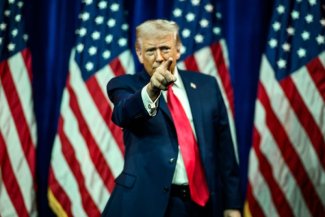
On 22 January in Davos, representatives of 20 states signed the Charter of the Board of Peace established by Donald Trump (see Appendix). The concept of the board first appeared in a 20-point peace plan for Gaza presented by the United States in September 2025. Its creation was subsequently endorsed in a UN Security Council resolution adopted in November 2025 (with abstentions from Russia and China). Both the peace plan and the resolution suggested that the body would develop overarching frameworks for a settlement in the Gaza Strip and oversee the financing of its reconstruction. A different concept of the board emerged on 16 January, when the US administration extended invitations to the leaders of around 60 states to join the body, together with the charter, indicating that it is intended to be a global institution that “seeks to promote stability, restore dependable and lawful governance, and secure enduring peace”, and is to be chaired directly by President Trump (see Appendix).
Trump is attempting to establish an organisation alternative to existing international institutions – above all the United Nations, which he regards as ineffective and, at times, acting against America’s national interests. The board’s objectives and its practical mode of operation remain unclear. For now, the initiative can be considered a failure, but its future will depend on Washington’s ability to secure the membership of key actors, or to pressure them into joining, as several of them have so far refrained from doing so.
Commentary
- Trump is seeking to create a new international body that would challenge the foundations of the existing system of international organisations. Furthermore, Trump would like the board to become part of his political legacy. He has been keen to emphasise his role in resolving global conflicts and has increasingly pressed his case to be awarded the Nobel Peace Prize. The initiative reflects the US administration’s assessment that the current international order requires revision, as it does not serve US national interests and its key institutions have proven ineffective. Since the start of Trump’s term, the United States has been reducing its involvement in these structures; in early December 2025, he withdrew the US from more than 60 international organisations in a single executive order. The attempt to establish an organisation – drawing on the legitimacy conferred by a UN Security Council resolution – that could serve as an alternative to the UN while remaining fully subordinated to the US president represents a further step along this path.
- The success of Trump’s initiative is by no means assured, but it could become a useful instrument of US foreign policy. The overwhelming majority of European states have not joined the board, while Russia and China, as well as regional powers such as India and Brazil, have refrained from accession. Some states will be unwilling to participate because of the implications for the wider system of international organisations, while others will object to the board’s complete subordination to the US president. The Trump administration may seek to exert pressure or make US support on other issues conditional on a country joining the board. How the body would function in practice and how it would address international crises and conflicts remains open questions.
- The vast majority of the United States’ European allies either declined the invitation or cited reasons which prevent them from making a swift decision. From the perspective of Germany and France, participation in Trump’s initiative could be viewed as a gesture that weakens the principles and structures of the UN and – although neither country has stated this openly – as a declaration of their subordination to Washington. Berlin has nevertheless refrained from issuing explicit criticism of the proposal or from formally ruling out its accession. Both France and Germany stress that they support efforts to secure peace, particularly in the Gaza Strip. The United Kingdom is unwilling to take part in an initiative to which Vladimir Putin has also been invited. For the Nordic countries, the decision to reject the US invitation was facilitated by Trump’s most recent escalation over Greenland. States keen to maintain good relations with the US administration (including Italy and Romania) have instead pointed to factors that prevent – or delay – a decision on joining. The only EU member states to have joined the board are Hungary and Bulgaria. For Prime Minister Viktor Orbán, participation serves to cultivate his close ties with Trump and reinforce his own image as a proponent of peace and a critic of what he portrays as Brussels’ ‘drive towards war’. Bulgaria’s accession, in turn, may be linked to Washington’s nomination of the Bulgarian diplomat Nikolay Mladenov as High Representative for Gaza within the board’s leadership, but it may also be shaped by domestic political turmoil and ultimately prove politically unsustainable.
- Moscow approached Trump’s offer with caution, but saw it as an opportunity to push for the lifting of Western sanctions. Russia abstained from the vote on the UN Security Council resolution that provides the legal basis for establishing the board. It has also, for now, refrained from joining, citing the need to review and study the details of how the body would operate. Nevertheless, reluctant to alienate President Trump, the Kremlin has avoided criticising the initiative, instead suggesting that – under certain conditions – it could have positive consequences for the situation in the Middle East. Foreign Minister Sergey Lavrov stated that Washington’s proposal demonstrates that it recognises international problems can only be resolved collectively. At the same time, Putin is seeking to use Trump’s initiative to ease US sanctions by declaring that Russia would contribute $1 billion to the board’s fund from Russian assets frozen in the United States. In doing so, Moscow aims to exert pressure on Washington in favour of Western countries unfreezing Russian assets as part of efforts to undermine the sanctions regime.
- From Israel’s perspective, Trump’s initiative contains both desirable and undesirable elements, with the former clearly predominant. Israel takes a favourable view of the weakening of the ‘old’ institutions of the international order (including the UN and its agencies, as well as the International Criminal Court), and the growing – if potentially short-lived – capacity of the United States to exert pressure on its allies and partners, assuming that this will also shape their policies towards Israel. In the context of Gaza, Trump’s 20-point peace plan (including the proposed Board of Peace) offered Israel an opportunity to scale back military operations in the Strip at a time when its political objectives were becoming increasingly unclear to the Israeli public without committing itself to far-reaching obligations regarding its future policy towards the territory or the Palestinian issue more broadly, and without entering into political dialogue with the Palestinians. Israel does, however, object to the invitation extended to Turkey and Qatar to participate in the initiative, specifically in relation to Gaza. From Israel’s standpoint, granting Turkey – which it views as a regional rival – a formal mandate to co-decide on Gaza’s future and its governance is unequivocally negative. Nevertheless, given Israel’s clear (if rarely stated openly) scepticism about the long-term viability of Trump’s peace plan – alongside its systematic efforts to obstruct it quietly – there is a strong likelihood that Turkey’s participation in the project will not carry serious long-term consequences for Israel.
Appendix. Details regarding the Board of Peace
Chairman: Donald Trump, whose term will continue until he resigns or is removed unanimously by the members of the executive board. All decisions of the board – including those concerning the budget, the establishment of subsidiary bodies or the appointment of officials, as well as political arrangements – must be adopted by a majority vote and approved by the chairman. The chairman is also the final authority in disputes over the interpretation of the charter’s provisions.
Executive Board: Marco Rubio, Steve Witkoff, Jared Kushner, Tony Blair (former UK prime minister), Marc Rowan (a billionaire and donor to Trump’s campaign), Ajay Banga (President of the World Bank), and Robert Gabriel (US Deputy National Security Adviser). Members of the Executive Board are appointed by the chairman.
High Representative for Gaza: Nikolay Mladenov, a former Bulgarian politician and senior UN official. In his role he is intended to mediate between the board and the technocratic National Committee for the Administration of Gaza. The High Representative will be supported by a dedicated Gaza Executive Board.
Charter of the Board: The preamble states that a new institution addressing peace at the global level is necessary due to the ineffectiveness of the existing bodies. The board’s mission is to promote peace-building efforts in line with international law and with the provisions of the charter itself.
Membership of the board: The board will comprise the heads of state which Donald Trump invites to participate, with each member serving a (renewable) three-year term. This limitation will not apply to countries that contribute more than $1 billion to the board’s fund in its first year of operation. In Davos, the charter was signed by representatives of: Argentina, Armenia, Azerbaijan, Bahrain, Bulgaria, Hungary, Indonesia, Jordan, Kazakhstan, Kosovo, Mongolia, Morocco, Pakistan, Paraguay, Qatar, Saudi Arabia, the United Arab Emirates, the United States, Turkey and Uzbekistan. The charter’s provisions require ratification at the national level.