Russia destroys energy infrastructure in Kyiv and Dnipro. Day 1420 of the war

The Russians have intensified their attacks in the Kostiantynivka area. Fighting continues in the south-eastern part of the city, where Russia’s goal is to control the Horlivka–Kramatorsk and Pokrovsk–Bakhmut road junctions. Russia approached Kostiantynivka from the south-west, where it attempted to attack the neighbouring Illinivka and Berestok (the last towns protecting the city from this direction), and from the north-east, from the area of Chasiv Yar. According to some sources, they had already reached the borders of Kostiantynivka in this direction and even occupied some of the neighbourhoods on its outskirts. The last areas south of the Kleban-Byt reservoir came under their control, which indicates that Ukraine withdrew from its northern, higher-lying part. This worsens the situation of the Ukrainians on the southern outskirts of the city.
There has been an increase in Russian activity in the arc north of Lyman. Russian forces approached the city from several sides, mainly from the east (from the direction of Siversk). They also entered Sviatohirsk on the Donets River, located to the north-west, but they most likely failed to consolidate their position in this town. It is located less than 10 km from the M03 motorway, currently the main supply route for Sloviansk and Kramatorsk from the direction of Kharkiv. There were no major changes on the other sections of the front in the Donbas, where – especially west of Pokrovsk – Russia made slight progress. There were also no significant changes in the actions of the parties in Kharkiv Oblast – near Kupiansk and Vovchansk – and in Sumy Oblast, where the Russians recaptured some of the positions which Ukraine had regained in previous months (including in the area of Andriivka).
Russia expanded the area under its control on the western bank of the Haichur River, but failed to push the defenders back from Huliaipole. Fighting continues on the western outskirts of the city and, according to official Ukrainian sources, clashes are also taking place there in the city centre. There has been an intensification of activity in the western part of the Zaporizhzhia Oblast, where the invaders have significantly increased their use of barrel and rocket artillery in the direction of Komyshuvakha, the main transport hub on the main supply route for Ukraine around Orikhiv. A Russian offensive is also being directed towards Komyshuvakha. Fighting is reported to be taking place 10 km south of the town, near the village of Novoboikivske.

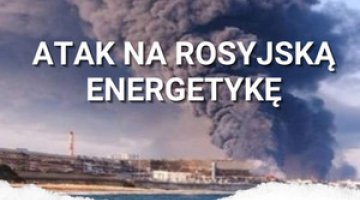
On the night of 6–7 January, Russia carried out a massive attack on the energy infrastructure of Dnipropetrovsk Oblast and the Ukrainian-controlled part of Zaporizhzhia Oblast. The attack is considered to be the largest since the beginning of the full-scale aggression. Among others, thermal power plants in Dnipro and Kryvyi Rih and two power substations were damaged. There was a blackout in the capital of Dnipropetrovsk Oblast and “serious power outages” in Zaporizhzhia. Further strikes on facilities and repair crews took place the following day, and the energy ministry concluded that both oblasts had been virtually cut off from the power grid. On 8 January, more than 800,000 consumers in Dnipropetrovsk Oblast remained without electricity, train traffic was disrupted, and the Zaporizhstal metallurgical plant in Zaporizhzhia suspended production. In Kryvyi Rih, there was a shortage of electricity and water, and 29 apartment blocks were damaged, with one person killed and 23 injured. Further strikes on the Kryvyi Rih Thermal Power Plant took place on 10 and 12 January. In Dnipro, some apartment blocks began to be connected to generators, as it was considered impossible to restore power supply from the grid in some areas of the city.
On 9 January, the energy infrastructure of Kyiv and Kyiv Oblast was the target of a massive attack. Four people were killed and 26 were injured, including the medical and technical personnel repairing the damage. Three thermal power plants, substations and high-voltage power lines, as well as municipal boiler rooms, were hit, resulting in the most serious heating problems since the start of the full-scale aggression. In the evening after the strike, 6,000 apartment blocks in Kyiv remained without heating, and the city authorities called on residents to leave temporarily. By the evening of 12 January, heating had been restored to 90% of buildings. Data on the restoration of the electricity supply showed that, as a direct result of the attack, approximately 1 million consumers in the capital and Kyiv Oblast may have lost access to electricity. Slavutych was completely cut off from electricity. In the capital, especially on the left bank, and in the surrounding areas, it was not possible to stabilise the power supply, and on the evening of 12 January, there were still so-called emergency power cuts. The restoration of supply was significantly hampered by the severe sub-zero temperatures.
Energy infrastructure was also attacked in other regions of the country, mainly in the border areas. The most serious strike on power generation and distribution facilities in Kharkiv took place on the evening of 5 January (five enemy missiles are thought to have hit them). They were targeted again on 10 and 11 January. On 9, 11 and 12 January, substations in Chernihiv Oblast were damaged, and on 11 and 12 January, similar facilities in Zhytomyr Oblast were hit. Energy infrastructure in Rivne Oblast (11 January) and Odesa (12 January) was also targeted. In all cases, the result was a power cut, often exacerbating the problems caused by previous attacks, especially in Chernihiv Oblast.
On 13 January, Russia carried out another massive strike on energy infrastructure in the areas it had attacked in previous days. It damaged power generation and distribution facilities in Kyiv and the Kyiv, Dnipropetrovsk, Odesa and Zhytomyr oblasts, resulting in power outages or emergency power cuts outside the capital, including in Dnipro and Odesa. In Kharkiv, the Nova Poshta terminal was the target of a missile strike, where four people were killed and six were injured.
The Russians have intensified their attacks on port infrastructure and ships calling at ports in Odesa Oblast. On 7 January, serious damage occurred in Chornomorsk, where two port workers were killed and eight were injured. Strikes on 8 and 10 January damaged port fuel tanks. On 9 January, the ships Wael K, flying the flag of Saint Kitts and Nevis, and Ladonna, flying the flag of the Comoros, were damaged near Odesa, and on the evening of 12 January, a tanker flying the flag of Panama and a bulk carrier flying the flag of San Marino were damaged.
On 9 January, Russia carried out an attack on a facility in Lviv using an Oreshnik medium-range ballistic missile. The target was an aircraft repair facility, as first reported by OSINT sources based on geolocation. These reports were not confirmed by the Ukrainian side, which only cautiously reported that a state-owned enterprise hall had been hit. The Ukrainian and Russian sides present conflicting data on the effectiveness of the strike – from “minor damage to concrete structures” to the destruction of the underground part of the plant. This was the second time that the Russians had used a conventional medium-range ballistic missile, i.e. a category usually used to carry nuclear warheads. The Oreshnik was first used in November 2024 in a strike on a company in Dnipro.
The attacks demonstrated a further weakening of Ukraine’s missile defence, including around Kyiv. According to Yuriy Ihnat, spokesman for the Ukrainian Air Force Command (UAFC), this is due to Russia’s unchanged tactics and a shortage of interceptor missiles, as a result of which the capital’s air defences had problems not only with ballistic missiles but also with cruise missiles, which are easier to shoot down. According to the UAFC, from the evening of 6 January to the morning of 13 January, Russiaused a total of 1,219 drones, including 820 strike “Shaheds” (although in massed attacks it used significantly fewer than in previous months – 214 on 9 January and 293 four days later), and 71 ballistic and cruise missiles. The defenders declared that they had neutralised 1,024 unmanned aerial vehicles and shot down 25 missiles.

Ukrainian drones struck fuel depots in the Lipetsk, Belgorod and Volgograd oblasts (on 6, 7 and 10 January, respectively), causing fires to break out at the facilities. On 11 January, they reportedly damaged a Lukoil drilling platform in the Caspian Sea. According to the Ukrainian Special Operations Forces, on 8 January, a fuel train was damaged near the village of Hvardiiske in occupied Crimea. Some sources also reported a Ukrainian surface drone attack, most likely unsuccessful, on the Palau-flagged tanker Elbus in the Black Sea on the same day.
As a result of the Ukrainian attack on energy facilities in the border regions of the Russian Federation, on 9 January, power was cut off in part of Belgorod Oblast. Problems with stabilising supplies continued there the following day. Among other things, the combined heat and power plant in Oryol was damaged and attacked again on the evening of 12 January. On two occasions – on 9 and 12 January – the Novocherkassk Power Plant in Rostov Oblast, which supplies, among others, the occupied Luhansk Oblast, was hit, as were power substations in the occupied part of the Donbas on 9 and 10 January, which exacerbated the problems with energy supplies in these areas.
On 6 January, the Security Service of Ukraine reported an attack on the 100th Arsenal of the Main Rocket and Artillery Directorate of the Russian Ministry of Defence in Kostroma Oblast. There is no information that the strike caused any serious damage. On 13 January, as a result of a special operation by the Alfa unit of the Security Service of Ukraine (SBU) and the Ukrainian Navy, the Atlant Aero plant in Taganrog, which manufactures, among other things, components for drones, was damaged, according to the Ukrainian General Staff. The plant was reportedly hit by Ukrainian-made missiles.

The United Kingdom has supplied Kyiv with new short-range anti-aircraft missile systems – 13 Ravens and two prototype Gravehawks. The Ukrainian army will ultimately receive 15 Gravehawks, as announced by the UK Defence Journal on 8 January. Both systems use available air-to-air missiles (British AIM-132 ASRAAM in Ravens and Soviet R-73 in Gravehawks), with the new element being ground launchers developed by the British. Their primary task is to combat attack drones. The capabilities of both systems in terms of shooting down cruise missiles are limited. The production of Gravehawk systems is co-financed by Denmark.
In January 2026, the United Kingdom will begin manufacturing Octopus interceptor drones for Ukraine, as announced by Defence Secretary John Healey on 10 January. A day later, the British government announced a competition to develop land-based ballistic missiles with a range of 500 km and a 200-kilogram warhead, codenamed “Nightfall”, for Kyiv. The order for the prototypes was sent to three companies (their names were not disclosed), which received £9 million each for this purpose. Each of the entities will prepare the first three missiles for testing within 12 months.
Sweden has so far delivered 26 Archer 155 mm self-propelled howitzers to Ukraine, according to the embassy in Kyiv. According to announcements made in November 2025, Ukraine will receive a total of 44 guns of this type. Sweden is also supplying additional barrels for the Archers sent earlier (Ukraine received 10 of them in mid-2025).
At the beginning of 2026, Kyiv will receive the first five Lynx KF41 infantry fighting vehicles from Germany, Rheinmetall announced on 12 January. The contract, signed in December 2025, is financed from the German budget. The “next step” in equipping the Ukrainian army with Lynx vehicles is to purchase an additional batch and, ultimately, to launch production in Ukraine.
Rheinmetall aims to sell its infantry fighting vehicle (IFV) to Kyiv from 2023. According to Armin Papperger, CEO of the company, serial production of the heavier KF41 version of the Lynx was supposed to start in Ukraine in 2024, which resulted in the delivery of one unit to the Ukrainians for testing in December 2024. Of the investments in Ukraine announced by the Germans for 2023–2024, including several factories (e.g. for tanks, IFVs and ammunition), only a hall for the repair of cars and lighter armoured vehicles has been launched so far.
The issue of Kyiv’s purchase of a larger batch of IFVs from Germany remains open. Rheinmetall’s offer included locating production in Ukraine, which is unlikely in the foreseeable future. In 2023, Ukraine chose the Swedish CV90 as the target IFV for its land forces, receiving at least 50 units free of charge as part of the support package. One of the arguments in favour of Stockholm’s proposal was cooperation with Sweden, the Czech Republic and Slovakia in the manufacture and subsequent servicing of the vehicles, which would reduce costs. However, Ukraine has not yet taken any serious steps towards rearming with the CV90, making it dependent on the development of the situation and, above all, on finding a source of financing for future purchases. The situation is similar with other categories of armaments. The decisions taken by Kyiv and preliminary agreements at the intergovernmental level should be treated primarily as part of ongoing diplomacy, not directly related to the potential technical modernisation of the armed forces. Examples of this in recent months include those on the purchase of a large batch of Gripen fighter jets in Sweden and, at the same time Rafale fighter jets in France. If this does happen, the most likely beneficiaries will be the companies that obtain funds for the implementation of Ukrainian orders outside the country, e.g. Rheinmetall in Germany and/or the EU.

On 5 January, Volodymyr Zelensky held talks with Defence Minister candidate Mykhailo Fedorov on the planned changes to how the ministry operates. The reform of the ministry will be based on maximising the use of technological potential to protect the lives of soldiers. The president pointed out that Russia has an advantage due to the scale of its attacks and strikes, and Ukraine must respond with faster technological development, new types of weapons and modern combat tactics. Zelensky noted that, since the beginning of the full-scale war, the Ministry of Digital Transformation, headed by Fedorov, has been one of the main sources of innovation for the defence sector. This includes the development of the arms manufacturing market, the widespread use of drones and modern communications systems.
On 9 January, the Prosecutor General’s Office and the State Investigation Bureau revealed the activities of an organised criminal group responsible for supplying mines that did not meet technical standards. According to the investigators’ findings, the group embezzled almost 3 billion hryvnia (approximately $70 million). A total of ten people are involved in the case. The investigation revealed that the participants in the scheme created the appearance of production capacity by using a company that had never previously been involved in the manufacture of anti-personnel and anti-tank mines.
A day later, the head of the President’s Office, Kyrylo Budanov, stated that the biggest problems directly affecting the country’s defence capability are corruption in military commissions and the growing number of cases of unauthorised desertion from units. He called on the General Staff and other military authorities to take action to improve the situation. His statement testifies to the worsening mobilisation crisis in the army. In November, the Prosecutor General’s Office stopped publishing periodic reports on the number of proceedings concerning unauthorised absence from units and cases of desertion. Some domestic commentators believe that this may have been due to the infamous record set in October. The Prosecutor’s Office later explained that this data was classified as restricted information due to its importance for national defence. Available statistics show that between the beginning of 2022 and September 2025, law enforcement agencies initiated nearly 300,000 criminal proceedings related to unauthorised absence from military units or desertion. The measures announced by Budanov are intended to tighten the mobilisation system, strengthen military discipline and increase criminal liability for abuses that disrupt the mobilisation process.

On 5 January, Zelensky appointed General Yevhen Khmara as acting head of the SBU. He is an experienced special forces officer – he has served in the SBU’s Special Operations Centre “A” since 2011 and became its head in 2023. The decision was preceded by a meeting between Zelensky and the current head of the service, Vasyl Malyuk, during which the issue of his possible successors was discussed. The president emphasised that Malyuk (dismissed by parliament on 13 January) would continue to be involved in special operations against Russia. Khmara’s first deputy is Oleksandr Poklad, Malyuk’s former deputy. The leadership team also includes Andriy Tupikov, former head of the SBU Counterintelligence Department, Denys Kylymnyk, who took over as director of the Anti-Terrorist Centre, and Ivan Rudnytskyi, former head of the Volyn Regional State Administration and a long-time SBU officer specialising in combating corruption and financial abuse. The changes are part of a broader reorganisation of state security structures, including the Ministry of Defence and the Border Guard Service, but do not constitute a “personnel revolution” in the SBU – the management positions have been taken over by officers who have been serving for years and who were accepted by the previous head of the service.
On 6 January, the State Investigation Bureau of Ukraine announced that it was investigating approximately 2,200 criminal cases involving crimes against state security. These include people suspected of treason against Ukraine, collaboration and cooperation with Russian intelligence services. According to data from the beginning of the year, 1,639 people have been charged and 528 are wanted.

According to information from Ukrainian military intelligence (HUR) on 9 January, more than half of the companies involved in the production of Russian armoured vehicles within the Uralvagonzavod corporation are still not subject to international sanctions. These entities are involved in the manufacture and modernisation of, among others, T-72B3M tanks, T-80BWM, T-90M and T-90MS Proryv tanks, TOS-1A Solntsepyok heavy flamethrower systems, tank support combat vehicles (BMPT) and armoured repair and evacuation vehicles (BREM). Despite the holding’s strategic importance for the war against Ukraine, as many as 23 identified companies have not been subject to restrictions by any coalition country. These include a design bureau responsible for developing railway platforms for transporting tanks, manufacturers of training stations and simulators for armoured vehicle crews, and companies supplying resources, equipment and services to support military production.