Krill, space and the race for the seventh continent: China’s interests and activities in the Antarctic region
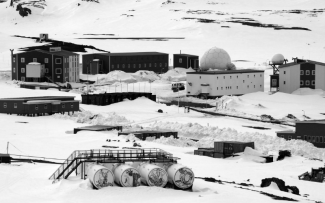
China’s leadership is interested in Antarctica and the surrounding Southern Ocean for several reasons. At present, China’s primary economic interest lies in exploiting living marine resources, but it may also turn its attention to mineral extraction after 2048. Another key driver is great-power rivalry with the United States, particularly in the space domain, where Chinese research facilities play an important role. By expanding its engagement in Antarctic affairs and its presence in the region, Beijing seeks to gain greater influence over any future decisions to revise the legal regime governing the continent and to shape relevant international agreements. Efforts to ‘tame’ the harsh natural environment around the South Pole also form part of China’s domestic and international propaganda narratives aimed at demonstrating the effectiveness of its system of governance.
The status of Antarctica
The status of Antarctica under international law is defined by the Antarctic Treaty System (ATS),[1] which comprises a series of international treaties and agreements establishing the legal and political framework governing state activities on the continent and in its surrounding waters (see Appendix 1). The Antarctic Treaty, signed in 1959 and in force since 1961, provides for the peaceful use of Antarctica, freedom of scientific research and the exchange of research findings. It also prohibits military activities, nuclear testing and the disposal of radioactive waste, and establishes a system of mutual inspections.
However, the treaty did not abolish pre-existing territorial claims but merely ‘froze’ them. Seven countries (Argentina, Australia, Chile, France, New Zealand, Norway and the United Kingdom) had already asserted such claims, while the United States and Russia maintain a ‘basis for possible claims’ but have not formally advanced them.[2] At the same time, the treaty prohibits new claims or the enlargement of existing ones while it remains in force. It applies principally to the area south of 60° south latitude, including all ice shelves.
The ATS froze the sovereignty dispute, prevented countries from using activities conducted while the treaty remains in force to strengthen existing territorial claims or assert new ones, and provided for the demilitarisation of Antarctica. Governance of the continent was intended to rest on broad international consensus and to serve the goals of scientific research and environmental protection. In practice, however, maintaining this approach and the underlying consensus has become increasingly difficult owing to intensifying great-power competition, the expansion of tourism and mounting pressure to secure natural resources, a trend fuelled by climate change and advances in extraction technologies.
The 1991 Madrid Protocol, which prohibits the exploitation of Antarctica’s mineral resources, established a complex mechanism for revising the mining ban that requires broad international consensus (see Appendix 1). Although such a compromise currently appears unlikely, it could be reached after 2048, when the first review of the protocol may be initiated. China wants to exert as much influence as possible over any future negotiations on this matter and is already laying the groundwork to do so.
Enter China
By joining the Antarctic Treaty and rapidly establishing a physical research presence in Antarctica, China laid the groundwork for securing a lasting position within the ATS. It acceded to the treaty in 1983 and sent its first scientific expedition to the region the following year. It gained consultative status in 1985, following the construction of its first Antarctic research station, Great Wall, on King George Island in the South Shetland Islands. This formally placed China among the group of countries with a say in the continent’s future.
Under the ATS, scientific infrastructure serves as a means of securing a ‘voice’ in Antarctic affairs. At the institutional level, the government-run Polar Research Institute of China (PRIC)[3] plays a central role in China’s activities in the region, serving both as a research institution and as the operational centre for Chinese polar expeditions. The institute has centres specialising in ice and climate research and polar ecology, as well as a centre for space physics and astronomy.
Today, China runs an extensive research programme, maintains five Antarctic stations (see Appendix 2), continues to expand its polar fleet and is among the countries harvesting krill under the auspices of the Commission for the Conservation of Antarctic Marine Living Resources (CCAMLR). However, much of the available information on Chinese infrastructure and activities in the region comes from vague press announcements, technical documents, inspection reports and fragmentary descriptions of research stations. China’s activities in Antarctica therefore cannot be regarded as fully transparent.
China’s second permanent Antarctic research station, Zhongshan, opened in 1989 in Princess Elizabeth Land, East Antarctica. In the 21st century, China’s Antarctic programme entered a phase of expansion into the continent’s interior. In 2009, the country established Kunlun, a summer research station near Dome A, the highest ice dome on the Antarctic ice sheet. Another summer station, Taishan, opened in 2014 between Zhongshan and Kunlun, followed in 2024 by Qinling on Inexpressible Island in Terra Nova Bay, part of the Ross Sea region. In 2025, China submitted documents[4] to the Antarctic Treaty Secretariat concerning a new seasonal research station at Cox Point in Marie Byrd Land, West Antarctica, indicating that its infrastructure expansion is far from complete. The existing research stations and their geographical distribution suggest that they are not isolated outposts but components of an integrated research and logistics system.
Through its scientific presence in Antarctica, China is pursuing a range of objectives. It is strengthening its position ahead of future institutional decisions concerning the continent while also shaping its own propaganda narrative and reinforcing its status as a major power. Knowledge of Antarctica and a presence in the region already enable China to exploit living marine resources in the Southern Ocean and could facilitate its resource extraction activities in the longer term. Some of its logistical and research infrastructure could serve both civilian and military purposes (particularly in satellite communications and space surveillance), while scientific research itself forms part of the broader technological rivalry.
More than just krill
China’s food production system faces a well-documented problem of low micronutrient density despite adequate caloric content. This results in insufficient intake of vitamins and minerals among the Chinese population. The problem affects people whose diets rely heavily on grains and refined products, such as oils,[5] and is linked to several factors, including the ‘dilution effect’ associated with high crop yields,[6] imbalanced fertilisation, food processing and regional deficiencies of certain elements in the soil. The best-documented issues include zinc and iron deficiencies in wheat, declining mineral concentrations in newer maize varieties and low calcium and selenium content in most food products. The problem is not unique to China but is more pronounced there than in other countries. In response, the Chinese government has been promoting the consumption of functional foods and dietary supplements that use Antarctic krill (Euphausia superba) as one of their raw materials. Consequently, fishing in the Southern Ocean is disproportionately important to China, even though the region accounted for only around 9% of the total tonnage of marine organisms caught by China’s distant-water fishing fleet in 2025.
Krill is a keystone species in the Southern Ocean ecosystem, meaning that fisheries management must take a precautionary approach to ensure that sufficient biomass remains both to maintain the population and to sustain predators that depend on it. The total precautionary catch limit for Antarctic krill in the Atlantic sector of the Southern Ocean, covering CCAMLR subareas 48.1–48.4 (surrounding Antarctica), currently stands at 5.61 million tonnes per year. In practice, however, catches are subject to a much lower threshold, known as the ‘trigger level’, of 620,000 tonnes per season. Until the end of the 2023/24 season, this threshold was further divided among the four subareas.[7] The arrangement expired at the end of 2024 because CCAMLR member states failed to reach consensus on extending it. The 620,000-tonne threshold remains in force but is no longer geographically allocated. As a result, catches up to this threshold can now be concentrated in one or several parts of Area 48, rather than being distributed according to the previous regional limits.
However, China views the exploitation of Antarctica’s living marine resources as a desirable area for economic expansion. Its objective is no longer merely to participate in fishing activities but to control the entire value chain, from catching marine organisms to processing them into high-value products.[8] Krill is therefore used not only to produce nutraceuticals and dietary supplements, particularly oil rich in omega-3 fatty acids and phospholipids, but is also processed into oil, meal and ingredients for aquaculture feed. Krill meal and oil enhance the nutritional value of feed, promote the growth of farmed aquatic organisms and improve their resilience.[9] From a strategic perspective, this means that krill fishing is closely linked to China’s broader ‘blue economy’ policy, its animal feed industry and its functional food sector.
China’s interest in Antarctica extends beyond krill and other living marine resources. Scientific studies[10] have long suggested that the continent may contain substantial hydrocarbon and mineral resources. Research conducted by the United States Geological Survey (USGS) in the 1980s identified thick sedimentary basins and pointed to the possible presence of oil, gas, coal, copper, iron and uranium. However, most researchers emphasise that no commercially viable deposits have been confirmed. At the same time, the legal regime established by the Madrid Protocol prohibits mineral resource extraction and, in practice, restricts exploration. As a result, most publicly available information and data on Antarctica’s mineral resources date from before 1998. One can only speculate as to which Consultative Parties may be conducting their own research without making the findings public. Nevertheless, climate change, advances in mining and refining technologies and intensifying great-power competition are heightening some Consultative Parties‘ interest in the potential future commercial exploitation of Antarctica’s mineral resources.[11]
At present, China has not publicly called for a revision of the Madrid Protocol after 2048 and has declared its support for the Antarctic Treaty System, but official sources refer to ‘protection and rational use’ of the continent while also suggesting the need to improve Antarctic governance mechanisms.[12] At the same time, Chinese academics are examining in detail the procedures for amending the Madrid Protocol, giving the impression that both relaxing and tightening its provisions are under consideration.[13] More explicit views have also emerged, arguing that China should conduct more extensive exploration in key areas, gather data for the future development and exploitation of Antarctic resources, secure a greater say in decision-making and expand research into the use of these resources.[14] As one Chinese expert put it in 2013: “We need to gain a full picture of the resources on the Antarctic continent. Chinese exploration of Antarctica is like a game of chess. In the global contest, gaining an advantage is extremely important. We do not know when the game will begin, but we must secure a favourable position in advance”.[15] This shows that, as early as 35 years before 2048, Chinese expert discussions were already considering how to position the country strategically ahead of potential changes to the rules.
Given the rapid pace of international developments, pressure to revise the ban on mineral resource extraction in Antarctica may increase as 2048 approaches, even though most Consultative Parties currently support maintaining it. China appears intent not only on participating in any such debate but also on exerting considerable influence over it. There are also strong indications that Beijing favours changes to the Antarctic governance regime that would relax the ban on mineral resource extraction. However, China’s activities on the continent may be driven less by the hypothetical prospect of exploiting mineral resources in the distant future than by more immediate military considerations and great-power rivalry, including in science and technology.
The space race
The Antarctic Treaty prohibits any measures of a military nature, but does not ban the use of military personnel or equipment for scientific research or ‘other peaceful purposes’. It therefore permits the presence of assets with dual civilian and military uses, provided they remain formally designated for peaceful purposes. In the context of contemporary technological competition, this leaves considerable room for interpretation by individual countries. The PRIC operates a space physics and astronomy centre, while Zhongshan Station is described as conducting research into ice and the space environment. Together with Great Wall Station, these facilities form part of a network of ground stations used for space research.[16]
Officially, China’s presence in Antarctica supports research into the aurora australis in the fields of near-Earth space physics and astronomy, taking advantage of the region’s exceptionally stable atmospheric conditions. It also aims to ‘support systems that depend on ground-based facilities in polar locations’, while developing technologies with applications beyond Antarctica. Polar infrastructure enhances China’s capacity to operate within an advanced technological system centred on science, observation and communications. This, in turn, has tangible value in great-power competition.
A presence in Antarctica offers several advantages to a country developing its own Space Domain Awareness (SDA) or Space Surveillance and Tracking (SST) system. A comprehensive SST system requires stations distributed across the Arctic, mid-latitudes, near the equator and in the Southern Hemisphere, with Antarctica completing this geographical coverage.[17] Many Earth observation and reconnaissance satellites, including military ones, operate in polar, near-polar or sun-synchronous orbits, with the latter allowing satellites to pass over a given point on Earth at the same local solar time. Each such satellite passes over Antarctica on every orbit around the planet; the more observation stations deployed worldwide, the more accurate the catalogues of orbital objects become. This means that a station in Antarctica can observe virtually all satellites in these orbits, regardless of which country operates them.
Suitable ground-based equipment makes it possible to determine satellites’ orbits more accurately, detect minor changes in their trajectories and predict their future positions. Moreover, Antarctica offers excellent astronomical conditions owing to its climate and limited human activity. This is particularly true of the high plateau around Dome A, where Kunlun Station is located and astronomical telescopes have been installed. Officially, these instruments are used for astronomical research, but they can also observe foreign satellites and space debris.[18] Some analysts suggest that scientific infrastructure could enhance the ability to monitor military satellites, support early warning systems and analyse the manoeuvres of satellites operated by adversaries.[19]
Legitimacy and propaganda
The Chinese Communist Party (CCP), which has ruled China unchallenged for more than 70 years, faces a domestic legitimacy deficit.[20] Against this backdrop, the CCP leadership seeks recognition, both at home and abroad, for China’s achievements in harnessing the forces of nature. In the past, major hydraulic engineering projects served this purpose, while today space exploration and a presence in the polar regions fulfil a similar role. Antarctica has thus become a stage on which the CCP demonstrates China’s capacity to operate in the planet’s most challenging environments.
The political dimension is just as important as economic and military considerations. China’s achievements in Antarctica are presented not only as evidence of administrative efficiency but also as proof of the superiority of its political system and ideology, which supposedly enable the concentration of resources, long-term planning and social mobilisation on a scale beyond the reach of liberal democracies.[21] Successive expeditions under the slogan ‘Southwards, towards challenges’ (向南! 向难!) and the establishment of new research stations in Antarctica have become part of a political spectacle of conquering and transforming nature.[22] They are intended to inspire national pride and, alongside other scientific and technological achievements, compensate for the deficit of democratic representation and obscure social costs and repression. The regime thus uses technological modernisation, tangibly reflected in the country’s presence in the Earth’s polar regions, to justify its rule. The underlying message is that if the party can build a base in Antarctica (or construct dams, reactors and high-speed railways, while also developing digital governance systems), it is also entitled to monopolise political power and determine the direction of society’s development.
Internationally, China has used its presence in the polar regions to project the image of a country that helps shape the future of humanity. Since 2024, official Chinese sources have emphasised both the ‘benefits to humanity’ of China’s activities in the polar regions and its ambition to transition from a ‘major polar country’ to a ‘polar power’.[23] Its presence in Antarctica thus serves as evidence of China’s modernity, competence and ability to compete in the global development race. For the authoritarian regime, activities in Antarctica provide an opportunity to combine two central narratives in its international propaganda – one highlighting scientific achievements and the other showcasing major engineering projects – to enhance China’s international prestige. The aim is to convince foreign elites, wider publics and governments in developing countries that the Chinese political model is not anachronistic but rather fosters innovation, ensures stability and enables long-term modernisation.
Images of Chinese researchers alongside seals and penguins in extreme weather conditions serve as a universal language that is less ideologically charged than official propaganda. They can therefore help China overcome isolation, attract partners and strengthen its soft power. International recognition of China’s achievements in Antarctic research allows the regime to present itself not only as a responsible, competent and indispensable actor in the global order but also as an alternative to the existing system. For the CCP, investments in research stations, icebreakers, polar aviation and observation programmes thus serve the dual purpose of advancing science and building political legitimacy.
Outlook
The treaty-based framework governing krill fishing in the Southern Ocean, marine protected areas and the allocation of catches is already becoming increasingly politicised. Disputes within CCAMLR go beyond discussions about the functioning of marine ecosystems and their fish and crustacean populations. CCAMLR is increasingly becoming a forum in which individual Consultative Parties seek to assert their influence and test mutual trust. Although official CCAMLR documents give little indication of the heated debates between members, reports by non-governmental organisations and the media have repeatedly identified China and Russia as the main opponents of establishing new marine protected areas and introducing stricter rules for managing krill fisheries.[24]
Official Chinese sources emphasise research, conservation and utilisation of the Earth’s polar regions.[25] In 2024, Xi Jinping called for “better understanding, protection and utilisation of the polar regions to make new and greater contributions to the benefit of humanity”.[26] Since then, Beijing has promoted a narrative of ‘balancing conservation and utilisation’ in the polar regions. Although it has not openly called for a radical revision of existing treaties, its extensive activities in and around Antarctica, as well as its engagement in intergovernmental and non-governmental bodies dealing with the region, indicate that the Chinese leadership attaches great importance to this area and wants to have a say, or even play a moderating role, in the debate over the future of the ‘seventh continent’.
Although the Madrid Protocol remains in force indefinitely, a review procedure that could theoretically lead to the lifting of the ban on commercial mineral resource extraction may be initiated from 2048. Should a formal attempt be made after 2048 to revise this ban, the countries with the strongest logistical, scientific and political presence in Antarctica, particularly China and the US, would enter negotiations with a considerable advantage. Paradoxically, despite growing rivalry between Beijing and Washington, both sides might be interested in cooperating to pressure other parties into accepting amendments to the Madrid Protocol. This does not mean that such a scenario will necessarily materialise. Nevertheless, maintaining an extensive presence in Antarctica and cultivating a reputation as a ‘key player’ represent a rational investment should a debate over the future rules governing resource extraction on the continent ever begin. The logic behind this approach is that an established position of influence in Antarctic affairs will create an incentive to eventually convert prestige and a seat at the negotiating table into access to resources.
Any revision of the ban need not take place immediately after 2048. China appears likely to focus initially on blocking attempts to turn the conditional ban on Antarctic mineral resource extraction into a permanent one. As a Consultative Party to the ATS, it will be in a position to do so. Beijing’s main priority will be to preserve the possibility of initiating such a debate in the second half of the century. It is also possible that the continued erosion of the international order will lead individual countries to stop respecting the existing international legal framework governing Antarctica and other regions even before 2048. In that scenario, power and determination, rather than law or environmental considerations, will be decisive.
Appendix 1. Additional international regulations governing Antarctica and the Southern Ocean
The 1991 Madrid Protocol, which entered into force in 1998, is an important complement to the Antarctic Treaty. It designates Antarctica as a ‘natural reserve, devoted to peace and science’ and prohibits all activities relating to mineral resources other than scientific research. Any amendment to the Protocol would require approval by a majority of the Parties, including three quarters of the Consultative Parties as of 1991. It would enter into force only after formal acceptance by three quarters of the Consultative Parties, including all 26 that held this status in 1991. These are Argentina, Australia, Belgium, Brazil, Chile, China, Ecuador, Finland, France, Germany, India, Italy, Japan, South Korea, the Netherlands, New Zealand, Norway, Peru, Poland, Russia (then represented by the Soviet Union), South Africa, Spain, Sweden, Uruguay, the United Kingdom and the United States. Bulgaria, Ukraine and the Czech Republic became parties to the Protocol after 1991. Furthermore, the ban on mineral resource activities can be lifted only if a binding legal regime governing these activities has first been established, specifying whether they are permitted and under what conditions.
The Antarctic Treaty System (ATS) also includes the Antarctic Treaty Consultative Meetings (ATCMs), which serve as its main decision-making forum. All Parties to the Antarctic Treaty participate in these meetings, but only Consultative Parties hold decision-making rights, exercising them by consensus. Observers and experts from the Scientific Committee on Antarctic Research (SCAR), an international scientific organisation established in 1958 to coordinate research on Antarctica and the Southern Ocean, also attend the meetings. Two other agreements are particularly important for countries operating in the Antarctic region: the Convention for the Conservation of Antarctic Seals (CCAS) and the Convention on the Conservation of Antarctic Marine Living Resources (CCAMLR).
Translation: Radosław Alf
Language Editing: James Long
[1] All documents relating to the ATS, including additional protocols, are available on the website of the Antarctic Treaty Secretariat: ats.aq.
[2] Formally, 58 countries are parties to the treaty, but only 29 hold consultative status and participate in decision-making. Consultative status is granted to the original signatories and countries that conduct ‘substantial scientific research activity’ in Antarctica. The remaining 29 countries may attend meetings but have no voting rights.
[4] Draft Comprehensive Environmental Evaluation (CEE) for the Chinese research station in Marie Byrd Land, Antarctic Treaty Secretariat, February 2025, ats.aq.
[5] See Hui Liu et al., ‘Grain iron and zinc concentrations of wheat and their relationships to yield in major wheat production areas in China’, Field Crops Research, vol. 156, 1 February 2014, pp. 151–160; Yijun Li et al., ‘Nutrient coverage of China’s plant-based food supply can be improved with food system adjustments’, Nature Food, vol. 7, 1 May 2026, pp. 452–463; Xiaoqi Wei et al., ‘Deficiency of Energy and Nutrient and Gender Differences among Chinese Adults: China Nutrition and Health Survey (2015–2017)’, Nutrients, vol. 16, 22 July 2024, mdpi.com.
[6] As crop yields increase, the average concentration of certain minerals, such as iron, magnesium and calcium, per unit of harvested mass declines, as plants can produce biomass faster than they can absorb and accumulate minerals from the soil. As a result, they provide more calories overall but fewer minerals per 100 grams of produce.
[7] ‘Krill fisheries and sustainability’, Commission for the Conservation of Antarctic Marine Living Resources, 16 February 2018, ccamlr.org.
[8] M. Bogusz, ‘The Great Wall of Lights: the global impact of China’s distant-water fishing fleet’, OSW Commentary, no. 733, 27 May 2026, osw.waw.pl.
[9] B. Pastuszewska, ‘Ocena mączki krylowej jako źródła białka w żywieniu zwierząt’, Postępy Nauk Rolniczych, 1979, vol. 26, no. 4, pp. 59–76.
[10] K. Kovar, Petroleum and Mineral Resources of Antarctica, USGS, 1983, usgs.gov; P.L. Williams, P.D. Rowley, D.L. Schmidt, Mineral Resources of Antarctica, USGS, 1 January 1974, usgs.gov; J. Kingston, The Undiscovered Oil and Gas of Antarctica, USGS, 1991, usgs.gov; P.W. Guild et al., Mineral-Resources Map of the Circum-Pacific Region: Antarctic Sheet, USGS, 1998, usgs.gov; R.C.R. Willan, D.I.M. MacDonald, D.J. Drewry, ‘The mineral resource potential of Antarctica: geological realities’ [in:] G. Cook (ed.), The future of Antarctica: exploitation versus preservation, Manchester University Press 1990, pp. 25–43; R.J. Adie, ’The geology of Antarctica’ [in:] H. Wexler et al. (eds.), Antarctic Research: The Matthew Fontaine Maury Memorial Symposium, American Geophysical Union, 1962, pp. 26–39; P.G. Quilty, ‘Mineral resources of the Australian Antarctic Territory’, ANARE Research Notes, no. 27, 1985, antarctica.gov.au; J.F. Splettstoesser, G.A.M. Dreschhoff (eds.), Mineral Resources Potential of Antarctica, American Geophysical Union, 1990.
[11] ‘外交部副部长刘振民在第40届南极条约协商会议期间接受国内媒体联合采访’, Ministry of Foreign Affairs of the People’s Republic of China, 25 May 2017, mfa.gov.cn.
[12] Li Xueping, Chi Yinuo, ‘2048年后南极矿产资源活动的管制措施研究’, Journal of Ocean University of China, vol. 5, 2022, pp. 57–66, rhhz.net.
[13] Zhu Jiangang et al., ‘南极资源纷争及我国的相应对策’, Chinese Journal of Polar Research, vol. 18, no. 3, September 2006.
[15] Chi Wang et al., ‘China’s Ground‐Based Space Environment Monitoring Network—Chinese Meridian Project (CMP)’, Space Weather, vol. 22, no. 7, July 2024, wiley.com.
[16] M.R. Ackermann, A systematic Examination of Ground-Based and Space-Based Approaches to Optical Detection and Tracking of Satellites, Space Symposium, 14 April 2015, spacesymposium.org.
[17] Yang Chenwei et al., ‘中国南极昆仑站低轨空间碎片监测优势及CSTAR望远镜实测’, Chinese Journal of Polar Research, vol. 31, no. 2, June 2022, pp. 128–133.
[18] M.P. Funaiole et al., ‘Eyes on the Skies. China’s Growing Space Footprint in South America’, Center for Strategic and International Studies, 4 October 2022, csis.org.
[19] M. Bogusz, Red nationalism. China’s foreign policy in the ‘New Era’, OSW, Warsaw 2026, osw.waw.pl.
[20] Zhen Tao, ‘心有山海 踏浪而行——写在中国第42次南极考察队起航之际’, CCTV, 2 November 2025, cctv.com.
[21] Dong Ruifeng, Gu Tiancheng, ‘新华时评:向南!向难!中国第42次南极考察续写新传奇’, Beijing Daily, 1 November 2025, bjd.com.cn.
[22] ‘心有山海 踏浪而行——写在中国第42次南极考察队起航之际’, Xinhua, 1 November 2025, news.cn; ‘习近平致信祝贺中国南极秦岭站建成并投入使用’, Xinhua, 7 February 2024, news.cn; ‘中国第41次南极考察队员集体重温习近平总书记重要贺信——汲取奋进力量 携手再立新功’, China Geological Survey, 11 February 2025, cgs.gov.cn.
[23] ASOC MEETING REPORT on CCAMLR XXXIV, Antarctic and Southern Ocean Coalition, 2015, asoc.org; L. Feast, ‘Russia thwarts plan for Antarctic ocean sanctuary, China on board’, Reuters, 30 October 2015, reuters.com; B. Briggs, F. De Augustinis, ‘China and Russia block Antarctic protection’, The Ferret, 1 October 2022, theferret.scot; G. Readfearm, ‘‘Very bad precedent’: China and Russia team up to undermine krill fishing restrictions in Antarctica’, The Guardian, 1 November 2024, theguardian.com.
[24] China’s Arctic Policy, State Council of the People’s Republic of China, January 2018, english.gov.cn.
[25] ‘Xi sends congratulatory letter on completion, operation of Qinling Station in Antarctica’, State Council of the People’s Republic of China, 7 February 2024, english.gov.cn.
[26] E. Lucas et al., ‘Emergence of Antarctic mineral resources in a warming world’, Nature Climate Change, vol. 16, 2026, pp. 477–484; P.G. Talalay, N. Zhang, ‘Antarctic mineral resources: Looking to the future of the Environmental Protocol’, Earth-Science Reviews, vol. 232, September 2022, sciencedirect.com.