The crisis over Iran: a war on multiple fronts
Since 28 February this year, the United States and Israel have been embroiled in an armed conflict with Iran. Neither the military operations nor the pressure aimed at destabilising the Iranian system have proved sufficient to achieve the stated objectives. In the following months, the focus of the conflict shifted towards the struggle for control of the Strait of Hormuz and, more broadly, towards an economic war of attrition between Iran and the United States. At the same time, as a result of both deliberate actions by the parties to the conflict and mounting local tensions, conflicts in Lebanon, Iraq and Yemen have become increasingly important, alongside the deepening crisis of a regional order. Under the current circumstances, it appears unlikely that we will see a political resolution to the crisis, or even a relative stabilisation. In the coming weeks and months, conflicts in the region, particularly in Yemen and Iraq, and the political situation surrounding the elections in the United States and Israel, are likely to have the greatest impact on developments.
Military impasse
Thirty-eight days of air strikes on Iran (28 February – 7 April) demonstrated that the United States and Israel have limited capacity to resolve the conflict using their chosen military methods: air strikes have proved insufficient, while the costs of the protracted war, particularly in political terms, are too high. US and Israeli calculations that they could force Iran into submission by eliminating the country’s political and military leadership, destroying its internal security infrastructure and degrading its military capabilities have also proved misguided. Nor does Iran, which is much weaker, have any chance of defeating its adversaries militarily; its actions have therefore focused on raising the costs of the US-Israeli operation and wearing down the enemy. Iran has carefully calibrated its military attacks on US assets in the region and targets in the Gulf states in order to control the dynamics of the conflict.
Since the ceasefire took effect on 8 April, the two sides have repeatedly exchanged attacks, but these have been much more limited in both their character and scale than in the first weeks of the conflict. Since April, Iranian forces have attacked US bases in the region and US Navy vessels and ships passing through the Strait of Hormuz, but have only relatively rarely struck critical infrastructure in the countries of the region. The United States, for its part, has carried out attacks – including an intensive air campaign in the first half of July – against strictly military targets in southern Iran and has forcibly intercepted vessels attempting to breach the US blockade. Both the United States and Iran have treated, and continue to treat, military strikes as a means of eliminating immediate threats to their own operations around the strait and as retaliation for enemy attacks, rather than as a way of comprehensively defeating their adversary.
Since the end of the intense phase of the conflict, Iran and Israel have exchanged air strikes only once, on 8 June. Although both the United States and Iran have repeatedly declared their readiness not only to resume hostilities but also to escalate and broaden them significantly – and both sides have amassed the forces needed to do so – they are unlikely to act on these threats. Such a move would not guarantee strategic success and would be extremely costly and risky for both sides. Following the failure of the 17 June US-Iranian agreement on ending hostilities and the accompanying plan to normalise relations, a political resolution to the conflict also appears unlikely under the current circumstances.
Resilience of the Iranian system
Another strategic dimension of the conflict is the durability and stability of Iran’s political system. It is part of the long-term strategy of Israel and the United States to bring about the collapse of this system, or at least for it to undergo a far-reaching erosion; this was therefore one of the stated objectives of the military operation. Iran’s internal weakness and crisis – including the mass protests in January, which were violently suppressed, and the earlier extent of Israeli intelligence penetration of the country’s security apparatus, which made it possible to eliminate key regime figures – were both among the factors prompting the attacks and a focus of active operations. Alongside the elimination of the country’s leadership headed by Supreme Leader Ali Khamenei, these measures included encouraging protests, providing material support, including communications equipment, fomenting armed uprisings, notably in Kurdish areas and Baluchistan, and carrying out large-scale attacks on local security structures and critical infrastructure to provoke further unrest. Efforts were also made to foster divisions within the elite, including an alleged attempt to recruit former president Mahmoud Ahmadinejad, and to disrupt command-and-control systems. Both the underlying calculations and the measures taken proved misguided: the Iranian system responded effectively to the threats, preserved its capacity for effective governance, maintained internal stability and, at least temporarily, broadened the regime’s legitimacy.
The months since the outbreak of the war appear to have confirmed and reinforced these trends, thereby highlighting the fundamental limitations of US and Israeli strategic assumptions. Iran’s political system and internal balance of power are undergoing profound changes and adapting smoothly to new challenges. This is demonstrated by the orderly succession process following the death of Ali Khamenei (he was succeeded by his son Mojtaba, whose mandate has not been challenged despite his absence from public view since February) and by the continuity of command and the rapid filling of military and political posts left vacant by figures eliminated by Israel.
Iran’s ruling elite remains diverse and divided on a number of important issues. Tensions persist between the government camp, which includes President Masoud Pezeshkian and Speaker of Parliament and chief negotiator Mohammad Bagher Ghalibaf, the core of the Islamic Revolutionary Guard Corps (IRGC), notably Commander-in-Chief Ahmad Vahidi and Secretary of the Supreme National Security Council Mohsen Rezaei, and parts of the clerical establishment. The disputes concern issues such as the merits of negotiating with the United States, competing priorities (whether security or economic matters should take precedence) and whether to defuse or suppress public discontent. These divisions and disputes are serious, but they do not undermine the fundamental cohesion of the regime and concern tactics rather than principles. The subsequent months of the war have not produced any viable opposition force, while the exiled monarchist camp has lost further credibility.
At the same time, the security establishment (the IRGC) has been consolidating its position at the expense of the nominally superior clerical class and the institutions formed through controlled elections, namely the government and parliament. This trend has been confirmed by all the appointments to key leadership positions which have been made since the outbreak of the war, including a series of decisions taken in early August. This direction of the system’s evolution is also reflected in the Iranian regime’s willingness to engage in risky tit-for-tat exchanges with the United States and in the significant reinforcement of the internal security apparatus and its conspicuous readiness to suppress any potential protests by force, demonstrated both rhetorically and through arrests, harsh sentences imposed on the regime’s opponents, and high-profile exercises.
At this stage, the chances of a rapid internal collapse of the regime should be regarded as minimal. At the same time, having entered the war amid a deep economic and social crisis, Iran has suffered heavy economic losses, it continues to bear the costs of the protracted conflict and faces an increasingly tight economic blockade. In the social sphere, there are clear signs of fatigue with inflation, which is running at around 80% and as high as 120% for food prices, compounded by market shortages, including severe fuel shortages (with prices above the subsidised minimum doubling in September) and rolling blackouts. Pockets of unemployment have also emerged, partly as a result of damage to the industrial base. Protests have reportedly taken place in some areas, while limited armed clashes have occurred in Kurdistan and Baluchistan. The risk of social unrest is now openly discussed in Iran. For the government camp, this is a signal to focus on economic issues, while the security establishment sees it as grounds for adopting a tougher line. At present, however, an outbreak of unrest capable of threatening the system appears unlikely.
The economy: the main front in the war of attrition?
From the first days of the conflict, it became clear that victory might depend less on destroying the adversary’s forces or bringing about its internal collapse through military and hybrid operations than on the strength of its economic base and its ability to absorb the costs of war.
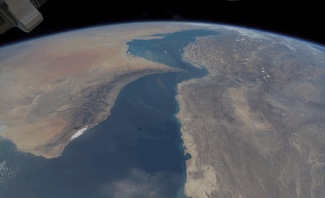
In Iran’s case, this thinking was reflected in the strong emphasis placed on blocking the Strait of Hormuz and selectively targeting economic infrastructure in the Gulf states, including energy facilities. The costs generated by these attacks prompted intense pressure both from the states of the region and from the wider international community, while the economic fallout from the conflict fuelled public discontent in the United States. In the short term, these actions enabled Iran to survive the most intense phase of the attacks. Strategically, they also gave shape to a vision of permanent Iranian control over the strait and Iran’s emergence as the undisputed regional power, as reflected in the partial acknowledgement of Iranian ambitions in the 17 June agreement.
Iran has pressed on with this strategy following the collapse of the agreement. Using military means, it has sought to compel shipping to pass through its territorial waters, laid mines along the route and attacked vessels sailing in breach of its restrictions and US Navy ships attempting to escort them. In doing so, Iran aims not only to demonstrate its advantage and derive economic benefits, but also to secure a permanent source of leverage over the Gulf states, the United States and the global economy.
Conversely, for the United States, reopening the Strait of Hormuz has become the primary objective, followed by enforcing a blockade of Iran as a means of defeating its adversary. In recent months, Washington has promoted shipping routes that bypass Iranian territorial waters while seeking to neutralise Iranian threats in the area. The vast majority of US military operations have focused on destroying Iranian assets used to enforce the blockade, including boats, missile launchers and radar stations. The United States has also declared the Strait of Hormuz completely cleared of mines.
Viewed over the past few months, this effort can be regarded as a moderate success. The Strait of Hormuz is now partially open: on average, between several and just over a dozen ships pass through each day, around 10% of pre-war levels, while a significant share of commodity exports has been redirected to alternative routes.[1] According to difficult to verify estimates, most vessels are following the US-designated route rather than the one imposed by Iran. However, this is not enough to conclude that navigation through the strait is now free and safe and that it will remain so, or that infrastructure in the Gulf states is secure. More broadly, ongoing disruption along the Red Sea route caused by the Iran-aligned Yemeni Houthis continues to strengthen Iran politically while damaging the image of the United States (see below).
Economic pressure, enforced in part through military means, has also become Washington’s main instrument for exerting pressure on Iran. The United States has imposed its own blockade of the Iranian coast, turning back, seizing or attacking vessels sailing to or from Iran. This has also served as a tangible means of weakening the country’s economic capacity: as a result of the blockade, oil exports, Iran’s main source of revenue, have fallen to approximately 10% of pre-war levels.[2]
At the same time, the United States has been tightening the sanctions regime around Iran, a framework that has been gradually expanded since the 1980s, by adding new entities to its sanctions lists on several occasions in recent months.[3] In a pivotal development, Washington has launched ‘Operation Economic Outcast’,[4] which significantly broadens the range of sectors of the Iranian economy subject to US restrictions and strengthens secondary sanctions against entities that violate them. Significantly, this policy appears to be coordinated with countries such as the United Arab Emirates, which at the same time announced it was severing all economic ties with Iran (despite the war, the UAE has remained the main intermediary for Iran’s financial operations). It also appears to be shaping the policies of Iran’s neighbours, most of which, including Turkey and Iraq, suspended air links with Iran in September.
The effectiveness of US economic pressure has long been widely questioned. Decades of sanctions have failed to alter Iran’s policies, and the Islamic Republic has proved remarkably adept at adapting to challenges and circumventing restrictions. It is also difficult to expect rapid results at present. At the same time, the effects of this pressure should not be dismissed altogether, particularly over the coming months. Iran’s economy is mired in a systemic crisis: it has incurred enormous costs as a result of US-Israeli air strikes (estimated at $150–270 billion) and the blockade and lack of investment are limiting the prospects for an economic recovery. The IMF estimates that Iran’s GDP will contract by 5.4% this year. These factors are exacerbating the tensions within society and the elite described above and are, at the very least, constraining Iran’s ability to sustain an intensive, protracted conflict across multiple theatres.
Proxy fronts – Lebanon, Iraq and Yemen
One particularly important dimension of the US-Israeli conflict with Iran is the regional rivalry, notably Iran’s ability to conduct offensive and defensive operations through non-state actors such as Lebanon’s Hezbollah, Yemen’s Houthis (more precisely, Ansar Allah) and Iraqi militias. The United States, Israel and many other countries regard these groups as terrorist organisations that directly threaten their interests in the region.[5] For Iran, by contrast, they form the so-called Axis of Resistance: a forward line of defence and also a network of regional footholds.
Each of these actors has a broad and durable social base. Hezbollah and the Houthis have also developed extensive institutions, creating robust quasi-state structures. Although all are linked to Iran, r[7eceive support from Tehran and share its core strategic objectives, they retain a considerable degree of autonomy.[6] On the one hand, the war that has been ongoing since 28 February represents an attempt by the United States and Israel to destroy or weaken these organisations and thereby deprive Iran of key instruments and regional footholds. On the other hand, Iran has sought to strengthen them and leverage their capabilities against its adversaries. With the end of the intense phase of the conflict in Iran, the importance of the Lebanese, Iraqi and Yemeni theatres has increased significantly.
Lebanon remains the principal proxy front and main arena of the anti-Iranian ‘offensive’, with the primary focus on Hezbollah, which has the closest links to Iran, poses the greatest threat to Israel and remains locked in a fierce conflict with it. Israel launched air and ground operations on an unprecedented scale in early March, quickly turning Lebanon into the main theatre in its confrontation with Iran. This campaign has continued following the suspension of operations against Iran in April. Israel currently controls around 10% of Lebanese territory, which had previously been controlled by Hezbollah.
Israel’s military campaign was accompanied by US diplomacy, which pushed through a peace plan for Lebanon without Hezbollah’s involvement. It envisaged the group’s disarmament and the transfer of control of territory held by Hezbollah to government forces. Expectations of Hezbollah’s capitulation and hopes of eliminating it as a significant socio-political force in Lebanon appear unrealistic, but the group has nevertheless suffered very heavy losses over the subsequent months of fighting. Its capacity for retaliation has been significantly reduced, while avenues for receiving support from Iran have been severely curtailed; Iran has even refrained from launching direct strikes against Israel. At present, Hezbollah appears to have been neutralised, at least temporarily, as an active instrument of Iran’s deterrence policy.
Iraq constitutes another front, in this case fuelled by Iran. Since the beginning of the war, pro-Iranian militias, or IRGC forces acting on their behalf, have carried out systematic drone and missile strikes on targets aligned with Iranian interests. These include US bases in the region (in both Iraq and neighbouring countries), US diplomatic facilities, critical infrastructure, including energy facilities, in neighbouring countries (one of these attacks destroyed Saudi Arabia’s East-West oil pipeline on 10 September) and numerous targets in Iraqi Kurdistan, including bases used by anti-Iranian armed groups. Despite periodic military strikes by the United States, Israel and Saudi Arabia, political and economic pressure and efforts by the Iraqi government – including counterterrorism operations and an official process of disarming militias – the problem remains unresolved. Through its influence over Iraqi militias, Iran retains an almost unlimited capacity to strike targets across the region while avoiding political responsibility for their actions.
For nearly two decades, Iraq has remained an arena of competing US and Iranian interests and influence. Furthermore, it remains dependent on both powers politically, economically and in security terms, while maintaining only fragile political and economic stability. Iraq is among those countries bearing the heaviest costs of the blockade of the Strait of Hormuz. Its oil revenues remain under US control, and Washington has repeatedly blocked transfers to Baghdad.
In recent months in particular, Iraq has come under heavy US pressure to disarm pro-Iranian militias and steadily tighten sanctions against Iran. Washington is also seeking investment in the Iraqi energy sector and promoting the development of transport routes that provide alternatives to the Strait of Hormuz. Iran, for its part, has successfully shielded its proxy militias, securing an extension of the deadline for their disarmament. It has also continued to apply military pressure on US-aligned Iraqi Kurdistan – the last US forces are due to withdraw by the end of September, which raises the prospect of further tensions. It has also sought to undermine US sanctions.
Baghdad’s close ties to Washington and Tehran and its susceptibility to external influence were underscored by the Iraqi prime minister’s visits to Washington and Tehran in quick succession in July, followed by visits to Baghdad in August by the commanders of US Central Command (CENTCOM) and the IRGC’s Quds Force, the branch responsible for external and hybrid operations. The risks of continued and intensifying US-Iranian rivalry in Iraq, and of the country’s destabilisation in the near future, remain high.
Yemen has emerged as a third, distinct theatre of the proxy conflict. The Yemeni-based Houthi movement has deep and extensive ties to Iran, but retains a high degree of autonomy and has not undertaken any military action in support of Iran since February this year. In July, in response to a Saudi attack, the Houthis launched strikes against Saudi Arabia, targeting military sites, ports, refineries and vessels sailing from Saudi ports. In early September, they launched an offensive in Yemen, drove back pro-Saudi forces, seized the Red Sea coast and secured control of the Bab al-Mandab Strait, a key part of the route linking the Mediterranean Sea and the Indian Ocean via the Suez Canal. Iran has declared political support for the Houthis but has denied having any links to the group or influence over the situation, although this does not mean that the IRGC is inactive in Yemen.
The United States, for its part, has also stayed out of the Yemeni conflict, even though Yemen is an ally of Saudi Arabia, opposes Iranian influence and carried out several rounds of strikes against Houthi forces in 2024–25. Technically, therefore, neither Iran nor the United States is directly involved in this conflict. Nevertheless, it has become an important extension of the war in the Persian Gulf: attacks on Saudi Arabia are exacerbating the crisis in energy markets and along key global trade routes, increasing the political and economic pressure on the United States and deepening instability across the region.
Erosion of the regional order
The continuing erosion of the international order in the region forms an important dimension of the current conflict. The crisis is evident both at the level of individual countries and across the broader regional security architecture.
At the national level, although it is still difficult to assess the process conclusively given its varied trajectory across countries, the war has undermined both the assumptions underpinning security policies and also the foundations of economic development; this will inevitably force adjustments. In security terms, every Gulf state, and more broadly every state in the Middle East, has come under attack from Iran or organisations affiliated to Iran, and these states have only limited means to protect themselves and respond effectively. Several countries in the region have become arenas of protracted conflicts (overt or hybrid), resulting from the war with Iran. These include Lebanon, Yemen, Iraq and Saudi Arabia.
In some Gulf states, there are strong concerns about the possible activation of pro-Iranian sabotage and terrorist groups. In every case, this is forcing a reassessment of existing security policies. Similarly, the war has struck at the foundations of economies based on the extraction, processing and export of oil and natural gas – a result of both the blockade of the Strait of Hormuz and damage to infrastructure. With the exception of the UAE, all Gulf states exported at least one-third less oil and gas in September than before the war. In Saudi Arabia, the decline was estimated at around 45% of pre-war levels, while in Qatar, Bahrain and Iran itself exports fell by at least 60–70%. In previous months, the declines were even steeper.
At the regional level, the crisis of the security system is becoming increasingly apparent. For decades, this system has relied heavily on US security guarantees encompassing a network of formal and informal commitments and the presence of US bases, but it has failed to protect the region’s states from Iranian attacks. Although none of the countries in the region has formally questioned its cooperation with the United States (indeed, several are seeking to extend it, notably through increased arms purchases) there are clear signs of frustration with Washington’s policies, prompting efforts by the states of the region to diversify their security arrangements.
First, none of the Gulf states openly joined the conflict, although the involvement of the UAE and Saudi Arabia in retaliatory strikes on Iran was revealed after the fact. All of them pressed for the conflict to be frozen, while some (notably Qatar and Oman) have maintained a close dialogue with Tehran.
Second, a number of steps have been taken to diversify the region’s security arrangements. The UAE has deepened its cooperation with Israel, while Saudi Arabia has strengthened its alliance with Pakistan and entered into a similar arrangement with Turkey under the Mecca Pact.[7] The Gulf states have also moved to extend sectoral cooperation with EU member states and the United Kingdom, while pursuing closer regional cooperation, largely through Saudi-led initiatives that also extend to the Indian Ocean.
These efforts are unlikely to produce an alternative regional order in the near term: for example, the Mecca Pact proved ineffective during the escalation of the conflict with the Houthi movement. Nevertheless, they signal profound realignments in the region. Notably, Washington does not appear to view these developments as a threat to its position, but rather as evidence that its partners are mobilising and assuming greater responsibility for their own security, potentially easing the burden on the United States.
Outlook
The United States and Israel’s conflict with Iran is deep-rooted and systemic. The experience of the past seven months suggests that a lasting political agreement between the parties is unlikely and, in the case of Israel and Iran, effectively impossible to countenance. However, a rapid return to full-scale hostilities, comparable to those seen in March this year, is not inevitable either. Both the United States and Iran are aware of the costs and risks involved, as well as the limited prospects of achieving a swift and decisive military victory. Washington in particular can be expected to avoid this scenario in the run-up to the congressional elections on 3 November, which pose a significant challenge for the administration. For the same reason, Iran may be more inclined to escalate the confrontation.
A resumption of the conflict, although also risky, could be in Israel’s interest, particularly in the context of the upcoming elections scheduled for 27 October. War could prove advantageous during the election campaign and the subsequent formation of a new government, since the complete neutralisation of Iran as a regional actor remains one of Israel’s enduring priorities.
Even if open conflict is avoided, the situation in the region will remain tense. Maintaining at least a partial blockade of the Strait of Hormuz, compounded by disruption in the Bab al-Mandab, and posing a credible threat to the energy infrastructure of the Gulf states remain the main sources of leverage available to Iran as circumstances require. The course of the conflict so far indicates that Iran cannot sustain a complete and lasting blockade, but its disruptive impact on global markets, especially when combined with attacks on infrastructure, will remain severe.
No fundamental revision of Iran’s policies, let alone a collapse of the Iranian system, appears particularly likely in the medium term. Its domestic problems and tensions, especially those related to the economy and exacerbated by US policy, are serious, but the consolidation of the elite around the security establishment would probably enable the regime to suppress any protests or attempts to build a political alternative. Internal pressures are likely to intensify and could eventually trigger domestic upheaval, but they are unlikely to produce any rapid, positive and lasting shifts in Iran’s policies.
Instability in the region is likely to persist and deepen. This applies to the ongoing conflicts in Iraq, particularly the problem of militias and the expected deterioration of the situation in Kurdistan, Yemen (notably the conflict between the Houthis and Saudi Arabia) and Lebanon. One compounding factor is the threat that Iran could fuel instability across the Middle East, particularly in the Gulf states. These crises remain closely linked to the conflict surrounding Iran, but each is fundamentally autonomous and continues to evolve according to its own internal dynamics.
[1] In the second half of September, these alternative routes were already carrying around one-third of the pre-war volumes of oil exports, with fluctuations depending on factors such as the prevailing political climate. See: ‘Crude oil exports via Hormuz at 33.7 million barrels this week, data shows’, Reuters, 25 September 2026, reuters.com.
[2] ‘Blockade succeeds where sanctions failed as Iran oil exports stall’, Reuters, 1 September 2026, reuters.com.
[3] Recent Actions, OFAC, updated 28 September 2026, ofac.treasury.gov.
[4] ‘Treasury Launches Unprecedented Campaign Against Iranian Regime on Economic D-Day’, U.S. Department of the Treasury, 24 August 2026, home.treasury.gov.
[5] The United States has designated selected Iraqi militias as terrorist organisations. The EU has effectively taken a hostile stance towards all of them, but has formally designated only Hezbollah’s military wing as a terrorist organisation.
[6] This applies primarily to the Houthis and, to a large extent, to Hezbollah, although Iran is believed to have gained more direct control over the latter after Israel eliminated the organisation’s leadership in 2024. Iran has greater leverage over some of the Shia militias in Iraq, although their political influence is much more limited.
[7] See: A. Michalski, K. Strachota, ‘The Mecca agreement: a loose alliance between Saudi Arabia, Pakistan and Turkey’, OSW, 12 August 2026, osw.waw.pl.