The Great Wall of Lights: the global impact of China’s distant-water fishing fleet
China’s distant-water fishing (DWF) fleet is an armada of vessels that the state subsidises, controls, protects and organises, either directly or indirectly. While engaged in commercial fishing activities – many of them illegal and often amounting to poaching – China’s DWF fleet also carries out national security tasks assigned to it by the Party and the state. It serves not only as an instrument of China’s food security policy, but also as a means of pursuing a military strategy involving ‘grey-zone’ operations and of expanding influence across the Global South. Consequently, any analysis of the Chinese DWF fleet’s activities requires moving beyond the framework of maritime economics, since the People’s Republic of China’s objectives in this area remain secondary to the broader ambition of realising the vision of China as a ‘Great Maritime Power’.
The distant-water shadow fleet
Peruvian fishermen have dubbed China’s DWF fleet the ‘Great Wall of Lights’ (El Gran Muro de Luz),[1] as these trawlers typically operate with their transmitters switched off while fishing off the coasts of other countries, appearing on satellite imagery or radar screens only as a wall of lights. Although the geographical scope of the fleet’s operations is vast – stretching from China’s coastal waters to the seas surrounding Antarctica, and from fishing grounds off sub-Saharan Africa to the edges of Latin American territorial waters — little is known about it. This opacity stems not only from the routine deactivation of the Automatic Identification System (AIS) transponders, which are required for civil navigation, but above all from China’s deliberate concealment of data and from the fleet’s complex ownership structure.
According to official data published by the State Council of the People’s Republic of China in 2023, 177 Chinese companies were engaged in distant-water fishing, comprising a fleet of 2,551 vessels, of which 1,498 operated on the high seas.[2] The official figures put annual catches at around 2.33 million tonnes, with the main fishing grounds located in the Pacific and Indian Oceans, the South Atlantic and the waters surrounding Antarctica. However, there are compelling grounds forconcluding that these figures are significantly understated. Independent estimates, based on analyses of satellite data, commercial records and vessel registries from multiple countries, indicate that China’s DWF fleet comprises between 16,000[3] and 17,000[4] vessels, some of which operate under foreign flags.
The structure of China’s DWF fleet is diverse in both technical and operational terms. Trawlers constitute the predominant vessel type: 1,821 were identified in the Overseas Development Institute (ODI) research sample alone.[5] These vessels are particularly destructive because they use bottom trawling methods that damage marine ecosystems. According to the ODI, other key vessel types include squid jiggers, which account for 13% of the fleet, as well as longliners (20.7%) and purse seiners (7.5%). A crucial component underpinning operations on such a vast scale is the auxiliary fleet, comprising refrigerated cargo vessels, tankers and floating bases, which enable DWF vessels to operate continuously for years without calling at port. This makes the DWF fleet largely independent of external infrastructure while facilitating both transhipment operations at sea and the concealment of illegal catches.
China’s DWF fleet did not emerge as a result of market forces but rather through large-scale, systemic state intervention. China is the world’s largest provider of fisheries subsidies, allocating between $7.2 billion and $16.5 billion annually for this purpose.[6] Without this support, most of its DWF fleet would be commercially unviable, as it is simply too large; however, Beijing requires a DWF fleet of this scale as a tool for grey-zone operations. The financial support system underpinning China’s DWF fleet has evolved since the mid-1980s (the first expedition, comprising 13 fishing vessels, set sail for the waters off West Africa in 1985), shifting from simple fuel subsidies to a more sophisticated set of mechanisms. These include special transfer payments administered by local authorities, which are difficult to track; public financing for DWF infrastructure and overseas bases, including under the Belt and Road Initiative (BRI); tax breaks and preferential loans; exemptions from customs duties and import taxes; and ‘defence contracts’ linked to the People’s Maritime Militia.[7]
Political pressure from countries in the Global South has also influenced the way in which China supports its DWF fleet. In response, Beijing began investing in fishing ports and processing facilities in countries such as Ghana, Mauritania and Peru. It has portrayed these initiatives as promoting development and supporting local fishing communities;in practice, however, this infrastructure forms a closed logistical network controlled by state-owned conglomerates such as the China National Fisheries Corporation (CNFC) and China Poly Group,[8] the latter being a state-owned defence contractor. According to ODI estimates, ‘harmful subsidies’ – defined as those that expand fishing capacity beyond sustainable resource levels – account for as much as 49% of all funding provided by the Chinese government. The DWF fleet receives the bulk of these funds, despite accounting for only around 22% of China’s total catch, according to official figures. However, economic considerations remain secondary for Beijing, as the DWF fleet functions primarily as a political project and a component of China’s maritime security strategy.
The blue granary
According to a report by the UN’s Food and Agriculture Organization (FAO), China accounted for approximately 40% of global fish production in 2022, while its predatory fishing practices contributed to a decline in global marine catches from 14.4 million tonnes in 2015 to 11.8 million tonnes in 2022.[9] At the same time, the Oceana report cited above, based on AIS data and information from Global Fishing Watch, found that China’s 57,000 fishing-capable vessels accounted for 44% of visible global fishing activity between 2022 and 2024, with distant-water fishing trawlers responsible for the majority of that activity. This concentration of resources has translated into market dominance. China is the world’s largest exporter of seafood, with annual trade worth around $18.5 billion, and its fishing fleet accounts for approximately 35-40% of reported high-seas catches. An estimated 60-65% of catches made by the DWF fleet are destined for the Chinese domestic market. China is the world leader in fish farming, with total production reaching 74.1 million tonnes in 2024, including 60.8 million tonnes from aquaculture; however, this sector requires vast quantities of fishmeal.[10] The DWF fleet supplies much of the raw material used in fish feed production, effectively transferring low-cost protein from poorer regions of the world to China.[11] Distant-water fishing has become one of the pillars of China’s national food security strategy, thereby reducing the country’s exposure to price fluctuations on international markets.
The DWF fleet’s role as a key component of China’s food security strategy is not accidental. The 13th Ocean Fisheries Development Plan,[12] adopted in 2017, defines the DWF fleet as a tool for ‘ensuring national food security’ in the face of depleted coastal fish stocks. As demand for animal protein rises alongside increasing affluence and changing dietary habits, China has become dependent on imports and distant-water fishing, while avoiding complete reliance on international trade. The country accounts for 36% of global fish consumption. Between 1961 and 2021, per capita fish consumption in China soared from 4.3 kg to 41.6 kg.[13] Food security became a strategic priority for the Chinese government during the COVID-19 pandemic, as reflected in the 14th Five-Year Plan (2021-25), which for the first time placed the fisheries sector within the economic security section alongside energy and finance.[14] As a result, China has secured a dominant position in the global fisheries sector, albeit at the cost of devastating the fishing industries of its potential allies across the Global South. The problem lies not only in the fact that the DWF fleet operates in the exclusive economic zones (EEZs) of some countries under bilateral agreements, including off the coasts of Ghana, Nigeria, Senegal, Guinea-Bissau and Liberia, while operating elsewhere beyond any legal framework. Rather, the destructive nature of the fleet’s activities stems from a combination of factors: the sheer scale of its operations and the displacement of local fishermen from their traditional fishing grounds; the underreporting of catches, resulting in overfishing, and outright poaching; the removal of a significant source of protein and calories from local food chains through exports to China; and the widespread corruption associated with Chinese fishing operations.
Saiko – the useful ‘trash’ fish
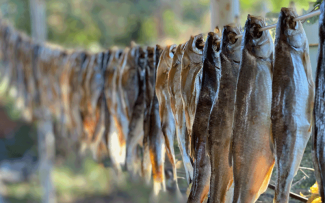
In Sub-Saharan Africa, pelagic fish such as sardinella provide up to 18% of dietary animal protein; the figure is even higher in coastal countries such as Mozambique and Namibia. Drying and smoking enable fish to be stored and transported over long distances without refrigeration, which is a critical factor for poor communities in tropical climates.[15] These fish are an important component of food security, particularly for children and for women of reproductive age, providing more than 15% of their daily requirements of calcium, iodine, iron, selenium, zinc, vitamins B12 and D, and omega-3 fatty acids, thereby helping to combat nutritional deficiencies.[16] However, the activities of the Chinese DWF fleet activities often amount to poaching,[17] a practice that has depleted traditional pelagic fishing grounds, destabilised local markets and contributed to the collapse of artisanal fisheries in many African countries. The consequences extend beyond shortages of a key dietary staple, undermining the foundations of local economies in coastal regions. While the nominal impact of the DWF fleet’s fishing activities on the GDP of coastal states appears limited,[18] they have a profoundly damaging effect on food security across Africa and on social cohesion within fishing communities.
Ghana offers a compelling example. Fish provide around 60% of animal protein in the local diet, and the artisanal fisheries sector supports approximately three million people. However, Chinese companies control nearly 90% of the industrial trawler fleet through sham joint ventures established to circumvent the ban on foreign ownership. The illegal use of modified nets by Chinese trawlers to catch small pelagic species has reduced the incomes of local fishermen by 40% over the past 15-20 years and led to a sharp decline in pelagic fish stocks. Fish drying and smoking have traditionally been carried out by women, providing an important source of income and financial independence.[19] The collapse of pelagic fish populations has pushed them into debt and poverty, with wider social repercussions across many coastal communities.[20] The fish that women traditionally sourced from local fishermen must now be purchased from Chinese companies in the form of low-quality frozen blocks or directly from Chinese fishermen on the black market, which is largely supplied with deliberately targeted juvenile fish – a practice that has even acquired its own name: saiko.[21] Meanwhile, the highest-quality catches enter illicit trade at sea, where industrial trawlers transship them to refrigerated cargo vessels bound for China.
A similar pattern has been repeated across most of Africa’s coastal states, while the consequences of the declining availability of pelagic fish have affected communities throughout the continent. In countries such as Ghana, China’s DWF fleet and the saiko trade have exacerbated the crisis of state institutions. Trawler crews bribe fisheries inspectors and pay off port officials. As a result, illegal practices are covered up by the very officials tasked with combating them. As the social and economic crisis continues to deepen, these developments have fuelled opposition movements. The DWF fleet’s activities are no longer viewed solely as an environmental issue, but increasingly as a matter of national security and sovereignty, a shift that has had a profound impact on diplomatic relations with China. At the same time, the corruption mechanisms associated with the DWF fleet have enabled China to co-opt significant sections of the political elites in African coastal states.
A similar situation has unfolded in South America, although coastal states in the region possess stronger institutions, including coast guards and navies, forcing the Chinese DWF fleet to operate along the boundaries of their EEZs. However, the large-scale harvesting of squid by Chinese vessels, typically conducted without licences and with AIS transponders switched off, continues to deprive local fishermen of resources that migrate between international waters and territorial seas or EEZs.[22] In 2020, the economic losses incurred by South American countries as a result of illegal fishing were estimated at $2.3 billion.[23] This has generated tensions in relations with China similar to those observed in Africa.
Anti-Chinese sentiment
The fishing effort[24] of the Chinese fleet off the coast of Argentina soared by 800% over the course of a decade.[25] This has led to armed incidents: on several occasions, the Argentine Coast Guard has opened fire on Chinese vessels and, in 2016, even sank one of them.[26] However, China has consistently sought to suppress controversies surrounding its DWF fleet. There has been no research into the extent to which anti-Chinese sentiment contributed to Javier Milei’s victory in Argentina’s 2023 presidential election; however, anti-China rhetoric certainly reinforced his image as an anti-leftist political outsider. In pursuing closer ties with the United States, Milei has intensified maritime patrols and initiated joint exercises with the US Navy aimed at combating illegal fishing. However, Argentina’s substantial debt to China and its dependence on exports of soybeans and beef to the Chinese market have compelled his government to proceed cautiously in order to avoid provoking economic retaliation from Beijing. This does not change the fact that similar processes have been unfolding across other Latin American countries.
In 2020, more than 500 Chinese trawlers gathered near the Galápagos Islands, prompting protests by fishermen and environmental groups. A local organisation, the Island Front for the Galápagos Marine Reserve, accused China of depleting tuna and squid stocks. In 2021 and 2024, Chile, Peru, Ecuador and Colombia issued joint statements condemning a ‘large fleet of foreign vessels’ (meaning Chinese) for illegal fishing within their EEZs. In Peru, an unlikely alliance of military personnel and fishermen has been pushing back against the country’s growing economic dependence on China, which it regards as a security threat, including through inspections of port facilities.[27] The increase in the number of DWF vessels operating off Peru’s coast, from 155 to 205 between 2023 and 2024, prompted tighter regulations and a ban on Chinese fishing vessels calling at local ports.[28] However, China’s DWF fleet has demonstrated a remarkable capacity to adapt and relocate its operations. When Peru barred access to its ports for vessels suspected of illegal fishing in 2024, the fleet swiftly shifted its logistical hubs to the Chilean ports of Iquique and Valparaíso and continued to exploit the same fish stocks across the region.[29] In Africa, anti-China protests linked to the DWF fleet’s activities have occurred in countries such as Ghana, The Gambia, South Africa, Senegal, Nigeria and Sierra Leone. Benin, Togo and Ghana have conducted joint maritime patrols.
China’s network of overseas DWF bases integrates ports, shipyards and processing plants. This system enables it to exercise near-total control over the value chain. Even when fish are caught off the coast of Africa, they are processed in Chinese hubs such as Dalian and Qingdao before being re-exported to Europe or the United States as products of Chinese origin. Currently, China accounts for around 30-35% of the global production of seafood and aquatic products,[30] giving it enormous leverage over pricing and contributing to the closure of competing processing facilities in other countries. Unsurprisingly, this has prompted accusations that China is replicating a model of colonial exploitation.[31]
The People’s Maritime Militia
The DWF fleet’s operations are closely aligned with the operational model of the People’s Maritime Militia (PMM), an organised paramilitary component of China’s maritime defence system. It consists primarily of fishing vessels, civilian ships and specialised crews that formally operate as civilian entities. In practice, however, these vessels and crews carry out tasks at sea assigned by Party and state authorities, including enforcing territorial claims, conducting reconnaissance, maintaining a presence in disputed waters, blocking or harassing foreign vessels and supporting the activities of the People’s Armed Militia, which also functions as a coast guard, and the People’s Liberation Army Navy (PLAN).[32] The PMM’s significance lies in enabling the Chinese state to create faits accomplis at sea without resorting to overt military operations. This capability is particularly important in disputed waters such as the South China Sea and the East China Sea. Examples of its activities include massing vessels around contested reefs, escorting Chinese warships, obstructing the resupply of Philippine outposts and demonstrating ostensibly civilian economic activity in disputed waters. Beijing has frequently employed the so-called ‘cabbage strategy’, surrounding contested reefs with successive ‘layers’ of fishing vessels, coast guard ships and naval assets. The PMM unveiled a new variation of this approach on 24-26 December 2025, when more than 2,000 vessels formed an inverted ‘L’ shaped formation stretching some 470 kilometres and cutting off access to part of the East China Sea.[33] At the same time, tracking the PMM is exceptionally difficult because its vessels routinely deactivate their AIS transponders.
Even when operating far from the maritime areas claimed by China, the DWF fleet continues to serve Beijing’s political objectives. Its activities are closely aligned with China’s strategic interests and diplomatic calendar. In 2018, during the G20 summit in Argentina, China’s Ministry of Agriculture and Rural Affairs issued an administrative order[34] directing Chinese distant-water fishing vessels to keep clear of the EEZ boundaries of the regions countriesand to withdraw immediately from high-risk areas in order to avoid diplomatic incidents during the summit. In March 2019, the ministry issued another ‘notice’ following an incident involving the vessel Hua Xiang 801 (华翔801), which was alleged to have entered Argentine waters illegally and resisted inspection. The document again instructed distant-water fishing vessels to maintain a distance of at least three nautical miles from the EEZ boundaries of neighbouring countries and to cooperate with foreign enforcement authorities. Significantly, it also justified these measures by citing the need to foster a ‘favourable atmosphere’ ahead of the 70th anniversary of the founding of the People’s Republic of China and the Second Belt and Road Forum.[35]
The impotence of the UN system
The system of international organisations operating within the UN framework remains largely powerless in the face of China’s oceanic poaching. Countries affected by the negative consequences of the DWF fleet’s activities have sought to intervene through multilateral mechanisms, but Chinese diplomacy has effectively obstructed many of these initiatives. In September 2025, a landmark World Trade Organization (WTO) agreement aimed at eliminating harmful fisheries subsidies entered into force.[36] As a WTO member, China ratified the agreement, which in theory obliges it to cease subsidising vessels engaged in illegal fishing and to increase transparency in reporting DWF-related expenditure. However, given the paralysis of the WTO’s dispute settlement system, it remains unclear whether these provisions can be effectively enforced.
At the same time, within bodies such as the South Pacific Regional Fisheries Management Organisation (SPRFMO), China has systematically exploited the consensus principle to block decisions that run counter to its interests. In 2026, the EU proposed increasing the required inspection rate for foreign vessels in ports from 5% to 50% within the SPRFMO framework. A majority of members supported the proposal, but China blocked consensus on the issue. It has also obstructed efforts to introduce binding standards governing crew working conditions (cases of forced labour are widespread on Chinese squid jiggers[37]), arguing that such measures would constitute an infringement of national sovereignty.[38]
Nevertheless, international pressure has produced some results. In 2025, the FAO announced[39] that China had become a party to the Port State Measures Agreement (PSMA). In theory, this should facilitate the inspection of illegal catches in ports and restrict the entry of illegally sourced fish into domestic and international markets. China has therefore formally begun to strengthen its mechanisms for overseeing its DWF fleet. Since 2020, it has imposed unilateral seasonal moratoria on squid fishing in selected areas of the high seas.[40] In January 2024, it announced the full implementation of electronic reporting requirements for Chinese vessels authorised to fish on the high seas.[41] However, it remains unclear what penalties apply to vessels that continue to operate without such authorisation. The effectiveness of these measures ultimately depends on Beijing’s willingness to enforce the rules, ensure data transparency and cooperate with other countries and regional fisheries management organisations, such as the SPRFMO.
Outlook
The operations of China’s DWF fleet represent a phenomenon that extends beyond the conventional boundaries of economic activity. Its commercial objectives are inextricably intertwined with China’s economic, political and military interests. The fleet has become an effective instrument for projecting Beijing’s power, and its activities are reshaping both political realities and ecological conditions across the world’s oceans.
At the same time, China’s DWF fleet poses a threat to the food security of countries across the Global South and risks degrading marine resources. Its systematic circumvention of international regulations and its use of bribery in many coastal states underscore the need for the international community to develop more robust mechanisms for enforcing agreements and combating transnational corruption. The assertiveness displayed by countries such as Argentina suggests that the effective use of force, within the bounds of international law, must form part of the pressure exerted on China. Nevertheless, as long as Beijing continues to regard oceanic resources as a strategic asset essential to the survival of the PRC’s political system, its DWF fleet is likely to remain a permanent feature of the global maritime economy. It will continue to operate beyond the limits of international law and to test the resilience of marine ecosystems.
[1] J. Goodman, ‘El Gran Muro de Luz: el poder marítimo chino en Sudamérica’, AP, 24 September 2021, apnews.com.
[2] Development of China’s Distant-Water Fisheries, Rada Państwowa ChRL, październik 2023, scio.gov.cn.
[3] ‘China’s Global Fishing Offensive’, the Select Committee on Strategic Competition Between the United States and the Chinese Communist Party and the Homeland Security Subcommittee on Transportation and Maritime Security, January 2026, chinaselectcommittee.house.gov.
[4] ODI is an independent British think tank specialising in international development, public policy and poverty reduction. ‘China’s distant-water fishing fleet. Scale, impact and governance’, ODI, June 2020, media.odi.org.
[5] Ibid.
[6] See: A. Martin, ‘The Chinese fishing army: a threat to Latin America’, CEEEP, 17 March 2021, ceeep.mil.pe.
[7] See: ‘China’s Fisheries Subsidies Propel Distant-Water Fleet’, OCEANA, September 2021, oceana.org.
[8] See: ‘China’s distant-water fishing fleet…’, op. cit.
[9] ‘The State of World Fisheries and Aquaculture 2024’, FAO, 2024, fao.org.
[10] See: ‘China’s Food Future’, Moore Foundation, 28 April 2026, systemiq.earth.
[11] ‘Role and impact of China on world fisheries and aquaculture’, the European Parliament, February 2022, europa.eu.
[12] ‘十三五”全国远洋渔业发展规划’, the Ministry of Agriculture and Rural Affairs, 15 December 2017, moa.gov.cn.
[13] J. Miziołek, ‘Spożycie ryb na świecie – jak wypada spożycie ryb w Polsce na tle świata?’, Wiadomości Spożywcze, 7 March 2023, wiadomoscispozywcze.pl.
[14] ‘十四五”国家信息化规划’, the State Council of the People’s Republic of China, 28 December 2021. gov.cn.
[15] See: S. Bunting et al., ‘Evaluating rational and healthy use options for small pelagic fish species in sub-Saharan Africa’, Food Security 16(4), October 2024.
[16] See: J. Robinson et al., ‘Dried fish provide widespread access to critical nutrients across Africa’, Proceedings of the National Academy of Sciences, Vol. 122, No. 39, September 2025.
[17] More than 60% of DWF vessels engage in illegal, unreported and unregulated fishing worldwide. See: ‘An Investigation into the Dubious Chinese Distant-Water Fishing Fleet (DWF)’, Investigative Journalism, Reportika 2023. ij-reportika.com
[18] In Africa, coastal states lose between 0.1% and 1% of their GDP. See: E. Seiyafa et al., ‘Chinese fishing in West Africa: Responding to the environmental and social impacts’, Atlantic Council 2025, atlanticcouncil.org. In Latin America, the losses are even smaller and are not reflected in official statistics, as they usually amount to only a fraction of a percentage point relative to GDP, largely because the fisheries sector accounts for a relatively small share of national economies.
[19] W. Tycholiz, ‘Afrykańskie ryby w chińskich sieciach’, Polskie Centrum Studiów Afrykanistycznych, 10 September 2020; pcsa.org.pl
[20] ‘ON THE PRECIPICE: Crime and corruption in Ghana's Chinese-owned trawler fleet’, Environmental Justice Foundation, October 2022. ejfoundation.org
[21] The term saiko (formerly saite) dates back to the 1970s and derives from a Japanese term meaning ‘trash’ fish. For Ghanaian fishermen, however, it refers to ‘good’ or ‘useful’ fish, primarily small pelagic species such as sardinella. Industrial trawlers, designed to catch demersal fish, deliberately target pelagic species using illegal nets and then exchange their catch for fuel or cash with local fishermen. Unable to compete with the trawlers, these fishermen help distribute the contraband catch. See: J. Aldred, ‘Saiko fishing costs Ghana tens of millions of dollars in a single year’, Dialogue Earth, 13 June 2019, dialogue.earth.
[22] A. Godono, ‘Combating IUU Fishing in the South American Pacific: An Opportunity to Counter Chinese Influence Closer to Home’, National Defense University Press, 9 January 2026, ndupress.ndu.edu.
[23] C. Piñona, A. Beirão, ‘IUU Fishing Enforcement in the Southwest Atlantic Ocean: The 201-Mile Challenge for Coastal State Security’, Revista De Relaciones Internacionales, Estrategia Y Seguridad, 20(2), p. 122.
[24] Fishing effort is a measure of the intensity of fisheries-resource exploitation, defined as a combination of vessel size, engine power and the number of days spent fishing. It is a key parameter in fisheries management, used to establish catch limits that ensure the sustainable use of marine resources. See: ‘Coordinating Working Party on Fishery Statistics’, FAO, fao.org.
[25] N. Kuo, ‘US, Argentina to cooperate, combat illegal Chinese fishing’, VOA, 28 March 2024, voanews.com.
[26] ‘Argentina sinks Chinese fishing boat Lu Yan Yuan Yu 010’, BBC, 16 March 2016, bbc.com.
[27] A. Chakrabarty, ‘Illegal, Unreported and Unregulated Fishing in Latin American Waters by China’s Distant Water Fleet- Concerns’, Indian Council of World Affairs, 7 January 2025, icwa.in.
[28] A. Illueaca, ‘China and LAC at Odds: Blue Diplomacy in the Era of IUU Fishing’, China Global South Project, 4 December 2025, chinaglobalsouth.com.
[29] ‘China’s Global Fishing Offensive’, op. cit.
[30] China produced 64.5 million tonnes of fish and seafood in 2022, accounting for 35% of global production (approximately 187 million tonnes). In aquaculture, China’s share was even higher, at 60% (49.6 million tonnes). See: ‘The State of World Fisheries and Aquaculture 2024’, op. cit.
[31] See: ‘New evidence shows Chinese, West African governments must rein in rogue fishing fleet’, Greenpeace International, 20 May 2015, greenpeace.org; A. Ebo’o, ‘China’s Domination of Distant-Water Fishing: The Impact on West and Central Africa’, Hoover Institution 2022, hoover.org; C. Rogers, ‘The dark side of China’s foreign fishing boom’, Mongabay, 2 June 2016, mongabay.org.
[32] According to the US Department of Defense, it constitutes a component of China’s armed forces, operating under military control and ultimately subordinate to the Central Military Commission through local structures of the People’s Liberation Army (PLA). In peacetime, its primary role is to exert pressure in support of China’s maritime claims. See: ‘Military and Security Developments Involving the People’s Republic of China December 2024’, the U.S. Department of Defense, 2024, p. VIII, defence.gov.
[33] Sokabe-Mori Aki, ‘China's Maritime Militia Is a Growing Threat’, Japan Forward, 26 March 2026, japan-forward.com.
[34] ‘农业农村部下发通知:严防远洋渔业发生涉外违规事件’, The Paper, 30 November 2018, thepaper.cn.
[35] ‘农业农村部:加强远洋渔业安全管理,严禁越线捕捞’, The Paper, 22 March 2019, thepaper.cn.
[36] ‘Agreement on Fisheries Subsidies’, WTO, 17 June 2022, wto.org.
[37] K. Northrop, ‘Chinese squid fishing linked to labor, environmental abuses’, The Washington Post, 17 September 2025, washingtonpost.com.
[38] ‘U.S. Leads the Way to Strengthen Monitoring and Control of Fishing in the South Pacific’, NOAA, 12 March 2025, noaa.gov.
[39] ‘China becomes Party to the PSMA’, FAO, 16 April 2025, fao.org.
[40] Wei Yuan, Xuejiao Pan, ‘The fishing moratorium regime under the framework of global marine governance: insights from China’, Frontiers in Marine Science, 20 October 2025, vol. 12, frontiersin.org.
[41] Ibid.