The dismantling of the Kurdish quasi-state: a new stage in Syria’s post-war transformation
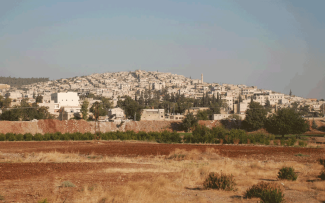
The unrecognised Kurdish autonomy in Syria (the so-called Democratic Autonomous Administration of North and East Syria – DAANES/Rojava),[1] was effectively dismantled in January, as a result of an offensive by Syrian government forces and a conflict within the quasi-state. Damascus assumed direct control over 80% of its territory and critical infrastructure. Under the agreements reached, Kurdish armed forces are to be fully integrated into state structures. The dissolution of DAANES will lead to profound shifts on the Kurdish political scene both in Syria and in neighbouring countries.
The takeover of DAANES marks a strategic success for the government in Damascus in the process of the country’s post-war reintegration. It reflects the growing effectiveness of state structures and the steady rise of Syria’s international position, particularly in relations with the United States. At the same time, the integration of this part of the country will serve as an indicator of Damascus’s intentions and capabilities in the ongoing political transformation, particularly regarding centralisation and the role of minorities in the state. The crisis surrounding Rojava confirms that the risk of a resurgence of Islamic State (IS) remains one of the most significant challenges.
Developments in Syria reflect broader international processes, most notably the high level of activity and influence of the United States in the region. Washington played a key role in containing and resolving the conflict, and reaffirmed Syria’s importance in its Middle East policy. The United States seeks to stabilise the country, remains engaged in combating IS, and is prepared both to accommodate and to restrain the regional ambitions of Israel and Turkey.
Kurdish quasi-state
The process of building independent political and military structures in Rojava/DAANES (see Appendix) dates back to the outbreak of the Syrian civil war in 2011. It emerged in response to Kurdish political ambitions, the weakening of the government in Damascus, and the absence of agreement with the Arab-dominated opposition. The dominant political force among Syrian Kurds was the Democratic Union Party (PYD), an offshoot of the Kurdistan Workers’ Party (PKK), headquartered in the Kandil Mountains in Iraq. The PYD maintained its own armed militia, the People’s Defence Units (YPG).
A turning point for the Kurds came with the repelling of the Islamic State offensive in 2014. This strengthened the authority of the PYD, established it as the main US ally in the fight against Islamic State, and, over time, enabled the group’s defeat in Syria and the takeover of most of its territory. One of the consequences was a sharp increase in the Arab population within DAANES. Strong and stable institutions made Rojava an attractive partner not only for the United States but also for Russia, which established military bases there, and at times also for Iran and Israel. DAANES, regarded as an extension of the PKK, remained in open conflict with Turkey. This resulted in armed clashes, including the loss of the Afrin exclave and a strip of border territory in 2018–2019. At the start of 2026, Rojava controlled more than a quarter of Syria’s territory, including around 80% of the country’s oil deposits, which ensured its de facto economic independence.
Since 2011, strong political, administrative, and military structures evolved in the areas controlled by the Kurds and the PYD, which Damascus never recognised. They were built on the ideas of democratic confederalism developed by Abdullah Öcalan, the historic leader of the PKK. In practice, this entailed a progressive social revolution, including the marginalisation of traditional elites and the rapid empowerment of women in a traditional society, alongside the establishment of largely façade democratic institutions. Both the political structures of DAANES and its multi-ethnic armed forces, the Syrian Democratic Forces (SDF), were dominated respectively by the PYD and the YPG, which maintained close ties with the PKK. Some of their members originated from the organisation, although the degree to which the entire structure was subordinated to the leadership of the Kurdistan Workers’ Party in the Kandil Mountains remained a matter of debate. Compared with the rest of the country, however, Rojava remained a politically and economically stable region.
The collapse of Bashar al-Assad’s regime and the establishment of a new government in Damascus in December 2024 brought about a radical change in the situation. Formally, DAANES recognised the new authorities and declared its readiness for integration, while demanding far-reaching autonomy, effectively limiting the central government’s role to a purely nominal one. At the same time, in 2025, clashes took place with the Syrian National Army (SNA – forces supported by Turkey and now integrated into the Syrian army), the integration process negotiated under pressure from the United States on 10 March 2025 was boycotted, and repressive measures were carried out against supporters of the new authorities. In addition, cooperation was developed with the Druze, who hold separatist aspirations and are supported by Israel (see below). At the start of 2026, DAANES effectively operated as an independent actor on the Syrian and regional political scene.
Defeat in the war with Damascus
The January conflict broke out on 6 January this year in the Kurdish districts of Aleppo after another round of negotiations between the sides collapsed and Kurdish forces shelled government troops the day before. Following two days of fighting, and with US mediation, Kurdish forces were evacuated and the local population fled the city. On 13 January, a government offensive east of the Euphrates commenced, coordinated with an anti-Kurdish ‘uprising’ by Arab tribes. This ultimately led to the collapse of the defence and to the capture of most of the Kurdish ‘autonomy’s’ territory by government forces.
Significant episodes during the fighting included the escape of around 120 Islamic State fighters from a prison previously controlled by the SDF. Most were later captured with the support of US forces. In addition, up to 10,000 family members of Islamic State militants escaped from another camp. The final terms of the ceasefire, agreed with Washington’s mediation, were announced on 30 January. They included the withdrawal of Kurdish forces from the main cities, namely Hasakah and Qamishli, and subsequently also from Kobanê, and their replacement by government security forces cooperating with their Kurdish counterparts. Damascus assumed control over critical infrastructure and oil fields, as well as authority over the region’s administrative structures.
The details of the agreement concerning the creation of four brigades based on the SDF, the integration of the security apparatus, the continuation of employment in public institutions, and the allocation of positions at both the local and central levels remain unclear. Questions also remain regarding the scope and legal basis of the rights granted to the Kurds by President Ahmad al-Sharaa in a decree issued on 16 January, as well as the future of foreign fighters within the SDF. In the days that followed, the agreement was largely upheld.
During the January conflict, each side lost around one thousand soldiers. The civilian death toll is estimated at several dozen.
Collapse of the quasi-state.
As a result, DAANES lost most of its territory, including the areas that had ensured its economic independence. At the same time, its military and political structures either collapsed or underwent significant erosion. The autonomy has effectively ceased to exist as a political entity.
The conflict exposed the scale of the systemic problems faced by DAANES. The most significant factor, which proved decisive for the success of the government offensive, was the extent of tensions between its structures and the Arab majority. Arabs constituted at least 60% of the autonomy’s population (see Appendix). This led to desertions and armed clashes between Sunni Arab groups and the SDF.
Another challenge was tensions within Kurdish groups. These affected the SDF and YPG themselves and stemmed from differences over policy towards Damascus, and, to a large extent, from divisions between Syrian Kurds and those more closely linked to Kandil. The latter adopted an uncompromising stance towards integration and in January supported fighting to the end, in line with calls from Kandil. Further tensions also emerged with the activation of the opposition, mainly the Kurdish National Council (KNC).[2]
The third aspect of the crisis in DAANES was the shift in the international situation, underestimated by the Kurds, including the lack of military support from their previous partners, above all the United States. They also counted on assistance from Israel, and, to a lesser extent, from Russia.
The dissolution of DAANES diminishes the achievements of the PYD, and even more so, those of the Kurds in Syria, but it does not erase them. Its enduring legacies appear to include significant symbolic and identity capital, weakened yet still functional party structures, and a residual core of military forces and security apparatus. However, the political project pursued by the PYD, and, by extension the PKK, has entered a phase of profound defensive retreat.
Syria’s principal challenges in light of the dismantling of the Kurdish quasi-state
The situation surrounding Rojava was, and remains, an important indicator of the overall condition of post-Assad Syria, its internal dynamics, and trends in regional politics. The country is undergoing a phase of profound transformation following the devastating civil war (2011–2024) and the rebuilding of the state by forces of the former radical Islamist opposition led by al-Sharaa, who has served as Syria’s president since 30 January 2025. Syria’s main challenges include restoring control over its territory, developing a model of governance, and building state structures, as well as neutralising threats and strengthening its international agency.[3]
The issue of territorial control
Rojava was the most significant, though not the only, challenge facing the new authorities in Damascus regarding territorial integrity. When they took power in December 2024, central control remained largely illusory not only over DAANES but also over regions in northern Syria held by the pro-Turkish Syrian National Army (SNA), the coast dominated by Alawites,[4] and the south of the country, including Druze areas.[5] In addition, Turkish, Israeli,[6] American, and Russian forces were present on Syrian territory, directly or indirectly shaping the situation on the ground.
Two serious crises unfolded in 2025. In March, the government faced an ‘uprising’ by Alawites linked to the Assad regime, which it suppressed with force. In July, bloody clashes took place with the Druze, who were supported by Israel. As a result, Damascus lost control over the south of the country, specifically the Suwayda province. At the same time, however, the SNA was reintegrated and control over areas in northern Syria was strengthened. The situation on the Alawite-dominated coast also gradually stabilised. With the dismantling of Rojava’s structures, the authorities can claim a milestone in the process of reasserting control over the state’s territory. Despite this clear success for Damascus, repeating the DAANES scenario in Suwayda currently appears impossible owing to the Israeli security umbrella.
State-building and institutional structures
The final political model envisaged by Syria’s current authorities remains unclear. The leadership has emerged from the recent Islamist opposition and has a terrorist background. Both Western countries and Syria’s minorities are deeply concerned that the authorities may seek to impose a centralised, religious, and nationalist system, effectively entrenching Sunni Arab dominance in a state marked by significant ethnic and religious diversity.
Doubts likewise persist over the democratic nature of the system being built in Syria. Freedoms have clearly expanded compared with the Assad era, and the authorities are not accused of deliberately and systematically restricting them. At the same time, the transformation is being directed from the centre. For instance, the president has controlled both the adoption of the interim constitution and the formation of parliament. The process remains incomplete.
These concerns were particularly evident in Damascus’s relations with Rojava, a Kurdish-dominated region with well-established and distinctive political structures that promotes a secular model of the state, but has been largely marginalised in the transformation process. The issue also largely affects other ethnic and religious minority groups, including the Druze, Alawites, and Christians.
The dissolution of DAANES may partly validate these concerns, pointing towards a unitary Syrian state. At the same time, Damascus has signalled openness to minority rights. This includes the unprecedented decree by al-Sharaa granting rights to the Kurds, as well as a broad willingness to include minorities, for example by effectively incorporating Rojava’s military personnel, security services, and administrative structures into state institutions. At the same time, the authorities appear to favour the emergence of Kurdish elites that are aligned with the government but not linked to, or openly in conflict with, DAANES and the SDF. The resolution of the Kurdish and Rojava issue therefore remains a key test of the authorities’ intentions and capabilities and is likely to set a precedent for other minorities.
The dissolution of DAANES also came as a test for the effectiveness of state institutions, particularly diplomacy and the armed forces. Concerns have persisted over the government’s insufficient control of the army. These fears were fuelled by massacres of civilians committed by government forces during the suppression of the Alawite ‘uprising’ on the coast in March last year, which left up to 1,500 civilians dead,[7] as well as by the massacre of Druze civilians during the July conflict, when around 800 people were killed.[8]
The fighting in Aleppo and north-eastern Syria in January this year carried particular risks, not least because of the involvement of SNA forces, which had previously been accused of crimes against Kurdish civilians. In the present conflict, however, the issue of civilian casualties and atrocities emerged on a relatively limited scale. The number of victims is estimated at several dozen, or slightly more, with responsibility attributed to both government forces and the SDF. In this context, it is possible to speak of a significant improvement in the authorities’ control over the armed forces, as well as of a greater awareness of the political consequences of their actions.
Non-state military actors
In the background of the ongoing fighting between government forces and the SDF, three specific types of irregular armed groups emerged. This highlights a broader challenge facing Syria.
The first group comprised Arab tribal forces, which actively rose up against the SDF. As autonomous political and military actors, they had previously participated in Syria’s conflicts. They cooperated at different times with opposition forces, Assad’s security services, and later with Islamic State. The United States also sought to work with Arab tribes during the campaign against IS. Following Assad’s overthrow, tribal (Bedouin) militias became the main participants in the conflict with the Druze in Suwayda. Although Damascus now exercises complete control over them, they are likely to remain autonomous and locally significant political and military actors.
The second problematic actor is the PKK. Its presence in Syria is well established, although its scale remains contested, with Turkey, for example, equating the SDF and YPG with the PKK. Rojava has served as the group’s principal base of support, and the January conflict exposed differences between the PKK leadership in Kandil and Syrian Kurds over tactics and strategy, weakening the PKK’s position in Syria and raising the prospect of its complete removal. Ankara and Damascus continue to call for the withdrawal of the PKK’s foreign Kurdish members from Syria, and the organisation is therefore likely to remain a source of tension, particularly in the north, including the risk of guerrilla or terrorist activity, as well as potential Turkish military operations, all of which would carry broader political consequences for the country.
The third, and from an international perspective the most significant, actor is Islamic State, whose role became particularly evident during the conflict in Rojava. In the short term, a key challenge has been maintaining effective control over prisons and camps holding Islamic State members and their families. Since 2018, these facilities have been overseen by the SDF, with US support, and have held around 50,000 people, including about 8,500 fighters. The loss of control over one such facility in January this year immediately prompted pressure from Washington on both sides of the conflict to ensure the proper security of detention sites. At the same time, the core problem remains the risk of an Islamic State resurgence in both Syria and Iraq. The number of IS attacks is increasing, raising concerns that the group could attract Syrian radicals dissatisfied with the authorities’ moderate policies, as well as Arabs living in areas previously under SDF control. Islamic State is also a primary concern for Washington.[9] Since 2014, the United States has led the Global Coalition against Islamic State, maintained around 1,000 troops in Syria,[10] and conducted ongoing operations against IS.
Combating IS is the foremost expectation that Washington has of the current authorities in Damascus. Since November last year, Syria has formally been a member of the coalition and an active participant in operations targeting Islamic State. The threat posed by IS in Syria is likely to intensify, partly due to the collapse of the control system previously maintained by the SDF.
Syria’s international position
Damascus’s success in the conflict over Rojava points to a steady improvement in its international standing. At the end of 2024, the authorities were in a weak position, having taken power in the capital as a radical Sunni group whose leaders were still designated as wanted terrorists, and remaining heavily dependent on Turkey. In the months that followed, Syria came under sustained pressure from Israel, including airstrikes,[11] territorial incursions, and open support for Druze separatism, as well as, indirectly, Kurdish separatism, aimed at preventing the re-emergence of a politically and militarily strong Syrian state that could constrain Israel’s freedom of action. Although Iran and Russia saw their influence significantly reduced after Assad’s fall, both retained important levers, with Russia maintaining military bases in Syria and Iran preserving the ability to support Alawite and Kurdish actors, as illustrated by reports that Kurdish forces used Iranian drones during the January fighting.
A positive development for the government was the political and economic support it received from the Gulf states and Turkey, including military assistance. Above all, however, US influence over the Syrian government quickly became evident and continued to grow. This was reflected, among other things, in two meetings between al-Sharaa and President Donald Trump in 2025, the suspension and subsequent lifting of US sanctions, and Syria’s accession to the anti-terrorist coalition, followed by joint US–Syrian operations against Islamic State.
Washington has emerged as the principal force stabilising internal tensions in Syria, including those between Damascus and the SDF and the Druze, while also constraining the ambitions and shaping the policies of Israel and Turkey. Over the course of a year, al-Sharaa achieved broad international recognition and rapidly developing cooperation with regional actors such as the Gulf states and Turkey, as well as with the West – including the United States, the EU, and its member states – and with Russia. These developments, underscored by two presidential-level visits to Moscow, constituted his most significant and unequivocal successes.
The conflict over Rojava confirms the steady rise of Syria’s international position. The dismantling of the Kurdish quasi-state strengthens Damascus in its relations with Ankara, as the central objective of Turkish policy is close to being achieved and Syria accomplished it without the direct involvement of Turkish forces. The process also unfolded without disruption from Israel, although such a risk existed. The fragmentation of Syria would serve Israeli interests; DAANES had strengthened the Druze, and Israeli actions in the south could have disrupted the offensive in the north. One immediate consequence was the evacuation of the Russian base in Qamishli. In both cases, this signals acceptance of Damascus’s strengthened position. The conflict also led to a significant intensification of diplomatic contacts. Negotiations were conducted, among others, with Iraqi Kurdish actors and with France, while the agreements that ended the conflict, effectively reflecting the government’s policy, were accepted by the European Union.
Above all, however, the course of the crisis around Rojava confirms Washington’s key role in Syria and the particular importance of Damascus in US policy. Pressure from the United States,[12] can be credited with preventing the involvement of Turkey and Israel in the conflict, which would have posed a serious threat to Damascus. At both the military and political levels, the conflict was effectively managed by the United States. This was demonstrated by the lack of US military support for the Kurds, Washington’s mediation between the parties, including efforts to secure the Kurds’ basic interests, and regular negotiations with Turkey, Israel, and Iraqi Kurdistan. The government in Damascus has confirmed its growing regional importance, and Washington appears prepared to support Syria even at the expense of its Israeli and Turkish allies. At present, Damascus has every reason to believe it can continue strengthening its position. Syria’s growing potential is particularly visible against the backdrop of the challenges faced by its neighbours, namely Lebanon and Iraq, and more broadly the demand for regional stability in the context of the crisis surrounding Iran.
Conclusions
The dismantling of DAANES has implications for the Kurdish question across the wider region. Rojava, much like the Iraqi Kurds’ ultimately unsuccessful bid for independence[13], represented the most developed Kurdish state-building project to date. Although it has now been irreversibly abandoned in its previous form, its symbolic legacy is likely to persist, alongside elements of the institutions it established, as well as the social and generational experiences it shaped, particularly through education.
The fall of DAANES poses a major challenge for the PKK, the organisation and political milieu that has dominated Kurdish politics in recent decades. It marks the loss of its most developed political project, underscores the effectiveness of Turkish pressure, and highlights the weakening of its position in the Turkish–Kurdish peace process. Formally, following Öcalan’s decision, the PKK has dissolved itself and disarmed its units.[14] This development is likely to accelerate realignments across the pan-Kurdish political landscape, including the short-term strengthening of forces linked to the Barzani family governing Iraqi Kurdistan, the emergence of new political actors, and a broad, cross-party mobilisation of Kurdish society during the crisis.
In the current situation, Syria is emerging as a significant partner in US regional policy, with Damascus expected in the immediate term to bear the main burden of the fight against Islamic State, which remains Washington’s primary objective in this part of the Middle East. From a broader perspective a stable Syria is seen as a potential buffer between Turkey and Israel, as well as a stabilising factor for Iraq, and possibly Lebanon. At the same time, Syrian policy, including the Rojava issue, suggests that the United States remains highly active in the region and is continuing to develop the instruments at its disposal.
Syria also remains an important arena of activity for Israel and Turkey. Ankara’s primary objective is the effective elimination of PKK influence in the country, alongside imposing a framework for Damascus’s policy towards the Kurds. This includes preventing the establishment of formal Kurdish autonomy, ensuring strict security oversight of Kurdish communities by the authorities, and promoting political forces as alternatives to the PYD and the PKK. These objectives largely align with the policy of Damascus and do not fundamentally contradict US interests. Their implementation would strengthen the process promoted by Ankara to resolve the Kurdish question within Turkey itself. For Israel, however, the prospect of a strong and stable Syria with a robust international position constitutes a strategic challenge, making it likely that it will seek to hinder this process. The south of the country will remain a particular point of tension, including the Israeli-occupied Golan Heights and the Druze community, which may serve as an instrument of Israeli policy.
Appendix. Democratic Autonomous Administration of North and East Syria (DAANES)
Status as of early 2026
Area: approx. 50,000 km² (Syria – 185,180 km²); additionally, de facto control over parts of Aleppo
Population[15]: approx. 4.5 million (Syria – approx. 25 million)
Ethnic structure: impossible to reconstruct reliably
Kurds: 1–2.5 million (in Syria estimated at 2–2.5 million, i.e. around 10% of the population)
Sunni Arabs: 1.5–3 million (in Syria around 60–65%)
SDF: 50,000–100,000 soldiers (of whom an estimated 60% belong to the YPG)
Historical outline – key stages in institutional and territorial evolution
2003 – establishment of the Democratic Union Party (PYD) as the Syrian branch of the PKK
2011/2012 – creation of political and military structures maintaining neutrality in the civil war; takeover of three centres (Kobanê, Amuda, and Afrin); in 2013 the structures operated under the name Interim Transitional Administration
2014 – unilateral declaration of autonomy covering three cantons; adoption of a ‘constitution’; formal name: Democratic Autonomous Regions of Afrin, Jazira, and Kobani; heavy defensive fighting against Islamic State conducted by the YPG, ending in a spectacular success
2016 – establishment of the Democratic Federation of Rojava and Northern Syria; creation of the Syrian Democratic Forces (SDF); formation of the Democratic Federation of Northern Syria (DFNS)
2017 – US-supported SDF offensive, including the capture of the Islamic State capital – Raqqa
2018 – operation ‘Olive Branch’ conducted by the Turkish armed forces; loss of Afrin
2018 – name changed to the Autonomous Administration of North and East Syria (AANES)
2019 – Turkish operation ‘Peace Spring’; loss of part of its territory in the border zone
2023 – name changed to the Democratic Autonomous Administration of North and East Syria (DAANES), amendment of the ‘constitution’; names also used in parallel: Federation of Northern Syria and Democratic Confederal Autonomous Areas of Northern Syria
2024 – offensive in Deir ez-Zor, capture of areas south of the Euphrates
2026 – collapse of DAANES following an offensive by government forces
[1] DAANES is the most recent self-designation of the unrecognised autonomy (see Appendix). The term Rojava remains in widespread use, referring to western, or Syrian, Kurdistan, which reflects the leading role of the Kurds, although it does not correspond to the area controlled by DAANES at the start of 2026. Part of Rojava lay outside the borders of DAANES, while most of the territory administered by DAANES – dominated by an Arab population – is not regarded as Kurdistan or Rojava.
[2] Parties and political circles linked to the Kurdistan Democratic Party (KDP), one of the oldest Kurdish parties, and to the Barzani family, which leads both the party and the autonomous Kurdistan Region in Iraq. They remained in sharp conflict with the PKK and the PYD, partly due to their markedly greater conservatism and their openness to political dialogue with Turkey.
[3] See K. Strachota, K. Wasilewski, M. Matusiak, ‘No prospect for stability: internal and regional drivers of the situation in Syria’, OSW Commentary, no. 655, 7 April 2025, osw.waw.pl.
[4] An ethno-religious group – Arabic-speaking and adhering to a religion that emerged from Shia Islam – living primarily in Syria (around 2.5 million people, about 10% of the population), as well as in Turkey and Lebanon. Hafez al-Assad and Bashar al-Assad, who ruled Syria between 1971 and 2024, were Alawites, making the community the regime’s main source of recruitment.
[5] An ethno-religious group – Arabic-speaking and adhering to a religion that emerged from Shia (Ismaili) Islam – living mainly in Syria (around 600,000 people), Lebanon (250,000), and Israel (120,000).
[6] Israel has taken direct control of around 400 km² of territory in southern Syria and is enforcing its demand for the ‘demilitarisation’ of this part of the country by military means.
[7] “Are you Alawi?”: Identity-Based Killings During Syria’s Transition, Human Rights Watch, 23 September 2025, hrw.org.
[8] ‘Syria: New investigation reveals evidence government and affiliated forces extrajudicially executed dozens of Druze people in Suwayda’, Amnesty International, 2 September 2025, amnesty.ca.
[9] See K. Khaddour, I. Kayssi, The United States and the Emerging Security Order in Eastern Syria, Carnegie Endowment for International Peace, 9 December 2025, carnegieendowment.org.
[10] In February this year, US troops were withdrawn from north-eastern Syria. A complete withdrawal of US forces from the country is under consideration, although they remain stationed in Iraq and Jordan among other locations. An alternative option being discussed is the establishment of a new base in Damascus.
[11] Within 12 months of Assad’s fall, Israel carried out at least 600 airstrikes, artillery attacks, and ground operations against Syrian forces and infrastructure.
[12] This included a series of meetings involving the US Special Envoy for Syria, Tom Barrack, and the leadership of CENTCOM with the Syrian authorities and the SDF, as well as with representatives of Turkey, Israel, France, the United Kingdom, Germany and other states. In January, two telephone conversations also took place between the presidents of the United States and Syria. Alongside the United States, the authorities of the Iraqi Kurdistan Region and France were particularly active in the negotiations. The crisis was also discussed by President al-Sharaa and Vladimir Putin during al-Sharaa’s visit to Moscow on 28 January this year.
[13] See K. Strachota, ‘Klęska irackich Kurdów i fiasko regionalnych ambicji Turcji’, OSW, 25 October 2017, osw.waw.pl.
[14] Z. Krzyżanowska, ‘Turkey: the PKK's historic decision to disband’, OSW, 13 May 2025, osw.waw.pl.
[15] There are no reliable demographic data for DAANES, especially regarding its ethnic composition, and this problem applies to Syria as a whole with estimates varying significantly. All of them are shaped by subjective assumptions and depend on the political context. See Country policy and information note: Kurds and Kurdish areas, Syria, December 2025 (accessible), 16 February 2026, gov.uk.