A massive Ukrainian attack on Novorossiysk. Day 1637 of the war

Russian forces have made further minor advances in Donetsk Oblast, where four main lines of attack have taken shape: a broad front from the east towards Sloviansk and Kramatorsk; from the south-east and south-west towards Druzhkivka and on to Kramatorsk; from the south and east towards Dobropillia; and from the north and east towards Lyman and on to Sloviansk. Only in the Lyman area have Ukrainian forces managed to hold back Russia’s advance relatively effectively and for a sustained period, posing a threat to the westernmost part of its force group, which is separated from the rest of its forces by the Netryus River. The Russians have destroyed a further two bridges over the Kazennyi Torets River in Sloviansk, further isolating the Ukrainian force in its eastern sector and on the outskirts of the town from its rear. The bridges on the northern and southern banks of Sloviansk, as well as on a tributary to the west of the town centre, remain intact. Sloviansk, Kramatorsk and Druzhkivka are under constant bombardment and shelling.
The Russians have intensified their operations in the Orikhiv area in Zaporizhzhia Oblast. Assault sub-units have begun to replace the sabotage and reconnaissance groups; according to some sources, they have launched the battle for this town (in its eastern part). They are also outflanking the neighbouring town of Mala Tokmachka, the eastern part of which is most likely under Russian control. Taking advantage of the drop in the water level of the Oskil River, Russian forces have intensified their operations in the western part of Kupiansk, the centre of which is currently not controlled by either side. On the eastern bank of the river, Ukrainian forces are still holding their positions in the Kupiansk-Vuzlovyi area.
On 12 August, President Volodymyr Zelensky reported that, as part of the large-scale offensive operation launched in January this year in the Oleksandrivka sector, Ukraine had recaptured 745 km² of territory and 26 settlements. This claim is disputed by OSINT observers. The fighting at the junction of the Dnipropetrovsk, Zaporizhzhia and Donetsk oblasts is taking place with less intensity than on neighbouring fronts, resulting in minor, though regular, territorial gains for both sides (see ‘The Ukrainian-Russian battle of the flags. The offensive that never was’).

On 16 August, Russian missiles again struck Kyiv. The greatest damage occurred in the area of the Pochaina railway junction and in the industrial area in the south-western part of the city. Among the targets reportedly hit were factories producing components for FP-5 Flamingo cruise missiles and so-called long-range drones. In the Brovary area near Kyiv, a small airfield in the village of Hoholiv – used by the defenders to launch these drones – was destroyed (extensive fires at the site were confirmed by NASA FIRMS satellite imagery). On 12 and 18 August, Russian drones struck warehouse complexes in Brovary (including the destruction of Raben Ukraine’s warehouses). On 16 August, Kryvyi Rih and Kremenchuk were also targeted by missile strikes. In the first of these cities, the ArcelorMittal metallurgical complex was seriously damaged (the damage affected the main power and blast furnace installations, as a result of which the plant partially suspended production). Two workers were killed and 14 were injured. Kryvyi Rih was also the target of a Russian attack the day before. In Kremenchuk, storage tanks on the site of a disused refinery – which had survived previous attacks – were hit. It took over 24 hours to extinguish the resulting fire.
The Russians continued their attacks on port infrastructure and other logistics facilities in Odesa Oblast. Strikes took place daily from 12 to 17 August. Damage was reported in the ports of so-called ‘Greater Odesa’ and in the Danube towns of Izmail (on 14 August, Russian drones also struck the local railway station and two tugboats) and Reni. Furthermore, in Odesa, fuel depots and two terminals at Nova Poshta were hit, whilst in Izmail, a power substation, a railway station and two tugboats were struck. Warehouses in Bilhorod-Dnistrovskyi on the Dniester were damaged on two occasions. In the waters near Ukrainian ports, a further three ships were damaged (on one of them – flying the Togolese flag – four seamen were injured). Furthermore, port infrastructure and a vessel were damaged on 13 August in Mykolaiv. On 16 August, a Russian drone that had entered Romanian airspace was shot down by one of the Spanish fighter jets based there.
In the frontline regions, Zaporizhzhia was the target of the largest number of attacks. These took place on 12 August and every day from 15 to 18 August. A shopping centre and warehouses belonging to the Epitsentr chain were destroyed or damaged, as were industrial facilities (according to some sources, the Peretvoryuvach [Russian: Preobrazovatel] electrical engineering plant and a high-voltage equipment factory). However, Russia’s bombardment of the Preobrazhensky Bridges on 16 August ended in failure, with only minor damage reported. Strikes on energy, industrial, transport and/or logistics infrastructure also took place in Chernihiv (on the evening of 11 August and on 15, 17 and 18 August), Kherson (12, 14, 16 and 17 August; power cuts persist in the city), Dnipro (12 August), Pavlohrad (13 and 15 August), Kharkiv (15 and 18 August), Sumy (15 and 17 August) and in the Kirovohrad and Zhytomyr oblasts (14 August). According to Naftogaz, gas extraction infrastructure was also attacked 13 times between 11 and 17 August, and some facilities were forced to suspend operations. On 15 August, the Kanatove airbase near Kropyvnytskyi was the target of a massive missile attack, where, according to NASA FIRMS, four large fires broke out. On 18 August, a Russian missile struck Pechenihy, east of Kharkiv, killing ten and injuring eight civilians. The main supply route for the Ukrainian forces in the north-east part of Kharkiv Oblast passes through this village.
On 11 August, the Ukrainian Air Force Command (UAFC) ceased publishing reports on the number of missiles used by Russia. According to UAFC spokesperson Yuriy Ihnat, the restriction was intended to apply to ballistic missiles; however, in practice, it covered all categories of missiles. Their types are reported only sporadically, and on just one occasion, on 16 August, did the UAFC report that three Kh-59/69 missiles had been shot down. However, data on attack drones and their decoys is still being released; between the evening of 11 August and the morning of 18 August, the Russians are said to have deployed 916 of these, of which 742 were neutralised. Ihnat confirmed an increase in Russia’s use of new-generation turbojet-powered drones, with five times as many reportedly used in July as in June, and in ‘some attacks’ they account for up to two-thirds of the total number of unmanned aerial vehicles. Information on the number of missiles of all categories used is provided by OSINT sources (e.g. AMK Mapping), according to which Russia used over 30 during the period in question, including at least 12 ballistic missiles, whilst two or three Kh-59/69 guided air-to-surface missiles were shot down.

On 12 August, the Security Service of Ukraine (SBU) announced the arrest of four members of a Federal Security Service (FSB) network gathering information on Ukrainian military infrastructure in three oblasts. According to investigators, these individuals operated under the direction of a single Russian handler in the Donetsk, Dnipropetrovsk and Kirovohrad oblasts. Their tasks included locating weapons and ammunition depots, air defence positions, airfields, fortifications and areas where troops and equipment were concentrated.
On 13 August, the SBU announced that it had dismantled a 14-member group working on behalf of Russian military intelligence, which had been gathering data on Ukrainian F-16 and Mirage aircraft and air bases. The network was organised by a resident of Lviv who ran a Telegram channel about aviation. He is said to have recruited 13 other people living near aviation infrastructure and to have instructed them to photograph airfields, aircraft, crews and personnel, and to record take-off times.
According to police information, since the beginning of 2026, the Russian services have carried out a total of 31 terrorist attacks involving recruited Ukrainians, whilst a further 14 were successfully prevented. By way of comparison, nine such cases were recorded in 2024, rising to 61 the following year. This year, the police have documented, amongst other things, 11 cases of underage girls being persuaded to poison Ukrainian military personnel. 260 minors voluntarily reported recruitment attempts to the police, which helped to prevent crimes.

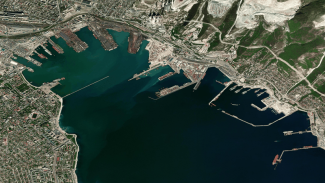
On 12 August, Ukrainian forces carried out one of the largest attacks on Novorossiysk, resulting in damage to, amongst other things, two grain terminals and the Sheskharis oil terminal. These facilities – and, according to some sources, a third grain terminal as well – suspended operations. A warehouse, a freight train and a water main were also hit, causing a temporary interruption to the city’s water supply. However, reports from the Ukrainian General Staff regarding damage to two frigates and two corvettes at the Black Sea Fleet base in Novorossiysk were not confirmed. It is highly likely that none of the vessels were hit. Satellite images confirmed traces of falling debris in the base’s technical area and damage to a nearby school building. A day later, Reuters reported that Ukraine had, through intermediaries, offered Russia a mutual ceasefire on targets in the Black Sea basin. After a delay of several days in responding, the Russian Foreign Ministry rejected the proposal in a public statement. According to Bloomberg, on 16 August, the Greek oil tanker ‘Spiros’, carrying crude oil from the local terminal of the Caspian Pipeline Consortium (CPC), was struck in the Novorossiysk area.
On 15 August, the Rocket and Space Centre “Progress” in Samara, which manufactures Soyuz launch vehicles, was struck. According to some OSINT sources, it was hit by two FP-5 Flamingo cruise missiles – this was the first successful use of these missiles in several weeks. Ukraine is said to have used a total of around 30 missiles of this type in the attacks on 15 and 16 August; however, apart from the two mentioned above, all the others are reported to have been shot down. The day before, the Ukrainians struck Novatek’s gas terminal in Ust-Luga in Leningrad Oblast, and on 13 August, a Gazprom refinery in Salavat in Bashkortostan. Fires broke out at both sites. It is highly likely that the flight of Ukrainian drones towards Leningrad Oblast triggered an air-raid alert in eastern Latvia. One of the drones was shot down by NATO fighter jets. The refinery in Orsk suspended operations after sustaining damage as a result of a Ukrainian attack on 11 August, as reported by Reuters the following day.
On 16 August, the Ukrainians carried out the largest attack on Rostov Oblast since the start of the full-scale invasion, resulting in damage to the Kamensky Combine in Kamensk-Shakhtinsky, which produces solid rocket fuel (including for rockets used in the Smerch, Tornado-S and Uragan systems). Two production halls were destroyed and a further four were damaged. The Russian Ministry of Defence reported that over 150 unmanned aerial vehicles had been neutralised over Rostov Oblast, whilst the Ukrainian Navy stated that Neptune cruise missiles had struck the plant. On the same day, another record was set for the number of ‘aircraft-type’ drones used by Ukrainian forces in attacks on Russia and the occupied territories. According to Russian data, the number of aerial attack vehicles exceeded 1,500 for the first time, with 1,478 drones, amongst others, reportedly neutralised. This was preceded the day before by an equally record-breaking attack, following which the Russian Ministry of Defence reported that 1,328 drones had been neutralised.
On 16 August, Wildberries’ largest warehouse in Russia, located in Koledino in Moscow Oblast, was hit, resulting in a fire. Following an attack on 13 August, part of the Wildberries logistics centre in the Chishminsky District of Bashkortostan was destroyed by fire. Following the strike on the Koledino warehouse, the Ukrainian Ministry of Defence reported that, in the attacks to date, 21 of Wildberries’ 30 largest warehouses had been destroyed or damaged, including seven of the company’s ten largest logistics centres. Furthermore, on 15 August, Ukrainian drones set fire to the Galaktika shopping centre in occupied Donetsk.
On 18 August, Ukrainian forces carried out their largest attack to date on Moscow, during which, according to the city’s mayor, Sergei Sobyanin, Russian air defences shot down 627 drones (including 180 over Moscow Oblast). According to OSINT sources, the Ukrainians deployed over 500 drones, all of which were shot down. However, a Wildberries warehouse in the Bogorodskoye District of Moscow Oblast was hit (minor damage suggests this was caused by falling debris) and – in the same oblast – 5,000 customers experienced a temporary power cut as a result of a high-voltage power line being severed.
Operations led by the Ukrainian Unmanned Systems Forces against the energy sector and shipping in the occupied Crimea region have lost momentum. Their commander, Robert Brovdi ‘Magyar’, has scaled back reporting on the progress of both operations (codenamed ‘Crimea Shutdown’ and ‘MoLoCHKa’ respectively), and his published summaries indicate that the number of ‘power hubs’ hit per day has fallen below four (in July it exceeded six), and the number of ships hit has fallen to one or two (at the peak, the Ukrainians reported more than a dozen per day). However, as a result of the damage inflicted so far, power supply problems persist in some of the occupied territories, including Sevastopol and Mariupol (in the latter, emergency power cuts are said to be affecting 50,000 customers). The Ukrainian General Staff reported damage to further Russian military facilities. Strikes are said to have taken place, amongst other places, at the following airfields: Saky and Kirovskoye in Crimea (on 12 and 18 August respectively) and Savasleyka in Nizhny Novgorod Oblast (15 August).

On 11 August, Ukrainian Unmanned Technologies (UUT) and the Danish company Vidar Industries announced the establishment of a joint venture in Denmark to produce Ravlyk unmanned ground systems. The aim of the joint venture is to expand the industrial base and meet the needs of the Ukrainian Defence Forces
On 14 August, the Lithuanian Ministry of the Economy and Innovation signed an agreement with the Ukrainian company DEMZ to build a new ammunition factory in Lithuania. Production will meet NATO standards, and the Ukrainian Armed Forces will be its main customer.

According to information from Ukrainian military intelligence (HUR), Russia is increasing its stockpiles, production and infrastructure dedicated to the use of long-range drones. On 12 August, HUR estimated Russian stockpiles of Geran drones at approximately 6,200 units. Production of the newer Geran-4/5 jet-powered drones is estimated at around 3,000 units per month, whilst that of the Geran-2 is estimated at nearly 2,800 units per month. On 17 August, The Telegraph, based on an analysis of satellite imagery, reported on at least ten Russian bases with 59 new launch pads along the borders with Ukraine and Belarus.
On 16 August, the Ukrainian Ministry of Foreign Affairs estimated that Russia had recruited at least 2,982 citizens from 37 African countries into its army, of whom approximately 486 had been killed. According to the ministry, 35 citizens from 17 African countries were being held captive by Ukraine. Russian intelligence services are said to be recruiting people under the pretext of work or study, offering high salaries and the prospect of obtaining Russian citizenship. Some of these foreign nationals are then reportedly forced to sign military contracts under threat of deportation or imprisonment.

On 12 August, Dmytro Lubinets, the Verkhovna Rada’s Commissioner for Human Rights, reported 375 verified cases of Ukrainians dying in Russian captivity and at least 345 executions of soldiers who had declared their intention to surrender. This figure includes both prisoners of war and civilian hostages. Furthermore, 695 cases of torture and 860 cases of inappropriate conditions of detention have been documented. It is reported that 95% of Ukrainian prisoners of war have been subjected to systematic torture, and since 2022 the International Committee of the Red Cross has been denied access to the detention facilities holding Ukrainian prisoners of war.
On 14 August, the SBU, the State Bureau of Investigation and the National Police reported that they had uncovered ten schemes to avoid mobilisation and had arrested 13 of their organisers. According to the security services, the suspects demanded between $2,500 and $30,000 for helping people evade mobilisation, illegally discharging soldiers from service and smuggling men across the border. The methods used reportedly included fabricated documents claiming the need to care for relatives, false medical diagnoses, and the exploitation of contacts at territorial recruitment centres (TRC) and medical boards.
The police are conducting large-scale investigations into corruption and abuse within the mobilisation system. According to information from the acting head of the National Police, Maksym Tsutskiridze, charges have been brought against 76 TRC managers. The legality of deferrals and exemptions concerning nearly 2,500 people is being investigated. Furthermore, 83,500 decisions by military medical boards have been seized, whilst 6,500 decisions have been deemed unfounded and annulled. As part of Operation ‘Deklarant’, over 100 searches were carried out in connection with, amongst other things, the possible unlawful enrichment of officials at the TRC and medical boards.