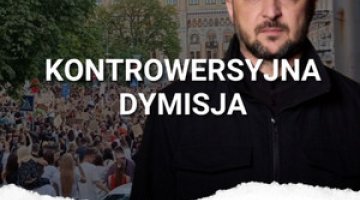
Zelensky vs Fedorov: Ukraine’s Defence Minister dismissed
On 15 July, President Volodymyr Zelensky announced that Defence Minister Mykhailo Fedorov would not be part of the new government. The government reshuffle and the allegedly slow implementation of reforms to the mobilisation system served as the pretext for dismissing the highly popular minister. However, the president cited Fedorov’s conflict with Commander-in-Chief General Oleksandr Syrskyi as the reason behind the decision.
A day later, Fedorov rejected the accusations, claiming that Syrskyi and the General Staff, which formally oversees recruitment centres, had sabotaged the reform process. He blamed them for creating organisational chaos at corps level, suppressing initiatives at lower command levels, distributing weapons unfairly among military units, avoiding responsibility for mistakes, and spreading falsehoods and manipulating information about his work. He also accused Syrskyi of demanding his dismissal.
On 16 July, protests in support of Fedorov took place in Kyiv and several other cities, drawing a total of several thousand participants. Fedorov is widely regarded as one of the architects of the Ukrainian strategy that has proved effective in containing the Russian armed forces in recent months. In a show of solidarity, several officers, including Deputy Commander of the Ukrainian Air Force Pavlo ‘Lazar’ Yelizarov, announced their resignation.
Faced with the conflict between Fedorov and Syrskyi, President Zelensky sided with the commander-in-chief. The dismissal also stemmed from efforts by parts of the military establishment and the defence industry to block the minister’s anti-corruption measures in the defence sector, as well as from the president’s desire to remove a potential political rival. The decision is likely to erode public trust in Zelensky and risks stalling military reforms.
Commentary
- Fedorov’s dismissal appears to have mainly stemmed from a desire to halt his efforts to combat corruption in the defence sector and introduce greater transparency through the digitalisation of public procurement. After taking office as defence minister six months ago, he sought to reform the tendering system, effectively reducing opportunities for arms manufacturers to secure contracts through informal ties with representatives of the General Staff. Under the established system, the General Staff identifies the types of weapons and equipment required by the armed forces, which the Defence Procurement Agency subsequently procures through competitive tenders. With tens of billions of dollars at stake annually, a number of companies have relied on informal contacts to sell overpriced or substandard products. Last March, the General Staff’s role in drone procurement was reduced to defining technical specifications, without identifying a specific product or manufacturer. Procurement decisions are now based exclusively on the combat performance of each model, as recorded in digital battlefield management systems (Mission Control). Plans to extend these changes to other categories of weapons and military equipment prompted intensified lobbying efforts to remove the inconvenient minister.
- Fedorov’s conflict with General Syrskyi and the General Staff provided the formal pretext for his dismissal. The military leadership viewed several of Fedorov’s proposals as unacceptable interference, including his idea of assessing the outcomes of military operations exclusively on the basis of data from digital systems integrating battlefield data (among others the DELTA system). The aim was to provide a comprehensive picture of the losses inflicted on the Russian military and the resources used to achieve this. Critics accused Fedorov of subordinating assessments of combat effectiveness to algorithms without taking into account the specific realities of the battlefield. The dispute with Syrskyi developed into a personal conflict, rooted not only in their differing approaches to military affairs and the role of technology, but also in a significant generational gap reflected in contrasting styles of communicating and organising work. Fedorov’s dismissal is likely to slow the modernisation of Ukraine’s armed forces, leading to more limited use of drones and battlefield management systems, slower progress in combating corruption in the defence sector and reduced cost savings in defence procurement.
- Fedorov’s dismissal reflects President Zelensky’s concerns over the minister’s growing popularity and the risk that he could emerge as a political rival. According to a June poll by the Kyiv International Institute of Sociology (KIIS), Fedorov ranked second in public trust, ahead of the incumbent president. Fifty percent of respondents said they trusted the former defence minister, while 21 percent said they did not. Removing the young politician (born in 1991) and failing to offer this highly regarded specialist an equivalent position is consistent with Zelensky’s approach towards capable, honest and increasingly independent officials whose growing prominence could pose a political challenge to him. The dismissals of Deputy Prime Minister Oleksandr Kubrakov and Ukrenergo CEO Volodymyr Kudrytskyi in 2024 stemmed from similar considerations. Zelensky’s popularity is likely to decline following his decision to dismiss Fedorov.
- Fedorov’s dismissal has triggered a strong public reaction and drawn criticism from the media and civil society organisations. During his seven years as minister of digital transformation (2019–26) and deputy prime minister (2019–26), and in his role as defence minister since the beginning of this year, he has overseen a number of major reforms, most notably the digitalisation of public administration, exemplified by the Diia app, and the widespread integration of drones into the armed forces. These achievements are widely regarded as having been crucial to Ukraine’s effective resistance against the Russian invasion.
- Fedorov’s outspoken public statements, including his unprecedentedly harsh criticism of the General Staff, demonstrate a desire to assert his independence and political agency. The former defence minister’s growing popularity, public protests against his dismissal and his clear political ambitions position him as a potentially formidable candidate in Ukraine’s next presidential election.