Ukraine deals a blow against shipping in the Sea of Azov. Day 1602 of the war

Russian forces continued to ‘clear’ Kostiantynivka of the few remaining groups of Ukrainian soldiers. The loss of the densely built-up area (Ukrainian troops still control the northern outskirts of the town) was indirectly confirmed by a change in the nature of the defenders’ operations. They have intensified air strikes on Kostiantynivka, using their air force for this purpose. These strikes are intended to prevent the Russians from consolidating their control over the town and thus make it more difficult for them to use it as a bridgehead for a further advance northwards, towards Druzhkivka and then Kramatorsk. They also support the Ukrainian narrative that the defence of Kostiantynivka has not collapsed and that fighting for the town continues.
The Russians are advancing along the western bank of the Donets–Donbas Canal towards Kramatorsk. There are conflicting reports concerning the positions held by the parties, but it must be assumed that Russia has not yet managed to establish a stable bridgehead from which to launch a direct assault on the city. The area of operations is 7–10 km from the city, and the only possibility of organising a relatively stable defence lies with the small town of Pershomaryivka. However, the absence of other settlements shielding Kramatorsk from the east provides Ukraine with the opportunity to make greater use of unmanned aerial vehicles, thereby significantly hindering the covert movement of Russian troops.
The invaders continued their slow advance on the other fronts. Further territories south of Dobropillia in Donetsk Oblast and east of Orikhiv in Zaporizhzhia Oblast, as well as on the eastern bank of the Oskil River in the Kupiansk area of Kharkiv Oblast, have come under their control. Conflicting reports are emerging from Dnipropetrovsk Oblast where, according to some sources, Russian forces have approached the Pokrovske junction and are regaining control of areas that had become a grey zone following Ukrainian attacks in February–March this year. The Ukrainians, meanwhile, are reported to have launched a successful counteroffensive in the western part of Zaporizhzhia Oblast, consolidating their control over Stepnohirsk, and on the border between the Dnipropetrovsk and Donetsk oblasts in the area of Ivanivka, where they have recaptured some of the territory they had previously lost.

The Russians carried out further attacks on Kyiv, exploiting the weakened defences of the Ukrainian capital caused by a shortage of missiles for the Patriot systems. Once again, the main targets were industrial and storage facilities, though the damage also affected civilian infrastructure (including one of the power substations) and residential buildings. On 8 July, three people were killed and 14 injured, whilst 12 people were injured on 11 July. The attacks were on a much smaller scale than those carried out the previous week. According to data from the Ukrainian Air Force Command (UAFC), the city was struck by a total of 21 Iskander-M ballistic missiles and missiles fired from S-400 systems (the use of the latter was confirmed for the first time by other sources). On 8 and 11 July, none of them were intercepted. It was not until 14 July that the UAFC reported that five out of eight ballistic missiles had been shot down, indicating that new PAC-3 MSE missiles had reached Ukraine.
The intensity of Russian attacks on port infrastructure in Odesa Oblast has increased. Drones or missiles struck Odesa (twice on 8 July, and on 10, 11, 12 and 13 July), Chornomorsk (on 11, 12 and 13 July), Pivdennyi (on 12 and 14 July) and Izmail (on 12 July). On 12 July, four ships were damaged (on one of them, five crew members were killed and ten were injured); two more were damaged the following day, and another on 14 July. In Odesa, damage was also caused to energy and transport infrastructure (including three petrol stations). A total of six people were killed and nine were injured in the attacks on 8 and 11 July.
Russia continued to strike Ukraine’s logistics facilities in the frontline regions, increasing their use of guided aerial bombs (Russian: KAB) in attacks on major cities. Industrial, energy and transport infrastructure, as well as warehouses, remained the main targets. Amongst the places reported damage were: Kharkiv (on the evening of 7 July, twice on 8 July and on 11 July), Zaporizhzhia (daily from 8 to 13 July), Mykolaiv (9 and 10 July), Chernihiv (on 12 July, a 330 kV substation was damaged, resulting in over 61,000 customers being cut off from the electricity supply) and Kryvyi Rih (twice on 12 July). Over 30 petrol stations were damaged, mainly in the Kharkiv and Dnipropetrovsk oblasts. Attacks using KABs resulted in an increase in the number of civilian casualties. On 7 July, in Kharkiv one person was killed and 20 were injured (including four children), whilst three strikes on Zaporizhzhia (on 10, 11 and 12 July) left a total of three people dead and 74 injured. Five people (including a child) were killed on 11 July in Sumy, and a further 43 were injured. The civilian casualties in Kharkiv on 8 July (two killed and 20 injured) were most likely caused by rocket debris falling on a block of flats. According to the UAFC, from the evening of 7 July to the morning of 14 July, the Russians deployed a total of 905 attack drones and 46 missiles, of which 19 were shot down. A further 762 drones are reported to have been neutralised.
Russian forces have significantly intensified their attacks on energy infrastructure, with the number of hits in the first half of 2026 rising by 36% compared with the same period last year. This was reported on 10 July by Vitaliy Zaychenko, chairman of the board of Ukrenergo. The Russians have changed their tactics, enabling them to simultaneously destroy both power generation and transmission facilities. In the early stages of the full-scale invasion, they used three to four drones to attack a single facility; now they use 20 to 25. According to Ukrenergo’s daily reports, persistent power cuts are occurring in all frontline regions, and further damage resulting from Russian attacks is occurring daily in four to six oblasts.

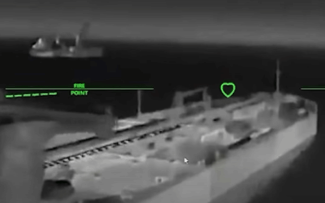
The Ukrainian Unmanned Systems Forces (USF) have stepped up operations to disrupt Russian shipping in the Sea of Azov. According to USF commander Robert Brovdi “Magyar”, the operation codenamed “MoLoCHKa” began on 6 July, and since 9 July, Ukrainian drones have been striking at least a dozen or so vessels of various categories every day. A total of 116 vessels are reported to have been attacked over the course of nine days. Most of these are small (up to 140 metres in length and with a deadweight of 7,000 tonnes) flat-bottomed tankers used for local shipping, supplying fuel and chemicals to occupied Crimea and transhipment terminals on the Black Sea. General cargo ships entering ports on the Sea of Azov, as well as ferries and tugs serving local shipping, are also being targeted. A dredger was also among the targets. Contrary to the Ukrainian narrative, these are not vessels of the so-called ‘shadow fleet’, and Kyiv’s use of this term most likely serves to lend the operation added significance. Satellite images and footage published online suggest that a dozen or so vessels at most have sustained serious damage; nevertheless, the Ukrainian operation has significantly hampered the use of the Sea of Azov for transport purposes. On 11 July, for the first time during the attack, traffic through the Azov–Don Sea Canal – linking Taganrog Bay with the mouth of the Don River, and thus with the Russian inland waterway system (primarily the Volga–Don Canal) – was suspended.
Ukraine continued its attacks on occupied Crimea, with energy infrastructure becoming the primary target. On 12 July, power cuts occurred across the entire peninsula, and a blackout took place in Sevastopol. Part of the city was also left without power as a result of an attack on 14 July. According to the USF, on 12 and 13 July, 11 energy facilities in Crimea were damaged, including nine substations and the main installation of the Kuban–Crimea power bridge.
The Ukrainians struck further facilities within the Russian fuel complex, damaging equipment at least five refineries. Refineries in Saratov – where production was halted as a result of the damage – and in Nizhnekamsk in Tatarstan (8 July), Ilsky in Krasnodar Krai and Ust-Luga in Leningrad Oblast (10 July), and in Syzran in Samara Oblast (12 July). On 14 July, fires broke out at the refinery in Salavat in Bashkortostan and in Afipsky in Krasnodar Krai. Fires also broke out at oil terminals in Bataysk and Taganrog in Rostov Oblast (on 9 and 10 July respectively) and at fuel depots in the Tver Oblast (9 July), where three storage tanks were destroyed, and in Stavropol Krai (9 and 13 July). According to the Security Service of Ukraine (SBU), two pumping stations in Bashkortostan (8 and 9 July) and the tanker ‘Blue’ (part of the so-called ‘shadow fleet’) in the Black Sea (8 July) were also reportedly hit.

On 8 July, the SBU announced the arrest of a Russian intelligence agent who had been attempting to secure a senior position in the Ukrainian energy sector. The suspect, an industry expert, had been seeking employment with energy companies in order to influence decisions favourable to Russia and to gather information on vulnerabilities and security systems for critical infrastructure. Meanwhile, on 10 July, the SBU announced the arrest in Sumy, Khmelnytskyi Oblast and Ternopil of three individuals suspected of setting fire to military vehicles and a bank building on the orders of the Russian secret services.
On 8 July, the Centre for Countering Disinformation at the National Security and Defence Council of Ukraine reported that Russian propaganda was spreading false information claiming that the Ukrainian authorities were preparing a terrorist attack against their own population, with the aim of subsequently blaming Russia for the act. According to the centre, the aim of the campaign is to pre-emptively shift the blame for Russian war crimes onto Ukraine and to divert attention from Russian attacks on Ukrainian cities.

On 9 July, President Volodymyr Zelensky announced that the explosion in the village of Vyshneve, following the Russian attack on 6 July, had been caused by a strike on an ammunition depot belonging to one of the companies within the state-owned defence conglomerate Ukroboronprom. Nine people were killed and 29 injured as a result of the explosion (see: ‘The tragic consequences of Kyiv’s shortage of anti-ballistic defence capabilities. Day 1595 of the war’). On 12 July, the conglomerate announced the dismissal of two managers from subsidiaries where breaches of regulations and safety protocols for the storage of ammunition had been identified.
On 7 July, officers from the State Bureau of Investigation carried out a search at the premises of Vyriy Industries, one of Ukraine’s largest drone manufacturers. The search was linked to suspicions of overpricing unmanned aerial vehicles supplied to the Ukrainian army. The company denied the allegations and suggested that the search might be an attempt to discredit it. On 9 July, the defence contractor Ukrainska Bronetekhnika reported that SBU officers had brutally beaten the company’s deputy director at his home. The officers were reportedly questioning him in connection with an investigation into the supply to the Ukrainian army of grenade launchers which allegedly fail to meet quality standards. Both companies belong to the National Association of the Defence Industry of Ukraine (NAUDI), which expressed deep concern over the security services’ actions and stated that they could hinder the companies’ arms production and weaken Ukraine’s defence capabilities.
On 10 July, President Zelensky announced a reorganisation of the Assault Troops. A Joint Rapid Reaction Force will be established, comprising assault units, in pursuit of this. General Dmytro Voloshin, commander of the 8th Corps of the Armed Forces of Ukraine, has been appointed commander of the new formation. Voloshin’s appointment is intended to “restore order” in the assault regiments and “overcome the anarchy prevailing there”. The announcement of organisational changes followed reports of brutal mistreatment of soldiers and the fatal beatings of recruits in the 425th Independent Assault Regiment ‘Skelya’ (see ‘A crack in the “Skelya”: disciplinary and reputational damage in the so-called Syrskyi regiments’).

On 13 July, Ukraine’s Foreign Intelligence Service reported that Russia is unable to maintain the recruitment rate seen in 2024–2025. According to the service’s data, by early July this year, approximately 195,000 soldiers had been recruited out of a planned 204,500, which is less than half of the annual target of 409,000. On average, 1,070–1,090 are being recruited daily, whereas in the previous two years the figure was around 1,200. According to intelligence reports, Russia is also lowering its medical and functional requirements.

Deputy Prime Minister for Humanitarian Policy and Minister of Culture Tetyana Berezhna stated on 9 July that the direct and indirect losses to Ukrainian culture caused by Russian aggression had reached $24 billion. According to the data presented, 1,685 cultural heritage sites were reported as damaged or completely destroyed. The Kharkiv, Kherson, Donetsk and Odesa oblasts have suffered the greatest losses.
Oksana Chervyakova, a representative of the Human Rights Ombudsman for Children’s Rights, reported on 9 July that Ukraine had recovered 2,368 children who had been deported or forcibly displaced by Russia. At the same time, 20,610 children considered to have been unlawfully removed remain on the Ukrainian Ministry of Justice’s register.
On 13 July in Brussels, Ukraine’s Foreign Minister Andriy Sybiha announced that Ukraine had documented the unlawful detention by Russia of at least 1,878 Ukrainian civilians. He noted that the actual figure is significantly higher. According to UN data he cited, over 90% of Ukrainian prisoners of war have been subjected to torture or cruel treatment, and there are approximately 180 Crimean Tatars among the detained civilians. On the same day, the EU’s High Representative for Foreign Affairs and Security Policy, Kaja Kallas, announced that the EU had set up an informal group to coordinate international efforts to secure the release of Ukrainian civilians unlawfully detained by Russia. The group will coordinate the imposition of sanctions on representatives of the Russian prison system and agree on support for non-governmental organisations assisting victims and their families.

During the 7–8 July NATO summit in Ankara (see ‘Ankara summit: Europe’s mobilisation for NATO 3.0’), the following measures, amongst others, were announced:
- President Zelensky signed bilateral cooperation agreements on unmanned technologies with Estonia, Denmark and the Netherlands.
- An unnamed NATO country has ordered a batch of 155 mm artillery ammunition and propellant charges for Ukraine from Rheinmetall, the quantity and value of which have not been disclosed.
- Norway announced that it would provide an additional 3 billion Norwegian kroner (approx. 300 million euros) to Ukraine under the US arms procurement mechanism (PURL).
- The Czech Republic and Turkey have announced their participation in the PURL scheme, but have not specified any amounts.
- NATO leaders have committed to providing military aid to Ukraine totalling 70 billion euros annually this year and next.
- President Donald Trump confirmed US intelligence support, which enables Ukraine to carry out attacks on critical infrastructure targets deep within Russia, and suggested the possibility of granting Kyiv a licence to manufacture missiles for Patriot systems.
On 12 July, Reuters reported that the German government had signed a contract for 50,000 FPV-type unmanned aerial systems, worth 90 million euros, which are to be delivered to Ukraine this year.
On 13 July, another meeting of the so-called Coalition of the Willing took place, during which the following measures, amongst others, were announced:
- A European Anti-Ballistic Missile Coalition was established, with the aim of developing missile defence systems capable of countering ballistic missiles. The coalition comprises Denmark, France, Germany, Italy, the Netherlands, Norway, Spain, Sweden, Ukraine and the United Kingdom.
- France announced that negotiations had taken place regarding the sale to Ukraine of 16 Rafale fighter jets and a battery of the SPAMP/T air defence system, which could be delivered in 2028–2029. Kyiv would finance this purchase with a €90 billion EU loan.
- President Emmanuel Macron stated that Kyiv had been granted a licence for the co-production, on Ukrainian territory, of AASM Hammer bombs, Aster 30 anti-aircraft missiles and SCALP-EG cruise missiles.
- Prime Minister Donald Tusk announced that the first exercises involving the military component of the Coalition of the Willing would be held this year on Polish territory. Once a ceasefire has been reached between Russia and Ukraine, these troops will be deployed on Ukrainian territory to monitor the truce.