Crimea’s supply route at risk. Day 1581 of the war
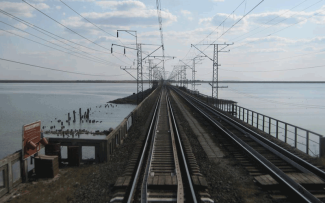

Ukrainian forces have intensified attacks on the road and rail links to occupied Crimea, as well as on critical infrastructure on the peninsula, severely hampering fuel supplies to the region. As a result of strikes on 17, 18, 20 and 21 June, the road bridge over the Henichesk Strait was damaged, as were the railway bridges over the Syvash in the Chonhar area and over the North Crimean Canal. On 18 June, railway bridges between the main part of Crimea and the Kerch Peninsula were also targeted, and on 20 and 21 June, infrastructure in the Kerch area was attacked, including the ferry crossing and the oil terminal (a fire broke out at the local fuel depot). Furthermore, on 21 June, the port of Kavkaz, on the Russian side of the Kerch Strait, was struck, resulting in damage to the quay infrastructure and two car ferries. Energy infrastructure was also targeted, including the Tavriya Thermal Power Station, which caused power cuts. According to the Security Service of Ukraine, the Crimean Bridge was also struck on 21 June, with reports that four S-400 radar stations and two Pantsir air defence systems were destroyed; however, there is no confirmation of these reports. As a result of the attacks, the authorities in Sevastopol suspended the sale of fuel to private individuals. A further attack on the Kerch Peninsula took place on 23 June, where a fire at a combined heat and power plant and a substation cut off electricity supplies to some consumers.
The attacks confirmed the Ukrainian army’s increased capability to carry out air strikes against Russian rear areas and demonstrated that its objective is to cut off Crimea’s supplies and thereby paralyse Russian operations in Kherson Oblast. However, a complete blockade of supplies to Crimea must be considered unlikely. The Ukrainians would have to render the Crimean Bridge inoperable, which has so far proven beyond their capabilities, despite having the necessary strike capabilities at their disposal. The Russians are likely to succeed in limiting the effectiveness of attacks on the bridges linking Crimea with Kherson Oblast by increasing the number of air defence units and assets, as was the case with the ‘Novorossiya’ route, which was still being effectively targeted in the first ten days of June (part of the traffic had been diverted there following attacks on the ferry crossing). However, the initiative in attacking Crimea’s supply lines will remain with the Ukrainian forces, and it is only a matter of time before they develop new tactics or deploy new weapons. An alternative for the Russians remains the so-called ‘breakout’ – carrying out a classic offensive operation to push the Ukrainians back from the peninsula by at least several dozen kilometres. Nevertheless, in the current realities of the battlefield, this would entail far greater losses than those incurred in positional warfare and would offer no guarantee of success.
In the Donbas, Kostiantynivka is falling under Russian control at an ever-increasing pace. The Ukrainian command denies reports that some of the defending forces have been encircled, but admits that Russian troops are present in most areas of the town. A stable Ukrainian defence line still holds in the northern part of the city, but is facing increasing difficulties in maintaining supplies, which are being delivered predominantly on foot. Ukraine also reports a growing shortage of personnel, with losses reportedly exceeding the number of reinforcements arriving. Up to 30 guided aerial bombs are reportedly being dropped on Ukrainian positions every day. Due to the intermingling of the combatants’ positions, part of the city remains in a grey zone – the Russians currently control up to 40% of its area, whilst the Ukrainians control around 15%.
Russian forces have stepped up their operations in the areas of Lyman and Kupiansk, making the Ukrainian defence increasingly difficult. In both cases, supplies for the defenders are being delivered via the rivers – the Donets and the Oskil River, respectively. In Lyman, a relatively organised defence remains in place, and whilst conflicting reports are emerging regarding the situation on the ground, only the western part of the town is currently under uncontested Ukrainian control. The Russians have also managed to halt Ukrainian attacks on the border between the Kharkiv and Donetsk oblasts, where they were striking the flank of the force attacking Lyman from the north. The displacement of Ukrainian forces from the eastern bank of the Oskil River is also continuing, where the defenders are attempting to hold the crossing points at Kupiansk and Kupiansk-Vuzlovyi. Russia has also made further territorial gains in the direction of Sloviansk, where Ukrainian forces are gradually withdrawing behind the Donets–Donbas Canal. Ukraine has launched counterattacks in Dnipropetrovsk Oblast and the western part of Zaporizhzhia Oblast, where, according to some sources, they have recaptured some of the positions they had previously lost.

Russian forces continued to strike at the Ukrainian rear areas in the frontline regions, directing the bulk of their attacks against petrol stations and storage complexes. The growing number of attacks on the former is linked to their taking over the role of fuel depots, which have been systematically destroyed almost since the start of the full-scale invasion. Few depots remain in the frontline regions, with most of them suffering varying degrees of damage and some of these facilities have already been completely destroyed. As is customary, energy, industrial and transport infrastructure were also targeted. From the major cities, Zaporizhzhia was attacked most frequently – on the evening of 16 June and every day from 19 to 23 June – where, in addition to drones and missiles, the Russians made greater use of guided aerial bombs than previously. On 20 June, these strikes hit, amongst other places, Khortytsia Island, and the shockwave damaged the Preobrazhensky Bridge connecting it to the rest of the city (which was temporarily closed) – five people were killed and 12 were injured. Damage to infrastructure was also reported in Sumy (17, 21 and 22 June), Dnipro (18 June; one person killed, 11 injured), Kharkiv (once on 19 and twice on 20 June; one person killed and nine injured in the first attack), Kropyvnytskyi (20 June) and Kryvyi Rih (23 June), as well as the Mykolaiv (20 June) and Odesa (19–22 June) oblasts. On 18 and 19 June, the Russians carried out a series of massive attacks on the energy infrastructure of Dnipropetrovsk Oblast (there are ongoing power cuts in all border regions). On 17 June, in Trostianets in Sumy Oblast, all local petrol stations were destroyed or damaged.
On 18 June, the Russians carried out a limited missile strike on Kyiv and Poltava. Depending on the source, up to three Iskander-M ballistic missiles (out of four fired) struck targets in the south-eastern part of the capital (according to the Ukrainian Air Force Command – UAFC – all were shot down). At the same time, drones struck industrial and storage facilities in Kyiv Oblast. In Poltava, facilities belonging to the company Ukrhazprombud – which is involved, amongst other things, in repairing previously damaged gas transmission system installations – were damaged. Ballistic missiles struck Poltava again on 20 June, killing two people and injuring 13 (including six children). On the same day, drones caused fires at warehouses in the Boryspil area of Kyiv Oblast. On 21 June, their targets – for the first time after a break of several days – were the Khmelnytskyi, Vinnytsia and Rivne oblasts. In the latter, the energy infrastructure in the Sarny area was struck. According to the UAFC, from the evening of 16 June to the morning of 23 June, the Russians deployed a total of 875 attack drones, of which 773 were neutralised, and – including data from the General Staff and regional military administrations – 19 missiles (one or four of which were shot down).
The invaders have intensified their attacks on ships heading for or leaving the ports of the so-called ‘Greater Odesa’. On 18 March, vessels flying the flags of Panama and Saint Kitts and Nevis were damaged. One crew member was killed, and three crew members were injured on each of the ships. On 22 June, Russian drones struck three vessels flying the flags of Belize, Palau and Panama. The Turkish general-cargo ship ‘Victress’, sailing under the Panamanian flag, was severely damaged and came to a standstill at sea. One crew member was killed, and the remaining eight (some of whom were injured) were evacuated from the vessel by the Ukrainian rescue services.

On 17 June, in a statement following the G7 leaders’ summit, an increase in supplies to Ukraine of air defence systems, interceptor missiles and long-range capabilities was announced. On the same day, the Netherlands announced a contribution of €250 million, Sweden pledged €108 million, and Germany €200 million under the US arms procurement mechanism (PURL). Germany will also provide €200 million for the purchase of PAC-3 missiles through the JUMPSTART programme – an accelerated US procurement procedure under the Foreign Military Sales (FMS) scheme – whilst the Netherlands will invest an additional €250 million in developing the production of Ukrainian unmanned systems on its territory.
On 18 June, the 35th meeting of the Ramstein-format Contact Group of Countries Providing Military Support to Ukraine (UDCG) took place, during which the Belgian Ministry of Defence announced that it would transfer seven F-16 AM/BM fighter jets to Ukraine by the end of 2026. Back in 2023, Brussels had pledged to supply a total of 52 such aircraft, but has not yet delivered a single one. Norway announced that it would allocate $190 million towards the purchase of air-to-air missiles and 155 mm ammunition. Furthermore, during the meeting, the defence ministers of Germany and Ukraine signed agreements on the joint development of anti-ballistic capabilities and the production of TerMIT ground-based unmanned systems in Germany.
During the Eurosatory defence exhibition in Paris, held from 15 to 18 June, it was announced that:
- as part of the ‘Build with Ukraine’ initiative, the Ukrainian company AiDrones and the Swedish company Njord Technology had signed an agreement to launch production of MAUL ground-based unmanned systems in Sweden;
- The French company Renault Trucks has announced that, since the start of the war, it has supplied Ukraine with over 1,400 lorries of various types, with these deliveries funded by France;
- The Spanish company EM&E has developed and supplied Ukraine with over 1,000 Alkon 122 Laser – A2L guidance kits for 122 mm BM-21 Grad rockets. These deliveries are funded by Madrid. Furthermore, the National Association of the Defence Industry of Ukraine (NAUDI) and EM&E have signed a cooperation agreement in the field of precision-guided munitions;
- the German company Quantum Systems and the Ukrainian manufacturer of ground-based unmanned systems, Tencore, have formed a joint venture to produce TerMIT NRC vehicles in Germany for the Ukrainian armed forces;
- the Ukrainian company The Fourth Law and the Lithuanian firm RSI Europe have agreed to develop joint drone production in Lithuania as part of the ‘Build with Ukraine’ initiative;
- the Ukrainian company Frontline Robotics and the Estonian firm Milrem Robotics have signed a memorandum of understanding on the joint development of anti-drone systems;
- MBDA has announced the successful testing of the CROSSBOW manoeuvrable missile, developed as part of the Project Brakestop, which aims to create relatively inexpensive (up to €0.5 million) manoeuvrable missiles for Ukraine that do not contain American components.

On 18 June, the Ukrainians carried out their most effective and spectacular drone attack on Moscow to date, damaging a refinery there. Four direct hits were scored, as a result of which (and due to damage caused by the attack on 16 June) the plant suspended production. Satellite imagery confirmed the destruction of two storage tanks (one of which was destroyed by Russian air defences), severe damage to a third and minor damage to two others, as well as damage to the bitumen production facility, several technical overpasses and the local Sadovod shopping centre. Meanwhile, according to the Ukrainian General Staff, one of the two main crude oil primary refining units was damaged (this information was also reported by other sources), as was the combined crude oil refining unit. The strike on the refinery was part of one of the most intensive Ukrainian drone attacks. The Russian Ministry of Defence reported that 555 drones had been neutralised there, and 992 over the course of the entire day. A fuel depot in Gukovo, in Rostov Oblast, was also damaged, whilst in Zhukovsky, in Moscow Oblast, a block of flats was damaged (a total of 17 people were reportedly injured in the oblast).
On 22 June, the Ukrainians damaged the Mikron plant in Voronezh, which produces microelectronics, including for Russian Iskander missiles. They used Storm Shadow cruise missiles for this purpose. Meanwhile, on the same day, Ukrainian drones attacked the Dubna space communications centre in Moscow Oblast, though without achieving any tangible results. Nor did the attack on the Antipinsky refinery near Tyumen yield any results, although the Ukrainians demonstrated a further increase in the range of their unmanned aerial vehicles. Initially, they reported a range of 2,000 km, then 2,500 km, and President Volodymyr Zelensky publicly expressed his gratitude to the engineers at Fire Point, a company with which he is associated. On 17 June, in the Novorossiysk area, the tanker FINA A, flying the flag of Equatorial Guinea and part of the Russian ‘shadow fleet’, was struck.
Massed attacks by Ukrainian drones deep into Russian territory have so far failed to produce systemic results, much like the operations targeting supplies to Crimea. Results are achieved only sporadically, as exemplified by Moscow, which remains a constant target. The attacks on 19 and 22 June failed to yield results; according to OSINT data, the Ukrainians deployed more drones against the Russian capital on those days than on the day of the successful attack on the refinery (a record number of at least 80 drones were reportedly neutralised in the Moscow area on 19 June). Ukraine has outpaced Russia in terms of the number of strike drones, deploying an average of 400 per day, compared with the 150 used by the Russians (with the exception of massed attacks, in which the average is 600). However, the results of the attacks on both sides confirm that Russia remains significantly more effective. Nevertheless, two strikes on a Moscow refinery in quick succession indicate that Ukraine’s capabilities are growing.

On 19 June, President Zelensky threatened to attack Belarus if Alyaksandr Lukashenka did not, within a week, dismantle the relay stations on Belarusian territory used to guide Russian drone attacks on Ukraine. According to Kyiv, there are a total of four of these installations along the border in the Homyel and Brest voblasts of Belarus. Zelensky also accused Belarus of supplying fuel to the Russian army and warned that Russia would provoke Belarus to draw it directly into the war, including through false accusations against Ukraine of attacks on civilians. He was commenting on the drone attack on 17 June in Russia’s Bryansk Oblast on a coach carrying a children’s football team from Homyel. Minsk described the incident as an “act of terrorism” and demanded “exhaustive explanations” from Kyiv.
Kremlin spokesperson Dmitry Peskov stated on 22 June that Vladimir Putin would discuss Zelensky’s ultimatum with Lukashenka in the near future. Peskov described the Ukrainian demand as an “absolutely aggressive threat”, an interference in Belarus’s internal affairs and a violation of its sovereignty. On the same day, the commander of the Ukrainian National Guard, General Oleksandr Pivnenko, stated that the threat of a renewed Russian offensive from Belarusian territory remains real, but would require Russia to concentrate around 70,000 troops. According to him, the aim of such a scenario would be to stretch Ukrainian forces and facilitate a deeper Russian advance into Ukrainian territory.
On 22 June, one of the leaders of the Belarusian opposition, Pavel Latushka, presented a report to the Ukrainian Foreign Minister, Andriy Sybiha, according to which the Lukashenka regime is systematically preparing Belarus for direct involvement in the war against Ukraine. The report highlighted signs of the increasing militarisation of Belarus, pointing to such plans: the construction of defensive lines along the borders with Ukraine, Poland and Lithuania; the militarisation of children; the mobilisation of the medical and civil systems; the build-up of fuel reserves; and ongoing military exercises.

On 16 June, National Guard Commander General Pivnenko reported that more than half of the National Guard soldiers who had been taken prisoner by Russia since the start of the war had already been released. The largest group among the National Guard soldiers still being held captive consists of soldiers from the ‘Azov’ Brigade, including the defenders of Mariupol, who are being treated ‘very badly’. The National Guard commander also reported that around 45% of National Guard soldiers who had left their units without authorisation had returned to service. He acknowledged that the problem of desertion exists, but that it is not critical.
Defence Minister Mykhailo Fedorov announced on 17 June that the ministry plans to recruit foreign nationals into the Ukrainian Defence Forces through licensed recruitment agencies. For every foreign national recruited, formally enlisted and placed under the ministry’s care, the company will receive 300,000 hryvnias (approx. €5,800), paid in instalments, so that it is responsible not only for the recruitment itself, but also for logistics, training, individual support and the soldier’s integration. According to Fedorov, several centres are already operating in Ukraine, which have so far brought in thousands of foreign nationals in total (see ‘Ukrainian Armed Forces pin hopes on foreign recruits’).

On 22 June, President Zelensky signed a bill amending the 2026 state budget, increasing, amongst other things, expenditure on the security and defence sector. According to the document, defence spending is set to rise by 1.56 trillion hryvnias (approx. €30 billion) out of a total of approximately 2.3 trillion hryvnias in additional funds in the 2026 budget. The main source of funding for the budget update is EU support under the enhanced cooperation mechanism, which includes a €90 billion loan facility for 2026–2027, of which approximately €44.5 billion will be transferred to the state budget this year. A further approx. €870 million is to come from the implementation of the Ukraine Facility initiative, and approx. €440 million from increased personal income tax revenue resulting from the rise in military salaries.
Tetiana Berezhna, Deputy Prime Minister for Humanitarian Policy and Minister of Culture, announced on 16 June that the Ukrainian government is preparing new storage facilities for museum collections and cultural artefacts evacuated from frontline areas to the country’s western regions. She emphasised that these facilities are of strategic importance, as Russia is deliberately targeting sites associated with Ukraine’s cultural heritage. The transfers are taking place pursuant to a government decision on the mandatory evacuation of part of the museum collections from areas located up to 50 km from the front line, which is intended to minimise the risk of their loss or destruction.

Dmytro Lubinets, the Human Rights Ombudsman of the Verkhovna Rada, reported on 18 June that, according to official Russian data, 744,000 Ukrainian children had been taken to Russia from the temporarily occupied territories. He stated that, prior to the occupation, approximately 1.6 million Ukrainian children lived in the areas now controlled by Russia. Ukrainian state institutions and services have so far managed to confirm the whereabouts and circumstances of 19,546 children. Lubinets pointed out that some of them had been illegally ‘adopted’ by Russian citizens.
On 19 June, Ukraine’s Prosecutor General Ruslan Kravchenko reported that, since the start of the full-scale invasion, 401 cases of sexual violence committed by Russian occupiers against civilians had been officially documented. The victims include 250 women and 151 men, which include 24 minors: 23 girls and one boy. The highest number of cases was recorded in the Kherson, Donetsk, Kyiv, Kharkiv and Zaporizhzhia oblasts. The Prosecutor General’s Office emphasised that the statistics cover only those cases which the victims were able to report; therefore, the actual scale of the crimes may be significantly greater, and cases of sexual violence against Ukrainian military personnel are being investigated in separate proceedings.