Ceasefire in Iran: an uncertain path to peace
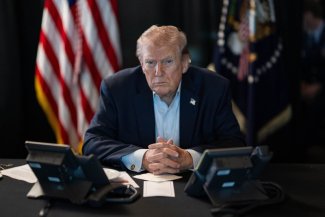
Iran and the United States have reached an agreement on a two-week ceasefire, during which US armed forces will refrain from further attacks on Iranian territory, while Tehran will unblock transit through the Strait of Hormuz. The deal was secured just prior to the expiry of the ultimatum set by President Donald Trump for 8:00 PM (US Eastern Time) on Tuesday, 7 April 2026. However, statements from both sides regarding the basis of the agreement are inconsistent. According to remarks by Iran’s Foreign Minister Abbas Araghchi and a position published in the media by Iran’s Supreme National Security Council, the ceasefire signifies that the Trump administration accepted ten Iranian conditions and that Iran achieved a complete victory in the war against the United States. By contrast, a post by President Trump on his Truth Social platform suggested that these Iranian conditions merely provide a basis for further negotiations aimed at reaching a peace agreement. The US leader claimed success for the United States, stating that the military objectives of the operation had been “met and exceeded”.
The ten Iranian conditions for ending the conflict include Iran’s commitment not to develop nuclear weapons (although not to halt its civilian nuclear programme), a full cessation of military operations against Iran and its allies, the withdrawal of US combat units from bases in the region, the partial reopening of the Strait of Hormuz under Iranian control, the lifting of all UN sanctions against Iran, the release of frozen Iranian assets, the payment of compensation and/or the establishment of mechanisms to enable the reconstruction of destroyed infrastructure, the recognition of Iran’s right to negotiate regional agreements, the extension of a non-aggression policy to cover Iran’s regional allies, and the ratification of these arrangements by the United Nations. Detailed talks with the United States are set to commence on 10 April.
Israel has officially supported the agreement to suspend attacks against Iran, while emphasising that this is a temporary measure that does not prejudge` the future course of the war. It has also stressed that the arrangement does not apply to the armed conflict with Hezbollah in Lebanon, thereby contradicting the Iranian position. The Israeli government has further underlined that it supports the US decision provided that Tehran unblocks the Strait of Hormuz and ceases attacks against Israel and countries in the region. Israel continues to insist that, in the longer term, Iran must cease to pose a nuclear and “terrorist” threat.
In response to reports of the ceasefire, both oil and gas prices fell. Brent crude dropped to $92.5 per barrel, around 15% lower than the previous day, while on the European TTF gas exchange, next-month contracts stood at €44.4/MWh, down 17.3%.
The prospects for a peace agreement appear uncertain. Divergences between the parties regarding the ten Iranian conditions, the United States’ inability to accept these terms, Iran’s distrust, and Israel’s distinct strategic calculations will all pose serious obstacles in negotiations. As a result, a fragile truce renewed every few weeks remains a plausible scenario.
Commentary
- President Trump has portrayed the ceasefire as a success, seeking to reverse the unfavourable domestic narrative surrounding this conflict. The effectiveness of this approach will depend on the durability of the ceasefire, the progress of further peace talks, and the extent to which the economic consequences of the war can be mitigated. Even if peace negotiations become protracted, Washington is likely to remain interested in maintaining the ceasefire in order to ease pressure on commodity markets.
- The United States (let alone Israel) is highly unlikely to accept Iran’s demands as the basis for a lasting peace agreement, particularly on issues related to regional security and the US military presence in the region. At the same time, regardless of its rhetoric, Iran may be open to an agreement based on the political normalisation of its relations with the United States, a declaration of non-aggression, and the lifting of sanctions. The issue of Iran’s regional allies and proxies, as well as Israel’s position, would certainly pose obstacles to the implementation of such an agreement.
- Despite Iran’s triumphalist rhetoric, the future of the ceasefire agreement remains uncertain. The main challenges include mutual distrust between the parties, imprecise provisions – particularly regarding the scope of the requirement to halt attacks on Iran’s allies (primarily Hezbollah) – Israel’s ambiguous stance towards the ceasefire and the risk of continued Iranian attacks on targets in the region. Even after the ceasefire was announced, strikes were reported in Iran (it remains unclear whether these were carried out by Israel or the United States) as well as in Bahrain, Qatar, Kuwait, and the United Arab Emirates.
- In the current situation, the ceasefire offers an opportunity for a limited reopening of the Strait of Hormuz under Iranian control. However, significant difficulties in this regard should be expected. Despite official statements, Iran’s military and political situation in the sixth week of the war remains dire, and the prospects for a military resolution of the conflict are minimal. Entering negotiations provides Iran with an opportunity to defuse the crisis politically and, in an extremely optimistic scenario, to ensure its survival and strengthen its international position. Within 12 hours of the ceasefire announcement, no ship transits through the Strait of Hormuz were observed.
- If an agreement is reached, Iran is highly likely to face internal upheaval and socio-political tensions. This stems from a number of factors, including a crisis in the country’s political system and a range of economic problems exacerbated by external actors. Given the scale of uncertainty surrounding the policies of Iran, Israel, and the United States, the risk of renewed military conflict and further escalation remains high.
- Israel’s position is consistent with its established modus operandi towards US efforts over the past two years to end the wars in Gaza and Lebanon. It is characterised by cautious and conditional acceptance at the official level, which allows Israel to avoid openly challenging the decisions of its ally, while subsequently applying the agreed arrangements in a highly selective and arbitrary manner, obstructing political talks aimed at securing a lasting settlement, and often openly undermining the ceasefire itself.
- A potential US-Iran agreement that leaves the Iranian regime in power and provides it with guarantees against further attacks would constitute a strategic defeat for Israel – and the Israeli opposition is already portraying this prospect as such. The Israeli government is therefore likely to take steps to prevent this outcome. For example, it could escalate its attacks against Hezbollah in Lebanon, continue targeted strikes on Iran, or deliberately push for any agreement to include conditions that would be unacceptable to Tehran.