Ukraine strikes Russian fuel terminals on the Baltic coast. Day 1497 of the war

Russian forces continued their offensive in the Donbas, making further territorial gains north of Pokrovsk and east of Sloviansk. It has partially captured Hryshyne, one of the main areas of fighting, and the north-western outskirts are in a grey zone. The Russians also launched an offensive against the next towns to the north of it. The situation is similar around Rai-Oleksandrivka. The Russians are reported to have captured Ukraine’s last stronghold south of it, in Lypivka. However, further Russian assaults in Kostiantynivka and Lyman, as well as Ukrainian counterattacks in the area of the latter town, have not brought about any significant changes. Russia has made further minor advances in Kharkiv Oblast (on the eastern bank of the Oskil River) and in the border regions of Sumy Oblast.
In the Zaporizhzhia and Dnipropetrovsk oblasts, the front has stabilised to some extent. Russia’s slight advances west of Huliaipole did not alter the overall situation, nor did Ukraine’s counterattacks in that area. The defenders continued their attacks around Stepnohirsk in the western part of Zaporizhzhia Oblast, but there too the situation and the positions of the parties remained unchanged.

On 24 March, the Russians carried out their first large-scale daytime attack on Ukraine, following a large-scale night-time attack. According to the Ukrainian Air Force Command (UAFC), they deployed 556 strike drones and their decoys in the attack, and used a total of 948 over the course of the day (the previous record, set on 9 July 2025, stood at 728). Western Ukraine was the main target of the attack, with the most severe damage reported in Lviv Oblast. In its capital Lviv, buildings in the historic centre (including the Bernardine Monastery) were damaged, with several dozen structures affected in total (including, once again, the local SBU headquarters), and 32 people were injured. A power substation in Dobrosin and gas infrastructure in Komarno were hit. In Ternopil Oblast, a substation in Zboriv was damaged, and in Vinnytsia – as in Lviv – the local SBU headquarters. Temporary power cuts occurred in the Lviv, Ternopil and Vinnytsia oblasts. Ivano-Frankivsk and Zhytomyr were also attacked, but no major damage occurred there.
On 29 March, Russia carried out its first large-scale air strike on Ukraine using only drones. According to the State Emergency Service, 442 were deployed (including 300 ‘Shahed’ strike drones), and 380 were neutralised. The main targets of the attack were industrial facilities in Kyiv Oblast (strikes on businesses were reported from two districts) and energy infrastructure. Damage to facilities and resulting power cuts occurred in the Khmelnytskyi and Odesa oblasts.
Russia intensified strikes on natural gas extraction and processing infrastructure in the Poltava and Sumy oblasts. Naftogaz facilities were attacked daily from 26 March onwards. The company reported significant damage to extraction facilities on two occasions (27 and 29 March). According to local sources, this damage occurred, among other places, in Kotelva in Poltava Oblast and in Konotop in Sumy Oblast.
The Russians continued to target Ukraine’s infrastructure in frontline and border regions, with Kryvyi Rih, Kharkiv, Chernihiv and Odesa coming under particularly intense attack. Between 26 and 29 March, Kryvyi Rih was attacked repeatedly (five times on 28 March). Railway infrastructure, as well as energy and industrial facilities, were hit. In Kharkiv, which was attacked on 25–27 and 29 March, infrastructure was damaged on two occasions, resulting in power cuts. In Chernihiv, a power substation was damaged (25 March), resulting in a blackout that also affected Slavutych, railway facilities (26 and 27 March) and a thermal power station (30 March). A substation was also damaged in Novhorod-Siverskyi, located in Chernihiv Oblast (28 March). The most serious attack on Odesa and Odesa Oblast took place on 26 and 28 March – four energy facilities (including three substations) were damaged there, as well as the port and industrial sites in Izmail (26 March) and Odesa (28 and 29 March). According to Ukrainian data, from the evening of 24 March to the morning of 31 March, Russia deployed a total of 1,570 unmanned aerial vehicles (including 1,010 strike drones), and including the daytime attack on 24 March – 2,126, as well as three ballistic missiles. Ukraine reported that it had neutralised 1,393 drones (including the aforementioned attack, a total of 1,934).

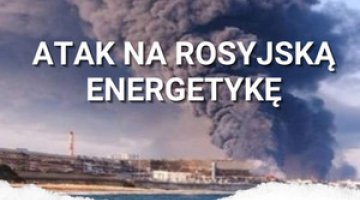
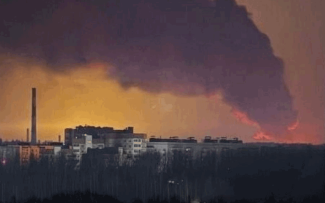
Ukrainian forces continued their attacks on Russian ports on the Gulf of Finland, damaging, among other things, a fuel terminal and a gas processing plant belonging to the Novatek corporation in Ust-Luga. Following the strike on the night of 23 March (see ‘The Russians are building their own Starlink system. Day 1490 of the war’), in which Primorsk was hit, Ust-Luga became the main target of the attack on 25 March. Further air strikes on both ports took place on 27, 29 and 31 March, with new hits recorded on the latter date. The attacks were organised by the Security Service of Ukraine and carried out by the ‘Alpha’ Special Operations Centre. Satellite images confirmed the destruction of fuel tanks (the ongoing fire has so far prevented a full assessment of the scale of the damage) and one of the mooring points for loading liquefied gas. The second such berth was only damaged. The terminal in Ust-Luga suspended operations and, according to Ukrainian assessments as of 30 March, its transhipment capacity had fallen to 40% of its original potential. On 26 March, despite the ongoing fire in the tanks, fuel loading resumed in Primorsk (satellite images from 30 March show that eight of the 18 Transneft tanks there have been destroyed or damaged). Transhipment terminals on the Baltic Sea account for around 30% of Russian fuel exports (40% including the Black Sea ports attacked in previous months), and the potential paralysis of their operations poses a serious threat to Moscow.
According to Estonian data, the Ukrainians used around 100 drones in the strike on Ust-Luga on 25 March, which is likely the largest number deployed against a single target since the start of attacks on Russian territory. Some of the Ukrainian drones crashed in Estonia that day (one of them damaged the chimney of a combined heat and power plant in Narva), and one in Latvia. On 29 March, at least one crashed in Finland. Most likely, these incidents were the result of Russian electronic warfare systems jamming the guidance systems of some of the drones; nevertheless, Moscow created a narrative around them, claiming that the drones attacking ports in the Gulf of Finland were using the airspace of the Baltic states for their attacks (on 23 March, one of the Ukrainian drones crashed in Lithuania – see ‘The Baltic states respond to incidents involving Ukrainian drones’).
On 25 March, the port of Vyborg was targeted, where the patrol icebreaker ‘Purga’ – being built for the FSB Border Service (based on Project 23550 ‘Yermak’) – was damaged. Contrary to some reports, this vessel was not armed with anti-ship missiles or Kalibr cruise missiles, which are fitted to the twin icebreakers being built for the Russian Navy (Project 23550 “Arktika”). A strike also occurred at the shipyard in Vyborg, but no information has emerged regarding any damage.
On 26 March, Ukrainian drones struck a refinery in Kirishi in Leningrad Oblast, resulting in the facility – which produces mainly for export – suspending operations. Satellite images confirmed damage to the oil processing plant and the destruction of three storage tanks. A day later, the Apatit chemical plant in Cherepovets in Vologda Oblast was attacked; on 28 March, a refinery in Yaroslavl and the Promsintez chemical plant in Chapayevsk in Samara Oblast (according to the Ukrainian General Staff, using FP-5 Flamingo cruise missiles); and on 30 March – the KuybyshevAzot chemical plant in Togliatti, also in Samara Oblast (this was the third attack by Ukrainian drones on this facility in March this year). Fires broke out on the premises or in the vicinity of the aforementioned companies; no damage has been confirmed. As a result of the Ukrainian attack on energy infrastructure in Belgorod Oblast on 25 March, a blackout occurred in, among other places, the regional capital Belgorod. On 30 March, a metallurgical plant and a substation in Alchevsk in occupied Luhansk Oblast were hit. However, further attempts to attack Moscow were unsuccessful.
In March this year, Ukraine deployed more strike drones per day than the Russians did unmanned aerial vehicles and missiles. This estimate was reported by Radio Svoboda on 28 March. The exception was the massive Russian attack on Ukraine on 24 March. This information was corroborated by data presented by the Russian Ministry of Defence, according to which, during night-time attacks on Russian territory and occupied areas on 25, 28, 29 and 30 March, Ukraine used an average of 350 drones, and on 27 March alone, fewer than 100. In total, from the evening of 24 March to the morning of 31 March, the Ukrainians used at least 1,831 drones, as well as seven cruise missiles. According to some sources, on 25 March the number of drones Ukraine used exceeded 700 in a single day – 200 more than in the largest Ukrainian attacks to date.

On 25 March, Latvia announced the start of the transfer of further CVR(T) family combat vehicles to Ukraine, without disclosing their number. Furthermore, on 30 March, Riga announced a further package of military support for Kyiv worth €6.8 million.
On 26 March, NATO Secretary General Mark Rutte stated that the mechanism for procuring US weapons under the so-called Prioritised Ukraine Requirements List (PURL) accounts for 75% of all missiles for the Patriot system and 90% of ammunition for other air defence systems that Ukraine has received since the summer of 2025. He also denied media reports that the US had appropriated $750 million paid into the PURL by European countries. He explained that these funds were allocated to replenish US stockpiles, which had been depleted as a result of the transfer of weapons to Kyiv, which is one of the principles governing the PURL mechanism.
On 27 March, the UK announced the transfer of £100 million to support Ukrainian air defence, without providing details of how it would be spent. At the same time, it was revealed that the previously announced RapidRanger very short-range air defence systems had already been delivered to Ukraine.
On 30 March, the European Commission announced the approval of €1.5 billion under the European Defence Investment Programme (EDIP) for the development of the European and Ukrainian defence industries. €260 million of this sum will be allocated to the Ukraine Support Instrument (USI).

On 24 March, the Security Service of Ukraine (SBU) reported the elimination of a suspected perpetrator of attacks in Ukraine, acting on behalf of Russian military intelligence (GRU). He was killed during an operation to apprehend a network of agents working for the Russian services who were planning to assassinate public figures and individuals linked to the Ukrainian security sector. Among the potential targets of the ten-member group were reportedly Serhii Sternenko – an adviser to the defence minister and an activist – and Ilya Bogdanov, a Russian fighting on the Ukrainian side. According to the SBU, the assassin was killed whilst resisting arrest. The group had been conducting surveillance on military personnel and public figures in various regions of the country. It is thought that the information gathered would be passed on to the Russian intelligence services, which would then relay it to the direct perpetrators of the attacks.
On 27 March, the Centre for Countering Disinformation (CCD), operating under the National Security and Defence Council of Ukraine (NSDC), announced the exposure of a network of Russian agents recruiting residents of Eastern European countries for subversive activities and destabilisation operations, including in Moldova, Bulgaria, Serbia and other countries in the region. According to information provided by the CCD, recruiters offered potential candidates ‘easy money’ of between $300 and $500, as well as a paid two-week trip combining leisure and training. In reality, they ended up in training camps where they were taught how to operate drones, use incendiary devices and counter police actions during protests. The instructors were reportedly individuals linked to the former Wagner Group.
Rustem Umerov, Secretary of the NSDC, warned that in recent days unidentified individuals had been contacting Ukraine’s international partners whilst impersonating him. They were reportedly making calls from unknown numbers and requesting specific information from representatives of foreign partners and the diplomatic corps.
On 26 March, the SBU reported the arrest in Kropyvnytskyi of a man suspected of planning to cause an explosion at a power substation. The perpetrator was said to be a local unemployed man, recruited by the Russian intelligence services via Telegram channels under the pretext of “quick money”. On the same day, the SBU reported the arrest in Dnipro of a 17-year-old local resident who was alleged to have guided Russian air strikes. A day later, a collaborator of the Russian services in Donetsk Oblast was arrested on the same charge.

On 25 March, the Verkhovna Rada passed a law amending legislation on preparing citizens for resistance in schools and universities. The document provides for a shift away from a one-off general military training model towards the continuous education of young citizens. A subject entitled ‘Defence of Ukraine’ will be introduced in secondary schools, and the ‘Fundamentals of National Resistance’ at post-secondary and higher education levels, both based on curricula developed by the Ministry of Defence of Ukraine. Practical training, including the use of small arms, will take place at military training grounds, in training units and at military units of the Armed Forces of Ukraine, as well as at certified shooting ranges.
On 26 March, the government appointed Mstyslav Banik as Deputy Minister of Defence, responsible for reforming the defence procurement system, and Yuriy Myronenko as General Inspector of the Ministry of Defence. Both are associates of the current Defence Minister, Mykhailo Fedorov, from his time as head of the Ministry of Digital Transformation.
Deputy Prime Minister and Minister for Community and Territorial Development Oleksii Kuleba announced on 25 March that the first civilian teams had begun operations to combat enemy drones at ports and railway facilities. These are members of volunteer units who – although not soldiers – carry out tasks alongside the military related to protection against unmanned aerial vehicles. Volunteers not subject to mobilisation who have undergone the appropriate training may be incorporated into these units. They may use unmanned aerial vehicles, manned aircraft, small arms, electronic warfare equipment and artificial intelligence technologies to counter attack drones and other aerial threats in order to strengthen the protection of critical infrastructure.
On 27–29 March, during President Volodymyr Zelenskyy’s visit to the Gulf states, ten-year security cooperation agreements were signed with Saudi Arabia and Qatar. The finalisation of a similar agreement with the United Arab Emirates was announced for the coming days. Meanwhile, Ukraine signed an agreement with Bulgaria on 30 March during Prime Minister Andrey Gyurov’s visit to Kyiv. The agreement provides, among other things, for Bulgarian support for the development of Ukraine’s air defence, the joint production of armaments, including drones, using the EU’s SAFE programme, as well as cooperation on demining the Black Sea. Sofia also pledged to purchase US air defence equipment for Ukraine under the NATO PURL initiative and announced that its military support for Ukraine to date had amounted to €344 million, of which over €243 million had been refinanced by the European Peace Facility (EPF).
On 30 March, the Commander-in-Chief of the Armed Forces of Ukraine, General Oleksandr Syrskyi, assessed the current level of mobilisation as a 6–7 out of 10. It remains the primary source for replenishing the army’s losses and meeting its needs, and he emphasised that whilst two years ago the Ukrainian army suffered primarily from shortages of ammunition and missiles, the greatest shortage now is of trained and motivated soldiers. Syrskyi announced the launch of the second phase of the corps reform, aimed at improving command and relieving the burden on the military command system. In the first phase of the reform, corps commands were established, and the development of their full combat and support structures is currently underway.

On 10 April, conscripts from the first year-round conscription, which began in Russia on 1 January 2026, will begin reporting to their units. This was announced on 30 March by General Yevgeny Burdinsky, Head of the Main Directorate for Organisation and Mobilisation of the General Staff of the Armed Forces of the Russian Federation. For the first time in the history of the Russian army, conscription is being conducted throughout the year (replacing the previous three-month spring and autumn campaigns); however, new soldiers are being assigned to units under the previously applicable rules (between 1 April and 15 July and between 1 October and 31 December). According to Vladimir Putin’s decree, this year’s conscription will involve 261,000 recruits, a figure similar to that of 2025. On 28 March, Burdinsky’s deputy, Vice Admiral Vladimir Tsimlyansky, announced the completion of the latest autumn conscription. In it, 135,000 conscripts were called up for basic military service, with 209,000 of those required to report for conscription being granted deferrals.
The Ukrainian Coordination Centre for the Treatment of Prisoners of War reported on 30 March that the total number of foreign nationals recruited by the Russians to fight against Ukraine stands at 27,407, representing 135 countries worldwide. On the same day, Andriy Chernyak, a representative of the Ukrainian Military Intelligence (HUR), reported that Cubans constitute the largest group from outside the former USSR. As part of the HUR-supervised “I Want to Live” project, the names of over 1,000 mercenaries from Cuba have been identified though, according to Chernyak, there could be as many as “10, 12, 15,000”. According to the project’s findings, by autumn 2025 the Russians had recruited over 10,000 foreigners (the number that could be identified). Apart from Cuba, the largest numbers came from Nepal (800) and Sri Lanka (700), and from the CIS states – Tajikistan (1,500), Belarus (1,300) and Kazakhstan (1,100). Ukrainian data do not indicate how many foreigners are currently fighting on the Russian side (the published data cover all those recruited since the start of the full-scale aggression), but it must be assumed that they account for no more than 1% of the participants in the so-called special military operation, whose number currently stands at 700,000–710,000. By comparison, 20,000 foreigners are currently fighting on the defenders’ side – 2% of the total strength of the Ukrainian Defence Forces, but at the same time up to 10% of the strength of Ukrainian units on the front line.

Reuters has published the findings of a journalistic investigation estimating the total costs incurred by Moscow for the integration of the occupied territories with Russia between 2024 and 2026 at $11.8 billion. One of the key elements of this process is the construction of over 500 km of rail connecting Rostov-on-Don with Crimea via Mariupol and Berdiansk. In parallel, the ‘Novorossiya’ motorway project is being implemented – a ring road around the Sea of Azov connecting Russian territory with the occupied territories in the Donbas and Crimea. Russia is also set to intensify the exploitation of mineral resources in the occupied territories. According to the authors of the investigation, such deep economic integration increases the financial viability of the occupation from Moscow’s perspective and may hinder the potential return of these territories to Ukraine.