Russia’s vulnerabilities
Table of contents
1. Centralisation and personalisation of power
5. Arbitrary changes to the rules of the game: redistribution of assets
6. The ageing of the Kremlin elite and limited rotation of cadres
7. Dismantling of the local self-government system
8. Ineffectiveness of the security sector and repressive apparatus
9. Radicalisation and Islamist terrorism
1. The criminalisation of social life and the normalisation of violence
2. War fatigue and the ineffectiveness of propaganda
3. Ethno-religious tensions and anti-immigrant sentiment
4. Preferential treatment of selected social groups and socio-economic inequalities
5. War losses and the demographic crisis
6. Collapse of municipal infrastructure
7. Natural and technological disasters
1. The rising costs of war and the unbalanced budget
3. Economic dependence on China
5. High inflation and the cost of credit
6. Growing dependence on non-Western hydrocarbon importers and declining revenues
7.Limited access to technology and production stagnation
MAIN POINTS
- For nearly four years, Russia has operated under conditions of wartime mobilisation. The political regime in Russia – a dictatorship with neo-totalitarian ambitions – has maintained relative stability. Through massive propaganda, the threat of repression against dissenters and the material benefits the war brings to parts of the elite and society, the government has secured a relatively high level of passive public support. Social tensions that have emerged so far have not posed a serious political challenge to the Kremlin. Despite the war and sanctions, the Russian economy has so far avoided a major crisis, although its problems are deepening. Russia continues to generate revenue from energy exports, which it has redirected from Europe to Asia. Economic cooperation with China plays a key stabilising role in trade and public finances while supplying machinery, equipment, and technology, particularly for wartime production.
- Russia nevertheless faces numerous weaknesses in the political, social, and economic spheres. The rising costs of its armed aggression against Ukraine and the cumulative impact of Western sanctions are exacerbating these vulnerabilities. Negative trends in the economy and in society, both short term and particularly long term, are working against Russia.
- In the political sphere, growing centralisation and personalisation of power are reducing the system’s effectiveness. Shrinking financial resources are intensifying competition within the elite. Opaque rules governing systemic corruption and the new redistribution of property, alongside weak mechanisms for elite renewal, are generating tensions and increasing unpredictability. A growing terrorist threat from Islamist radicals coincides with declining effectiveness in the security sector that has focused primarily on political repression.
- In the social sphere, public sentiment is deteriorating amid mounting socio-economic challenges and a war-driven rise in the crime rate . Ethnic and religious tensions, xenophobia, and regional social inequalities are intensifying. War losses are exacerbating the demographic crisis. Failures of infrastructure are worsening, compounded by sanctions and technological and natural disasters.
- In the economic sphere, the combined effects of rising war costs and Western sanctions, along with adverse trends in commodity markets, are amplifying financial pressures. Inflation and high borrowing costs remain persistent challenges. The budget deficit remainshigh, social spending is declining in relative terms and sectors not directly linked to defence production are contracting. Russia faces acute labour shortages. Economic dependence on China is increasing sharply, creating difficulties, including in the automotive industry, and generating political frictions. Technological regression is deepening beyond defence-related niches, and competitiveness is declining. Revenues from commodity exports are unstable and Ukrainian strikes on refineries are disrupting the domestic fuel market.
- There is no indication that these issues will be resolved in the foreseeable future. On the contrary, they are likely to intensify. Nevertheless, the Russian regime does not intend to halt its systemic war against Ukraine and the West, and remains determined to continue it in one form or another.
- In the interests of the security of Western states and their partners targeted by Russian aggression, measures should be taken to exacerbate Russia’s vulnerabilities. The short- and medium-term objective should be to weaken Russia as much as possible and thus reduce its capacity to pursue aggressive policies. In the longer term, the aim should be to ensure Russia’s defeat in the systemic war it has declared against Ukraine and the West. A regime change in Russia could facilitate such an outcome.
- First, Western policy should maximise support for Ukraine, particularly military assistance, in order to enable it to defend itself effectively and to inflict significant costs on Russia within its own territory. Effective Ukrainian strikes on military, energy, and other critical infrastructure deep inside Russia would not only generate serious economic challenges but also increase social and political tensions. They would complicate Kremlin propaganda, deepen divergences of interest between the centre and the regions, within the elite, and among officials at different levels, thereby undermining confidence in victory and in the effectiveness of the policy of aggression.
- Second, it is essential to tighten the sanctions regime, both within Western states and institutions and in their relations with third countries, while also expanding existing restrictions. This would intensify Russia’s economic problems, which would gradually translate into social and political pressures. Particular emphasis should be placed on targeting the foundations of Russia’s revenue base: the oil, gas, and nuclear sectors. Western states should expand financial sanctions and fully scrap the oil price cap on Russian exports. A complete cessation of trade with Moscow is also necessary, as such trade constitutes one of the primary sources of funding for its war against the West. Customs systems should be strengthened to more effectively track and penalise sanctions evasion.
- Third, as Russia’s cognitive war against the West becomes increasingly threatening, Western states and institutions should not only strengthen their internal resilience against Russian disinformation campaigns but also adopt a more proactive stance in the information domain. Media projects, including online platforms, particularly those run by independent Russian outlets operating from abroad, should receive robust support. By highlighting the numerous political, social, and economic challenges in Russia, they would gradually weaken the Putin regime. An important element of this policy should be support for the revival of national consciousness among the many nations and ethnic groups living within Russia that have fallen victim to Russian colonialism and Russification.
- These Western measures must not be confined to a short-term policy. It would be unrealistic to expect them to produce favourable change in Russia in the near term. What is required is recognition of the need for sustained, long-term strategic action. Only such a consistent policy, demonstrating Western strength and determination in the face of a confrontation imposed by Moscow, can lead to a future outcome that enhances security and stability.
INTRODUCTION
Russia’s full-scale aggression against Ukraine in 2022, alongside the escalation of Russian hybrid attacks against European states, marked another stage in the systemic war against the West waged by the neo-totalitarian Putin regime that governs Russia.
To deter the Kremlin from further escalation, reduce Russia’s capacity to exert harmful influence on Western and partner states, prevent its hybrid and potentially military actions against EU members and ultimately defeat Russia in this systemic war, the West must adopt both defensive and offensive measures.
The threat from Moscow is comprehensive and multidimensional. The response by Western states should therefore match it in scope and encompass political, economic, security, and information measures, among others. To ensure long-term effectiveness, these actions should target Russia’s key vulnerabilities and exploit and deepen its internal political, social, economic, and other structural problems.
This report begins with a diagnosis of these vulnerabilities and seeks to formulate recommendations on how to use them to weaken Russia. The text is divided into three chapters. The first examines Russia’s main internal political problems, the second addresses social issues and the third focuses on economic challenges. Each of these areas directly or indirectly affects Russia’s ability to wage war against Ukraine and the West, including its military potential and diplomatic activity. However, these two spheres fall beyond the scope of this study.
Each chapter comprises sections devoted to specific challenges within the respective domain. They provide a description of these issues, supported by examples and illustrative data, and set out recommendations for Western states on how to deepen and/or exploit these difficulties.
The authors recognise that, particularly in some areas and with regard to certain issues, the scope for external influence on the situation in Russia remains limited. The report does not seek to present a comprehensive picture of the state of the country. Instead, it concentrates on those elements that may, over the long term, serve the political objective of containing, weakening, and defeating Russia.
I. DOMESTIC POLICY
Despite its apparent stability, the Russian political system generates structural vulnerabilities which, over the longer term, may lead to significant political turbulence. Unless Russia suffers a military defeat in Ukraine or a crisis in the foreseeable future, there is little likelihood of a change in the Kremlin’s domestic and foreign policy course. Radical changes in the attitudes of members of the ruling elite are also unlikely.
1. Centralisation and personalisation of power
Russia’s greatest weakness lies in its personalist system of rule combined with a high degree of centralised state management. The absence of genuine political competition, with Vladimir Putin as the only autonomous political actor, results in the lack of independence among federal and regional elites. Heads of regions represent the interests of the Kremlin and of federal political and business clans. Around half of governors originate from outside the regions they administer. Although this appears to support system consolidation, in practice it hinders or paralyses flexible responses to challenges.
Officials at various levels of government and administrative apparatus avoid taking the initiative in solving problems, even at the local level; instead, they await instructions from above, as the Kremlin views manifestations of autonomy with suspicion. In most public offices, unconditional loyalty to the leader outweighs competence, which significantly lowers the overall quality of governance.
Putin takes key political decisions single-handedly and in a highly opaque manner. He also approves the distribution of major economic assets among competing interest groups, without regard to financial rationale, thereby weakening the state’s economic foundations. He consults only a narrow circle and disregards the mood within the broader elite. This increases the regime’s insularity and unpredictability, even for insiders.
The system’s Putin-centric character creates a risk of destabilisation after the leader’s departure, unless a succession is prepared in advance. Even then, however, turbulence remains highly likely. The disintegration of networks centred on Putin and the struggle for power and assets, driven by the need to establish a new balance of power among political and business circles, could trigger instability.
Recommendations
Western policy should aim to ‘overheat’ this inflexible system by generating as many tensions and challenges as possible at different levels of the state apparatus. The objective should be to weaken its political and bureaucratic cohesion and ultimately render it ineffective. Equally important is the delegitimisation of the leader in the eyes of both the ruling elite and society.
Examples of possible measures include:
- Tightening and further strengthening economic sanctions in order to affect regional budgets in Russia, thereby fuelling local discontent and tensions between Moscow and the regions.
- Publicising cases of violations regarding the rights of national minorities and indigenous peoples in Russia, as well as infringements of the socio-economic interests of the regions by the federal centre. Independent Russian media, particularly those operating at the regional and local level, play an important role here. To date, the most resonant issues capable of inciting potential protests have included environmental pollution, the removal of remaining competences from local self-government bodies (see below), and the rise in war-related crime (see below).
- Disinformation campaigns in independent Russian and Western media aimed at fuelling mutual distrust between the Kremlin and the broader ruling elite. This may include speculation about the Kremlin’s plans that undermine the financial interests of the elites, or about the alleged disloyalty of selected members of the elite to Putin, or their susceptibility to recruitment by foreign intelligence services.
- Supporting the increase of Ukrainian cyberattacks against Russian state agencies of various levels and key state-owned enterprises in order to disrupt their functioning.
- Delegitimising Putin as Russia’s leader and as a defender of elite interests. Creating international tribunals to prosecute Russia’s war crimes in Ukraine, including the International Criminal Court and a special tribunal of the Council of Europe on Russia’s aggression against Ukraine, would have an important role to play. The objective should be to undermine the collective sense of impunity prevailing within the Russian power elite. This could involve threats of implementing the 2023 ICC arrest warrant against Putin, which results in restricting his freedom of movement. Ideally, the ICC could also open proceedings in absentia against the Russian leader. Given the immunity of Putin, Prime Minister Mikhail Mishustin, and Foreign Minister Sergei Lavrov before a special Council of Europe tribunal, efforts should focus as swiftly as possible on exposing, investigating, and prosecuting crimes committed by members of the Russian ruling elite who do not benefit from such immunity.
2. The ‘Chekist syndrome’
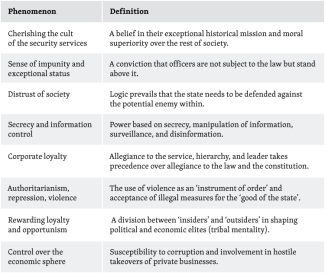
Russia’s current ruling elite has developed what may be termed the ‘Chekist syndrome’. This concept describes a mentality rooted in the tradition of the Soviet security services, authoritarian in nature and based on secrecy, manipulation, and control. It may characterise both individuals and power structures.
This mindset treats state governance as a special operation aimed at maintaining control over administrative structures, the economy, and society. It relies on an extensive security apparatus which in practice dominates the political system and serves the objectives of Russia’s foreign and domestic policy.
This approach also represents a weakness of the political system. It sustains the myth of Russia as a ‘besieged fortress’ defending itself against external influence. It generates pathologies in governance and drives the expansion of political repression. The security services harass medium-sized businesses in order to extract part of their income. At the Kremlin’s behest, they monitor the loyalty of political and economic elites. The siloviki (the members of secret services and law enforcement agencies) retain a strong position in the system and defend their autonomy. Despite numerous failures in recent years, these institutions have seen no significant personnel changes or structural reforms.
Table 1. Features of the ‘Chekist syndrome’ as a foundation of state security
Recommendations
It would be advisable to publicise examples of controversial and harmful actions by the security services, particularly the FSB, in order to fuel public resentment.
Relevant themes include:
- Arbitrary charges, detentions, and arrests, particularly of officials and businesspeople, as well as dubious accusations of scientists for disclosing state secrets.
- Unjustified privileges enjoyed by security service officers compared with other categories of citizens, as well as the use of official powers for private purposes.
- Cases of corruption, embezzlement, and other abuses within the services.
- Highlighting the crimes committed by Soviet and Russian security services against their own citizens in the past.
- Failures of the security services, for example in counterterrorism, counterintelligence, and the fight against organised crime.
- The negative consequences of security services’ actions affecting companies and state institutions, including bankruptcies, operational paralysis, economic losses, and suspicious managerial suicides.
- Sex scandals and other controversies.
3. Corruption
Mass corruption, as one of the foundations of the Russian system, is the norm rather than a pathology. It significantly weakens the effectiveness of state governance. In 2021, it was estimated that in public procurement as much as two thirds of the total value of contracts could have been siphoned off, with the average exceeding 22%. Overall losses incurred by the state as a result of corruption exceeded one third of budget revenues in 2020 and amounted to 6.2% of GDP. These figures should be regarded as underestimated, and the full-scale invasion of Ukraine has created new opportunities for enrichment through corruption.
The scale of embezzlement of state assets has a negative impact on the condition of Russia’s economy and the effectiveness of its armed forces. The Kremlin’s frustration was reflected, among other things, in the purge at the Ministry of Defence in spring 2024 and in numerous criminal cases launched in the border oblasts of Kursk, Bryansk, and Belgorod. The investigation also covered former Transport Minister Roman Starovoit and resulted in his alleged suicide in July 2025. Attempts to ‘combat corruption’ take the form of largely symbolic campaigns. In practice, they are highly selective and aim not to reduce but to redirect illicit financial flows, while limiting the number of individuals able to plunder the state treasury with impunity under wartime conditions. Although in theory this policy should strengthen the system, paradoxically it weakens it further. It intensifies competition for assets, with the involvement of siloviki and media discreditation campaigns. Uncertainty fuels efforts to accumulate wealth rapidly and increases the propensity to take risks.
Recommendations
Desirable measures should focus on fuelling uncertainty and distrust among elites, so that they steal faster and on a larger scale. Also, the measures should stoke the sense of social injustice among ordinary Russians. These goals could be achieved, in particular, by depriving the Russian nomenklatura and society of hope of victory in the war. This would require increasing and accelerating military support for Ukraine, intensifying Ukrainian attacks on Russian territory, and tightening and strengthening economic sanctions in order to weaken the regime’s economic foundations and significantly ramp up competition for corrupt revenue streams.
Other measures include:
- Publicising the links between rampant corruption of those in power and the poor situation of selected groups in Russian society. Traditionally, issues related to children’s health and safety resonate most strongly.
- Highlighting the scale of enrichment among the ‘children of the Kremlin’, the younger generation of the Russian establishment, and their foreign connections.
4. Creative accounting
Another dysfunctional feature of the system is the regular distortion of the socio-economic picture through manipulation of statistical data by authorities at various levels. This practice stems directly from the Russian model of state governance: a personalist dictatorship where the administrative apparatus seeks to provide the leader with information that matches his expectations rather than reality. The leader’s decisions are not subject to debate, and officials strive to formally meet the performance criteria imposed from above. The state apparatus is also responsible for providing the propaganda framing of the regime’s ‘successes’ for domestic and foreign audiences.
On the one hand, the authorities conceal an increasing amount of information on the socio-economic situation. In the second quarter of 2025, Rosstat did not publish demographic data for the first time. Budget expenditure is also increasingly classified. In 2025, as much as 32% of the budget was made secret, primarily items related to the war and internal security. On the other hand, data reported by the regions to the federal centre are also distorted. The most striking example so far was the inflation of population figures by many regions in the 2021 census (a part of federal budget transfers depends on population size). Russia’s actual population may therefore be more than five million lower than official figures, 140–141 million rather than 145.6 million.[1] This façade and creative accounting deprive the regime of reliable feedback. As a result, it lacks the instruments for coherent and adequate responses to challenges and for realistic forecasting.
Recommendations
Measures should exploit the authorities’ lack of accurate knowledge regarding the condition of the state.
Examples include:
- Information activities exposing the real situation in selected areas, drawing on investigative journalism and data obtained from non-public databases. This would aim to increase uncertainty, a sense of threat, and distrust within society and among Russian elites.
- Disinformation measures, potentially including cyber operations, presenting Russia’s situation as far worse than it is or appears to be, targeting Russian elites and society. This would exploit the system’s closed information environment.
5. Arbitrary changes to the rules of the game: redistribution of assets
The system is weakened by the Kremlin’s arbitrary revision of the existing rules of the game, which affects the conditional property rights of members of the elite. This reflects the supreme sovereignty of the personalist leader who leases out and takes back ‘pieces’ of state and private assets at will. The deteriorating economic situation, shrinking resources, and the Kremlin’s efforts to enforce loyalty and discipline among elites have led to a redistribution of property unseen since the 1990s. This includes nationalisation and hostile takeovers of profitable enterprises.
As a result, systemic competition for assets has increased and only the strongest players can feel relatively secure in their holdings. The process began in late 2021, gained momentum following the full-scale invasion of Ukraine, and accelerated markedly in 2025.
Discontent and tensions within the broader elite, whose members fall victim to this policy, are exacerbated by the absence of clear rules. The prosecutor’s office increasingly challenges privatisation transactions from the 1990s by manipulating statutes of limitation. Former criteria of loyalty, which previously guaranteed security, no longer apply. The state is clearly seeking to isolate Russia’s political and business elite from foreign influence. It pressures them to repatriate capital and punishes those with ‘dual loyalty’ who wish to continue earning in Russia while protecting their assets in safer jurisdictions. Businesses owned by individuals permanently residing abroad or holding foreign citizenship or permanent residence outside Russia are being seized. In sectors deemed strategic, expropriation of those linked to foreign interests is justified on national security grounds.
Large-scale unlawful redistribution of assets, combined with the absence of clear rules, risks triggering sharp and potentially public conflicts if the Kremlin’s control over interest groups weakens or if Putin ceases to act as the principal guarantor of transactions. In such a scenario, these conflicts could spiral out of control, leading to the brutalisation of political and business life and, consequently, the destabilisation of the system of power.
Recommendations
The objective should be to convince society and elites that chaos within the Putin system is growing, and to persuade members of the nomenklatura that the costs of loyalty to the Kremlin are too high and that security is not guaranteed even for the unquestionably faithful. This should be accompanied by a kind of offer addressed to broader circles of the Putin establishment.
Examples include:
- Developing a mechanism for lifting EU personal and economic sanctions on individuals who publicly condemn the Putin regime and its crimes. This should also apply to those who distance themselves from Putin and/or transfer a significant portion of their assets to support Ukraine, whether its armed forces or the civilian sector, and / or provide exceptionally important information about the functioning of Putin’s regime. An assessment should be made of how it may contribute to the defeat of the Russian army in Ukraine and significantly weaken Putin’s domestic position.
- Disinformation activities concerning alleged plans for nationalisation and hostile takeovers. These would aim to destabilise the situation by deepening distrust and intensifying competition for assets, which would increase the likelihood of disruption to the fragile balance of power and weaken the system’s economic foundations.
6. The ageing of the Kremlin elite and limited rotation of cadres
The Kremlin’s conservative personnel policy, relying during wartime on trusted long-term associates, has led to the ageing of those occupying the highest state positions. Rotation occurs only at lower levels and pathways to key offices are effectively blocked for younger generations. The lack of rotation generates frustration among potential successors due to limited career prospects. In the longer term, this may lead to intergenerational conflict, although such tensions may only surface after Putin’s departure.
Infographic: Putin’s ‘gerontocrats’
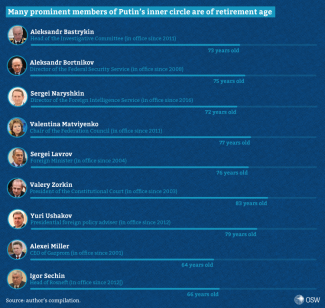
In the coming years, one should expect the gradual departure of these ‘gerontocrats’ for natural reasons. Personnel reshuffles may provoke tensions as new patrons and their clientelist networks assume control over key institutions.
Recommendations
Measures should focus on deepening intergenerational divisions and conflicts within the Russian establishment. The ‘rule of gerontocrats’ should be discredited as ineffective and as leading to the loss of status and wealth among Russian elites.
Examples include:
- Tightening and expanding sanctions against broader circles of the establishment, including younger technocrats, ‘children of the elite’, and regional elites.
- Intensifying cyber operations and disinformation campaigns in Russia aimed at pitting the older and younger generations of the ruling elite against each other.
7. Dismantling of the local self-government system
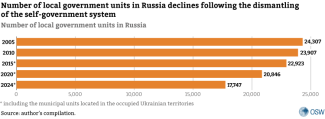
While regional authorities and elites in Russia remain under close Kremlin supervision, limited pluralism and a potential for protest persisted at the local level until recently. The centralisation of political life under Putin has led in recent years to the extreme marginalisation of local self-government bodies, a decline in their prestige and their growing dependence on higher levels of authority.
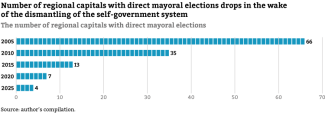
The ongoing final removal of local self-government powers and the liquidation of lower-tier units strengthen Moscow’s control but also create potential problems. The political, economic, and cultural marginalisation of peripheral areas in favour of regional administrative centres contributes to depopulation and accelerates the degradation of public services in the provinces. By dismantling local self-government, federal authorities lose an intermediary channel of contact with the population, making it harder to identify oppositional sentiments at an early stage. They are also forced to engage more deeply in micromanagement. Discontent among lower-level bureaucrats, linked to a significant reduction in positions, may also prove politically risky.
Recommendations
Information campaigns, particularly via social media, should target residents of Russia’s peripheries. The aim should be to increase tensions and, ideally, to provoke anti-government protests against the Kremlin’s centralisation policy and partially restore oppositional potential at the local level.
Examples include:
- Highlighting challenges faced by smaller towns and rural areas.
- Demonstrating the causal link between the dismantling of local self-government and the deterioration of public services.
- In messaging directed at residents of larger cities, traditionally a base of oppositional sentiment, emphasis should be placed on:
- the unequal distribution of tax revenues in favour of regional budgets, which in practice means subsidising the cities with their own funds,
- the growing interference in local affairs by regional authorities de facto appointed by the Kremlin.
8. Ineffectiveness of the security sector and repressive apparatus
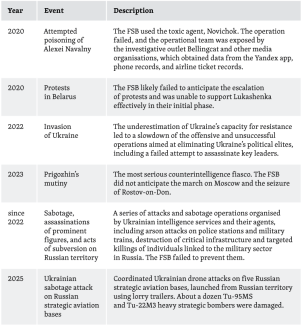
The functioning of the Russian state under wartime conditions has posed a challenge for the security agencies . Despite an unprecedented mobilisation of resources, the security apparatus has struggled to carry out assigned tasks effectively. It has exposed organisational weaknesses and operational errors. This results from shifting priorities and the redeployment of forces from the domestic to the foreign domain. It includes intensified efforts to destabilise Ukraine internally and the expansion of special operations against European states which are consistently strengthening their defence potential. Internal competition for influence persists among security services. Military intelligence has at times taken over political tasks traditionally within the remit of FSB, as illustrated by the case of Russian undercover agent Pavel Rubtsov, who operated in Europe under the false identity of a Spanish journalist on behalf of the Main Directorate of the General Staff.
The scale of operations conducted abroad has affected the effectiveness of counterintelligence within Russia. The Federal Security Service has failed to prevent extensive espionage and sabotage activities by Ukrainian secret services. This was demonstrated by the Security Service of Ukraine’s operation in early June 2025 targeting strategic aviation bases deep inside Russia. The FSB’s shortcomings stem from the dispersion of its forces across diverse tasks, ranging from intelligence and counterintelligence to combating the ‘internal enemy’ and overseeing the occupied territories in Ukraine and the ongoing process of their Russification.
The FSB has shown weaknesses in identifying terrorist threats. It also tends to shift responsibility onto other state agencies. For example, after the March 2024 terrorist attack at a shopping centre in Krasnogorsk, the FSB blamed the Interior Ministry for the lack of adequate security measures.. Besides, it has engaged in ‘wishful’ analysis of threats and challenges that is supposed to meet the leadership’s expectations. For instance, before the full-scale invasion of Ukraine the FSB misreported the Ukrainians’ sentiment vis-a-vis Russia. It has also exaggerated its successes, including by fabricating charges of treason.
Demoralisation within the FSB is deepening. Corruption scandals confirm that the service often operates like an organised criminal group. For instance, in early 2022, three senior officers were arrested for demanding more than five billion roubles (approx. $55 million) in exchange for dropping charges against an IT and logistics company.
Table 2. Major FSB failures
Operational failures have also affected, although to a lesser extent, the Foreign Intelligence Service and the Main Directorate of the General Staff (formerly the GRU), as well as cyber and hybrid operations against Western states. The latter include disinformation and psychological operations aimed at sowing fear and discord among the European public and prevent Western politicians from effectively preparing their countries for confrontation with Russia. It should be noted that Russia’s intelligence services cannot operate freely outside their own borders. For this reason, agents have been recruited from among members of the Belarusian and Ukrainian diasporas, as well as citizens of Western countries motivated by financial incentives.
As European countries strengthen their counterintelligence resilience, Russian operations have become more dispersed. The mass expulsion of Russian diplomats and tighter oversight of embassy and consular staff have reduced Russia’s intelligence potential. Nevertheless, Russian intelligence services retain the capacity to organise acts of sabotage targeting critical infrastructure.
Since 2022, the condition of the Ministry of Internal Affairs has also deteriorated. As of January 2026, vacancies had reached 172,000, more than 33,000 higher than the previous year. The staffing crisis affects all the ministry’s structures. It results from low pay and – in part - from transfers to the military. In some units (patrol, investigation, or anti-drug trafficking), shortages average 30%. Individuals who do not meet formal requirements are recruited. The growing burden on the ministry, which is expected to persecute politically ‘disloyal’ individuals, negatively affects public order.
Recommendations
Western states should adopt a new paradigm combining defensive and offensive measures. This requires additional financial resources, a revision of concepts and objectives for intelligence services, and necessary adjustments of their tools.
Examples include:
- A comprehensive set of disinformation activities, but also psychological operations (e.g. the disclosure of personal data of intelligence officers, including their closest family members, and their criminal records). The aim would be to create an atmosphere of threat to their personal safety if they leave Russia (e.g. for tourism purposes), and to lower the morale of Russian intelligence service officers.
- Largescale social media operations to block users identified as potential collaborators in Russia’s disinformation apparatus, even without direct evidence of their links to Russian secret services.
- Raising public vigilance in the event of suspicious attempts by representatives of the Russian intelligence services to establish contact. It is worth drawing on the experience of Ukrainian counter-intelligence. An example is the launch of the ‘Unmask the FSB agent’ app by the Ukrainian SBU in response to mass attempts at remote recruitment. The app is used to report attempts to establish contact or ‘job offers’ which are in fact proposals to carry out sabotage or intelligence tasks related to military reconnaissance.
- Expanding offensive cyber operations against Russia, including attacks on critical infrastructure, telecommunications systems, and e-banking.
9. Radicalisation and Islamist terrorism
Since 2023, Russia has again experienced regular terrorist attacks linked to Islamist extremism. Acts of violence on a scale unseen for several years have affected republics of the North Caucasus and other regions.
Growing Islamist radicalisation and terrorist activity stem from socio-economic problems in the North Caucasus, a generational shift, tensions between Sufism and Salafism, the difficult situation of labour migrants from Central Asia and the activity of Islamic State Khorasan Province (ISIS-K). The invasion of Ukraine has acted as a catalyst. It has absorbed the bulk of security resources and increased access to illegal weapons.
Map. Islamist extremist attacks occur regularly in Russia
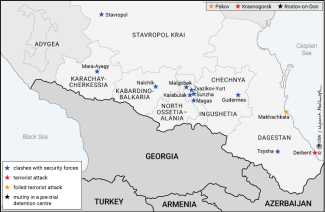
Source: author’s compilation.
Recommendations
Western intelligence services should cease or significantly limit counterterrorism intelligence sharing with their Russian counterparts. At the same time, any form of support for Islamist terrorist cells fighting Moscow must be completely ruled out.
To weaken social cohesion and inflame ethnic and religious tensions in Russia, targeted disinformation campaigns could be launched on social media. Messaging reffering to Russian chauvinism should link terrorism to the broader ethnic population of the North Caucasus and Central Asian migrants. Messaging aimed at young Russian Muslims could portray terrorists as fighters for the faith and for liberation from Kremlin rule.
II. SOCIAL SITUATION
1. The criminalisation of social life and the normalisation of violence
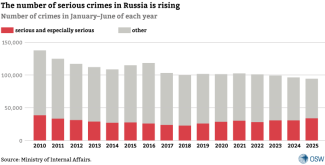
Although the social situation in Russia remains under the authorities’ control and appears stable, several issues are generating tensions among the population and deepening dissatisfaction with living conditions in the country. One of the most significant challenges is the escalation of violence, reflected in a rise in serious crimes. This trend stems primarily from the return of war veterans demoralised by combat, the release of prisoners who gained their freedom through participation in the war, and the normalisation of violence by state propaganda media.
According to data from Russia’s Ministry of Internal Affairs, 2024 saw a record number of serious crimes over the past 14 years, despite an overall decline in crime. A total of 617,301 such offences were recorded. The previous record was set in 2010 at 684,347. The upward trend continued in the first half of 2025, when 333,300 serious crimes were committed, the highest level in 15 years.
The number of serious criminal offences is increasing across many regions, most visibly in Moscow and in regions bordering Ukraine, particularly Bryansk, Kursk, and Rostov oblasts. In 2024, record levels were also reported in annexed Crimea and Sevastopol. Data from the Office of the Prosecutor General indicate a sharp rise in crimes committed by juvenile delinquents. In the first months of 2025, their number was 18 per cent higher than in the previous year. In the category of serious crimes, the increase was one and a half times. Youth violence most often targets those unable to defend themselves, including children, elderly, and homeless people.
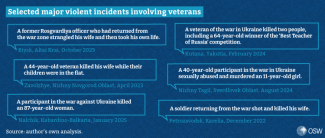
Over three years of war in Ukraine, Russian veterans, including former prisoners and regular soldiers, have killed or seriously injured more than 1,000 people after returning from the front. According to data compiled by the independent Russian outlet Verstka in December 2025, at least 551 people were killed and 465 seriously injured. The perpetrators are frequently characterised by post-traumatic stress disorder, criminal backgrounds, alcoholism, and family problems.
Russian social media platforms are also full of reports of torture, repression, and corruption within the armed forces. These accounts contrast sharply with the image promoted by propaganda outlets. Even patriotic and pro-war channels report that commanders systematically use violence against subordinates to force them into combat. Sick and wounded soldiers are reportedly sent to the front line as a form of ‘disposal’.
The available data indicate that the war is already having a negative impact on public security and is contributing to the demoralisation of society. The resulting increase in crime has generated concern and dissatisfaction among ordinary citizens, posing a challenge for the authorities. However, the state has taken no systemic steps to rehabilitate war veterans, toughen penalties, or otherwise improve public security.
The growing number of murders and robberies committed by veterans, combined with state inaction, undermines public perceptions of the army, which had traditionally commanded respect in Russia, and damages the image of the Kremlin itself. Over time, this trend may disrupt recruitment for the war.
Recommendations
Information campaigns in Western and independent Russian-language media should highlight the scale of crime in Russia and underline the causal link between its growth and the war. Particular attention should also be given to brutal crimes committed by former prisoners pardoned for their participation in the war, while stressing that the Kremlin bears responsibility for their release.
Information efforts should also target men subject to conscription or mobilisation in order to raise awareness of the scale of violence and demoralisation among frontline soldiers. This may increase public awareness of the consequences of participating in the war and contribute to growing dissatisfaction with the Kremlin’s policies, while forcing the authorities to devote resources to mitigating social tensions. This would divert attention from conducting military operations.
In seeking to prevent combatants from returning home and committing crimes, the Kremlin may further restrict troop rotation. Such measures would likely fuel public dissatisfaction, erode support for the army, and weaken mobilisation efforts. This should be regarded as one of the objectives.
Support, both financial and technological, to independent Russian-language media and investigative journalists is essential. These actors collect information on crimes committed by veterans and public reactions to them and disseminate these materials widely within the country.
2. War fatigue and the ineffectiveness of propaganda
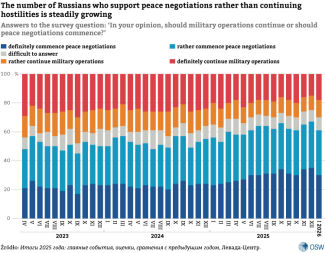
Despite consistently high levels of declared public support for the war and for the authorities in opinion polls, Russian society shows signs of growing fatigue and rising pessimism regarding the country’s future. One manifestation is the increasing number of people who support the initiation of peace negotiations, a trend that has become more visible over the past year.
The more frequent discussion of potential peace talks in official discourse on Russia–US relations, alongside Donald Trump’s rhetoric, has clearly encouraged the expression of such views. Russians have voiced more pacifist attitudes in part because propaganda messaging suggested that the Kremlin itself was open to negotiations, creating implicit permission for such opinions.
In May 2024, half of respondents supported negotiations. By January 2026, this figure had risen to 61 per cent. Over the same period, the share of those favouring continued military action fell from 41 per cent to a record low of 30 per cent.[2] The upward trend in support for negotiations developed relatively steadily, interrupted only briefly by the Ukrainian Armed Forces’ offensive in the Kursk Oblast in August 2024.
When asked about the reasons for their attitude, Russians point to fatigue with prolonged bloodshed. Fear of a new wave of mobilisation, which many wish to avoid, is also a factor. Research conducted by Verstka suggests that such sentiments are even stronger among those fighting, with 72 per cent of soldiers expressing a desire to end hostilities.[3]Support for additional state budget spending on the war has also declined. In September 2024, 43 per cent of respondents considered military expenditure a priority. By October 2025, this share had fallen to 31 per cent. Over the same period, the proportion of respondents who prioritised social spending increased from 38 per cent to 47 per cent.[4]
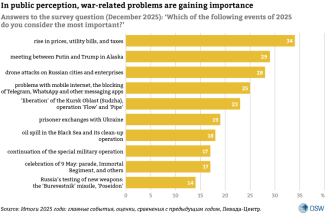
In-depth sociological research in Russia indicates that many citizens are reluctant to discuss the war publicly.[5] In media interviews, respondents often state that they avoid following war-related news to protect their mental well-being. In rankings of key events and problems in 2025, war-related issues feature prominently. Drone attacks on Russian cities and factories ranked third, cited by 28 per cent of respondents, while the ‘liberation’ of the Kursk Oblast ranked fifth at 23 per cent. The most acute concern, however, was rising prices, utility bills, and taxes, cited by 34 per cent. These are also indirect consequences of the war.[6]
State propaganda has proved unable to neutralise unfavourable public sentiment. This is particularly evident in public reactions to unforeseen events detrimental to the Kremlin, when official narratives diverge sharply from reality, such as during Ukrainian incursions into the Kursk Oblast or attacks on infrastructure deep inside Russia. In such situations, many Russians appear to distrust official propaganda and instead seek reliable sources of information independent of the Kremlin.
Recommendations
Western actions should aim to deepen the visible war fatigue within Russian society, potentially reducing support for the authorities and disrupting mobilisation processes. Information campaigns should focus on the social groups most affected by the war and its consequences, including soldiers’ families, ethnic minorities disproportionately recruited to the front, rural communities, and pensioners.
These campaigns should highlight social issues caused or exacerbated by the war, such as rising prices, shortages of medicines (including insulin), limited access to advanced medical treatments (such as cancer and diabetes treatment) and deficits of key food products (for example poultry and eggs, as experienced in December 2023). These problems do not stem directly from Western sanctions, as the Kremlin claims, but from restrictions imposed by Moscow and systemic governance failures.The social and information space in Russia should be closely monitored to identify emerging crises at an early stage and amplify them before the Kremlin can respond.
Financial and military assistance to Ukraine should be increased to strengthen its position against the aggressor and place the Russian army under greater pressure on the front line. Military setbacks would push the Kremlin’s promised victory further out of reach, complicating propaganda efforts and undermining public morale.
Challenges on the battlefield mean that the Kremlin – contrary to popular expectations – will have to maintain the state's involvement in the war, which will burden society (especially groups less crucial to the conduct of the war) and the state budget. Ukrainian strikes on targets on Russian territory should also be continued and intensified. Such actions have an important psychological effect, demonstrating to Russians that the war directly affects them and that, despite official assurances, the Kremlin cannot guarantee security on its own territory.
Further sanctions affecting the daily lives of ordinary Russians, who have so far experienced limited direct impact from the war, should also be considered. These could include measures contributing to inflation, reductions in social spending, and restrictions on access to goods and services such as flights, international tourism, advanced electronics, and Western pop culture. The European Union should consider suspending the issuance of tourist visas to Russian citizens. Despite sanctions, such visas continue to be granted. In 2024, Italy led in this regard, issuing more than 130,000 of the 565,000 Schengen visas granted to Russian nationals.
3. Ethno-religious tensions and anti-immigrant sentiment
High levels of nationalism and xenophobia in Russian society, coupled with the Kremlin’s increasingly restrictive migration policy, raise the risk of intensifying ethnic and religious tensions in Russia. The main factors driving the radicalisation of social attitudes include:
- growing socio-economic inequalities between different social groups (see below),
- systemic restrictions on minority rights, particularly the tightening of minority language rights since 2018,
- increased mobilisation of non-Russian ethnic groups into the army, with some national minorities statistically overrepresented among those killed, alongside relatively lower conscription rates in large cities in the European part of Russia,
- the growing activity of chauvinist paramilitary groups such as Russkaya Obshchina, which is likely under the supervision of the FSB.
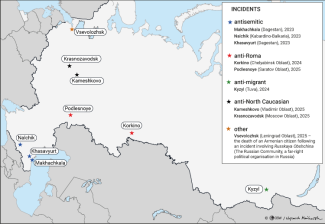
Rising hostility towards foreign labour migrants and representatives of national minorities, a dangerous phenomenon in multi-ethnic and multi-faith Russia, is reflected in public rankings of perceived threats. The presence of newcomers and immigration consistently rank third or fourth, identified by around one third of the population.[7] Tensions increasingly escalate into assaults, clashes, and pogroms. In some cases, such incidents compel the authorities of ethnic republics to intervene to defend their compatriots.
These sentiments have coincided with a tightening of policy after the terrorist attack at Crocus City Hall near Moscow in March 2024, which restricts the rights of labour migrants in Russia. Since then, the authorities have progressively restricted employment rules for migrants, excluding them from sectors which they traditionally worked, such as transport. They have also tightened residency regulations, making it harder to obtain required language certificates and permits. At the same time, recruitment of migrants for the war has been intensified, either coercively or in exchange for residency rights or citizenship. On the one hand, the stricter migration policy encourages parts of society to express xenophobic attitudes more openly. On the other hand, it discourages migrants from coming to Russia and generates tensions in Russia’s relations with states whose citizens face persecution in Russia, including Kyrgyzstan, Azerbaijan, and Tajikistan.
Map. Ethno-religious tensions in Russia are intensifying
Source: author’s own compilation.
Recommendations
The international community should raise awareness about the socio-political realities of present-day Russia, including the lack of genuine federalism, discrimination against minorities, inequalities, ethnic tensions, and systemic oppression of migrants (Russian propaganda has already pursued similar efforts in relation to the West). Such information poses problems for official Russian media, as it contradicts the image of a harmonious state and may damage the authorities’ reputation abroad.
Non-Russian ethnic audiences should be provided with information about political, economic, social, cultural and language discrimination resulting from the dominance of the ethnically Russian majority in the state. They should also be informed about the negative impact of the war on minorities and about systemic and grassroots manifestations of Russian chauvinism, racism and Islamophobia. Efforts should make the widest possible use of tensions generated by current developments in domestic and foreign policy. Particular attention should focus on labour migrants.
Targeted information campaigns in national languages, addressing living conditions in Russia and the risk of forced deployment to the front, should be conducted in countries that have traditionally supplied large numbers of labour migrants to Russia, forming sizeable diasporas. These include Kyrgyzstan, Tajikistan, Uzbekistan, and Azerbaijan, as well as other states in Central Asia and the South Caucasus. An outflow of labour migrants from Russia could significantly deepen existing labour shortages, which already constrain economic development, including the defence sector.
Domestically, financial and organisational support should be directed to minority organisations and their media outlets in Russia that expose ethnic problems, attempt to strengthen local identities, or deconstruct the official historical narrative by highlighting the realities of colonial conquest.
Policymakers should consider providing broad material, technical and political support to representatives of selected national movements in exile to increase their capacity to influence political developments and public sentiment in Russia’s ethnic regions. In Western expert and policy debates on the potential disintegration of Russia, a scenario that concerns Western decision-makers and features prominently in Russian propaganda, it is important to stress that improving understanding of centrifugal tendencies and developing policy tools now would better mitigate potential negative consequences more effectively than being caught off guard by a spontaneous escalation of violence. A weakening of Russia resulting from internal problems would benefit the West in the context of Russia’s aggression against Ukraine and potentially against Western states, for instance, by disrupting military mobilisation.
To weaken social cohesion and inflame ethno-religious tensions in Russia, launching targeted disinformation and propaganda campaigns on social media aimed at different groups should be considered. Content directed at ethnic Russian audiences should portray Russia’s minorities, including Muslims, Roma, and migrants from Central Asia and the South Caucasus, in a negative light. It should also raise fears of national republics seceding from Russia.
4. Preferential treatment of selected social groups and socio-economic inequalities
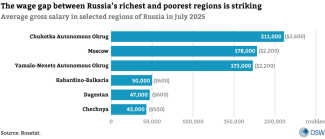
Income disparities between regions and occupational groups in Russia are widening. This is gradually becoming a problem that undermines social cohesion and at times fuels public dissatisfaction.[8] According to data from the Federal State Statistics Service for mid-2025, the average nominal monthly wage in Russia stood at around 99,000 roubles (approximately US$1,200). The highest wages were recorded in the Chukotka Autonomous Okrug (around 211,000 roubles, roughly $2,600) in Moscow (around 178,000 roubles, roughly $2,200) and in the Yamalo-Nenets Autonomous Okrug (around 173,000 roubles, also roughly $2,200). The lowest average wages were recorded in the republics of the North Caucasus: Kabardino-Balkaria (around 50,000 roubles) Dagestan (around 47,000 roubles) and Chechnya (around 43,000 roubles).[9] Significant disparities also affect pensions, which are generally modest even by Russian standards. In Dagestan, the average pension amounts to around 17,000 roubles per month (approximately $200) while in Chukotka it reaches around 38,000 roubles (approximately $450).[10]
At the same time, the war has created social groups with unprecedented high incomes and broad privileges. These include military personnel, volunteers, public sector employees sent to occupied territories, and employees of the military-industrial complex. By enlisting in the armed forces in “wealthy” regions that attract volunteers with higher contract paymentsy, an individual can earn more than 5 million roubles per year (over $60,000). Given the current mobilisation model, which encourages people from the provinces and non-Russian minorities to fight, substantial funds flow into regions that previously lacked such inflows. This raises income levels locally and alleviates some social problems.
However, this dynamic also distorts local markets. It drives up the prices of goods and property, which in turn harms groups without access to war-related income, including pensioners who previously formed part of the Kremlin’s traditional support base. Growing inequalities and the erosion of the previous social contract generate dissatisfaction among those excluded from wartime benefits. Combatants and veterans increasingly gain privileges and form a new elite. Propaganda valorises them and they assertively demand further benefits at others’ expense. Public resentment has emerged, for example, over the preferential admission of veterans and their children to universities through government quotas, despite significantly weaker results than candidates without a war-related recommendation. This practice discriminates talented students and lowers educational standards and professional prestige. Media reports indicate that in 2025 relatives of military personnel and veterans most frequently chose pedagogy, IT, and prestigious medical degrees, especially paediatrics and dentistry, where admission without preferential treatment is highly competitive. Last year, Russian universities admitted 28,500 participants in the war against Ukraine and their children to state-funded places, representing 6.5 per cent of all first-year students on publicly funded courses. In 2026, beneficiaries of the war may occupy up to 25 per cent of such places.[11] Public perceptions of injustice also stem (and rightly so) from the fact that despite the ongoing war and the anti-Western patriotic narrative promoted by state propaganda, the children of Russian politicians and oligarchs remain effectively exempt from mobilisation and conscription. They travel freely to the West, where they spend holidays, study, or reside.
Recommendations
Economic inequalities and the underfunding or uneven funding of social services should receive greater exposure internationally and within Russia. For the regime’s propaganda apparatus, which seeks to conceal inconvenient facts, sustained efforts to introduce these issues into the public sphere and to provide such information to Russian citizens will pose a challenge.
Media outlets and investigative portals that report on these problems (often publishing photographs, addresses, and other such evidence) and expose privileged individuals who evade military service (who are often closely linked to the power structures) should be supported and amplified.
5. War losses and the demographic crisis
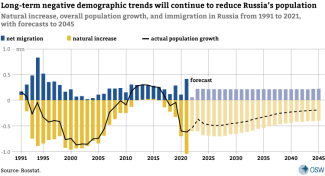
For three decades, except for a brief period between 2013 and 2015, Russia has recorded negative natural population growth. Since 2020, when positive net migration ceased to mitigate the natural decline, the population has been steadily shrinking. This reflects long-term negative trends that the Russian authorities have failed to reverse: rising mortality, declining birth rates, and a reduced inflow of migrants. The war has further exacerbated the situation, primarily through an increasingly visible rise in deaths. According to Rosstat, mortality increased by 3.3 per cent in 2024 compared with 2023, from 1.76 million to 1.82 million people. The sharpest increases were recorded in Altai (up 16 per cent), Chechnya, and Sevastopol (up 10 per cent), as well as in Tuva, Udmurtia, and Kamchatka (up 9 per cent). The natural population decline also intensified. In 2024 it reached 596,200 people, an increase of 20.4 per cent compared with 2023, when it stood at 495,300.
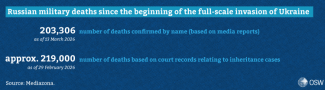
The full scale war’s demographic impact remains unclear due to the classification of casualty figures. According to independent estimates based on publicly available information, at least 220,000 people had been killed at the front between the start of the full-scale war and January 2026.[12] The Ministry of Defence last published official casualty data in September 2022, when it claimed that only 5,937 Russian soldiers had been killed since the beginning of the invasion, a clearly understated figure.
Although the Kremlin declares its intention to improve demographic indicators, its policy measures have proved controversial. Segments of Russian society have criticised methods aimed at encouraging childbirth, such as financial support for pregnant schoolgirls, as well as restrictions on access to abortion as well as repressive measures targeting migrants, who remain essential to the economy.
Recommendations
Demographic challenges and war losses should be highlighted in public debate both in the West and within Russia, in cooperation with independent Russian media outlets. Information campaigns conducted through online media and Telegram channels should emphasise that the state recruitment system cynically purchases soldiers’ lives in exchange for money, that wounded and sick individuals are sent to the front under coercion, that some units are sacrificed in so-called ‘meat-grinder assaults’, effectively condemning soldiers to death at the point of enlistment, and that disabled veterans are ultimately left without adequate assistance or the promised glorification.
Among soldiers, negative information should be disseminated regarding:
- the mistreatment of subordinates by commanders,
- the high risk of death or injury at the front, including permanent disability,
- the common transactional attitude of some soldiers’ families towards their lives, where financial gain may outweigh concern,
- the non-payment of due benefits by the state,
- cases of marital infidelity during deployment,year-on-year
- the neglect of soldiers’ graves, which contradicts the propaganda narrative of universal respect for ‘heroes’.
Continued military support for Ukraine and efforts that shift hostilities onto Russian territory would increase losses and weaken morale, undermining expectations of a swift victory. The Ukrainian incursion into the Kursk Oblast in August 2024 partially produced such an effect. Public dissatisfaction could intensify if the Kremlin were forced to announce another wave of compulsory mobilisation, which ordinary Russians do not support. The authorities therefore seek to avoid such actions, maintaining a continuous low-intensity recruitment drive in the regions instead and coercing vulnerable groups, including migrants and criminal suspects, into military service.
6. Collapse of municipal infrastructure
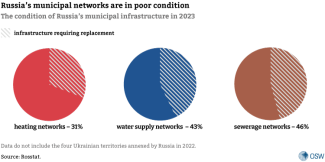
Russia’s municipal infrastructure has long been in crisis, and the situation has deteriorated markedly in recent years. Around 60 per cent of Russians experience infrastructure failures at least several times a month. The main cause is severe wear and tear, as most utility networks have not undergone major renovation since the collapse of the Soviet Union. Degradation is advancing far more rapidly than renewal. The actual level of deterioration likely exceeds official figures, which report an average of 40 per cent, (reaching as high as 80 per cent in certain regions).
During the winter season of 2023–2024, Russia experienced its most serious wave of municipal infrastructure failures in two decades, potentially affecting several million people. According to official data, likely understated, 9,000 incidents were recorded in 2024. In January 2026 alone, nearly 1,800 disruptions to electricity, water, and heating supplies were recorded nationwide, twice as many as a year earlier. Waste management is also in poor condition.
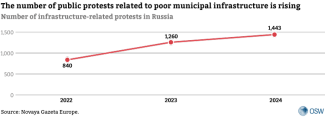
Protests in various forms over the deteriorating state of infrastructure are becoming more frequent. Public dissatisfaction has intensified due to rising household utility costs. From 1 July 2025, utility bills increased by an average of 12 per cent, exceeding 20 per cent in some regions, disproportionately affecting the poorest groups, including pensioners and residents of provincial areas. In 2026, tariff indexation will take place in two stages, with double-digit increases in half of the regions.
Recommendations
Information campaigns aimed at Russian society should emphasise the link between deteriorating infrastructure and government policy, including comparisons between the costs of the war in Ukraine and federal spending on municipal networks, as well as systemic corruption. Such campaigns should also highlight the effectiveness of demonstrations. Public dissatisfaction over rising utility tariffs can be leveraged by underlining the burden on average household budgets.
To further fuel public frustration, efforts that could simultaneously complicate the authorities’ attempts to improve the situation should be considered. By 2030, the Kremlin plans to allocate 4.5 trillion roubles, approximately $44 billion, to a programme for modernising municipal services. Its implementation depends heavily on attracting foreign investors. One option would be to consider extending sanctions to companies and banks from third countries participating in this initiative.
7. Natural and technological disasters
Climate change presents additional challenges for the authorities as well as risks for the population. Since the mid-1970s, the average annual temperature in Russia has increased at a rate two and a half times faster than the global average. Over the past 25 years, the number of hazardous natural phenomena has doubled. Damage caused by global warming costs the country an average of 60 billion roubles, around $770 million annually. Floods (with more than 40 regions being affected in spring 2024), and forest fires are particularly severe. The state remains poorly prepared to prevent natural disasters and has not significantly expanded its capacity in this area.
Following the launch of the full-scale war, many environmental organisations that had highlighted government shortcomings and raised public awareness were forced to cease operations in Russia. In crisis situations, residents are often left on their own, without support from the authorities and unimplemented safety procedures.
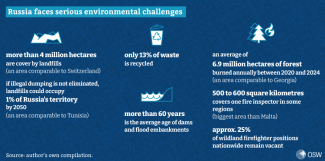
Disregard for safety standards contributes to numerous technological disasters. Oil spills pose particularly serious environmental risks. In December 2024, the Black Sea experienced its most serious environmental disaster in years. Following an accident involving two tankers, 2,400 tonnes of heavy fuel oil leaked into the water.
Map. Oil spills in Russia, selected examples from 2025
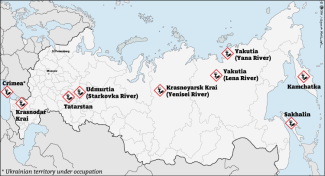
Source: author’s own compilation.
Recommendations
Information campaigns directed at Russian society should underline the ineffectiveness of government efforts to prevent accidents, mitigate the consequences of natural and technological disasters, and assist affected populations, while drawing attention to the financial burden imposed by the invasion of Ukraine. Disasters resulting from negligence or official actions, including oil spills into maritime waters, should be widely publicised internationally to raise awareness of the environmental risks associated with Kremlin policies, including incidents involving Russia’s so-called shadow fleet transporting oil in circumvention of sanctions. In this context, tightening and reinforcing the sanctions regime should be considered a necessary measure.
III. ECONOMIC SITUATION
1. The rising costs of war and the unbalanced budget
One of the key challenges facing the Kremlin is shrinking revenue alongside steadily rising war costs. As a result, balancing the budget has become increasingly difficult. Nominal budget expenditure in 2025 was almost twice as high as in 2021. War expenditure remains the priority. Its main components – internal security and national defence – accounted for at least 45% of total expenditure in 2025, compared with 24% in 2021.
The real cost of the aggression against Ukraine is, however, much higher and is also concealed in other budget lines. Despite rising tax burdens and high inflation, revenues are insufficient to cover expenditure, particularly as economic activity in Russia has slowed since the beginning of 2025. In addition, the price of Russia’s oil exports fell markedly. The annual average price stood at $58 per barrel, compared with the $69.7 assumed in the budget. The authorities’ difficulties have been compounded by the persistently strong rouble. In 2025 the average exchange rate was 83.6 roubles per dollar, compared with the roughly 94 roubles projected by the government.
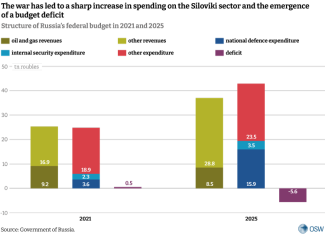
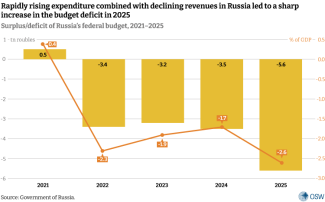
As a consequence, the government was forced to amend the 2025 budget twice. It incorporated a 24% year-on-year decline in oil and gas revenues and nevertheless decided to increase spending further. As a result, the federal budget deficit rose fivefold compared with official plans, reaching 5.6 trillion roubles. The growing deficit of regional budgets and extra-budgetary funds (pension and health) have caused the total gap in public finances to increase to 8.3 trillion roubles (3.9% of GDP) in 2025, compared with 3.2 trillion roubles (1.7% of GDP) in 2024.
Being cut off from international capital markets, the authorities must finance the deficit domestically, primarily through further bond issuance, although high interest rates significantly reduce the attractiveness of this instrument. While Russia’s public debt remains relatively low at around 17.5% of GDP, servicing it is costly. In 2025, debt servicing absorbed as much as 7.5% of total budget expenditure, equivalent to around 1.7% of GDP.
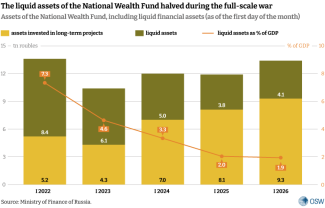
At the same time, the authorities are seeking to preserve reserves accumulated in the National Wealth Fund. At the beginning of 2026, its liquid assets amounted to 52 billion dollars, or 1.9% of GDP. After almost four years of war, these assets have halved in dollar terms and fallen almost fourfold relative to GDP. At the beginning of 2022, they were worth 7.3% of GDP. This sharp decline has occurred despite a doubling of gold prices between 2022 and 2025. Gold accounts for more than half of the Fund’s liquid assets. Oil prices were also relatively high in previous years, which enabled the government to continue replenishing the Fund. In 2024, it added around 15 billion dollars, although these resources were formally credited to the Fund only in 2025.
In 2025 the average price of Russia’s oil exports was 2 dollars below the baseline price of 60 dollars per barrel set in the budget. This required the authorities to cover the difference from the National Wealth Fund. At the beginning of 2026, the gap had widened to almost 20 dollars per barrel. Although prices rose in connection with the US attack on Iran, the level of accumulated reserves does not guarantee the security of public finances.
Recommendations
The stability of Russia’s public finances remains fragile. Nevertheless, the Kremlin continues to finance rising war expenditure despite shrinking revenues. It appears to assume that victory is near and that Western states will cease supporting Ukraine before Russia exhausts its own resources. It is therefore important for the West to demonstrate political and economic determination in countering Moscow.
A clear signal, also significant in psychological terms, would be the use of frozen Russian state assets to support Ukraine. Russia has consistently sought to undermine EU initiatives aimed at using these funds, including by threatening retaliatory measures and proposing to Washington that they be used for joint investment projects. The EU’s failure in December 2025 to agree on using the assets as collateral to finance a 90 billion euro loan for Ukraine was interpreted by the Kremlin as evidence of the effectiveness of its policy. EU member states should therefore return as soon as possible, in line with their declarations, to discussions on repaying Ukraine’s debt using frozen Russian assets.
Above all, the West must intensify efforts to further reduce Russia’s revenues, particularly from oil and gas, which remain crucial for the federal budget. EU member states should fully phase out purchases of Russian oil, gas, and uranium as soon as possible, even ahead of the 2028 deadline proposed by the European Commission in its draft regulation of 17 June 2025. Steps should also be taken to prevent a future resumption of such imports. These measures would also help implement the EU’s July 2025 commitments to significantly increase imports of energy resources from the United States over the next three years. The EU should introduce further instruments to restrict imports from Russia, including high tariffs on other raw materials and energy-intensive goods such as nickel, steel, and steel products, which remain available for purchase. Restrictions should also cover the transit of these goods through the EU.
It is important to withdraw from oil price cap entirely, as this would reduce Russia’s revenues. The January 2026 decision by the EU and the United Kingdom to lower the cap to 44.1 dollars was a step in the right direction but insufficiently ambitious. The United States and Japan should be encouraged to join this policy, particularly as increased US supplies could partially replace Russian exports, in line with President Trump’s policy. Western states should focus on enforcement, including by penalising European companies that violate the restrictions and publicly identifying those responsible.
Another priority is intensifying action against the so-called shadow fleet. This requires expanding sanctions lists to include additional vessels, their owners, and ultimately beneficiaries, a process which necessitates investigative work. Sanctions should also target recipients of Russian oil in Turkey, India, and China. Pressure on major ship registries, including those in Panama, Liberia, and the Marshall Islands, has proved effective. Concerned about their market position, these registries have tightened requirements and, in cases of non-compliance, withdrawn vessels’ right to fly their flag.
Western states should demonstrate determination in defending their interests and strengthen inspections of vessels belonging to the shadow fleet. These ships not only enable Russia to generate export revenue but also pose risks to regional security, including sabotage in the Baltic Sea and the risk of environmental disasters. The 1857 Copenhagen Convention on navigation through the Danish Straits and the 1982 UN Convention on the Law of the Sea guarantee freedom of passage through the Sound, the Great Belt, and the Little Belt. However, international law also allows states to protect their interests. Under Article 220(2) of UNCLOS, authorities may conduct physical inspections and initiate proceedings, including the detention of a vessel, where there are reasonable grounds to believe that a ship navigating in the territorial sea has violated national laws or international rules and environmental standards. The 1884 Convention for the Protection of Submarine Telegraph Cables may also serve as an effective instrument. Denmark has already invoked it when detaining the Chinese bulk carrier Yi Peng 3, suspected of damaging telecommunications cables in the Baltic Sea.
Finally, financial sanctions against Russia should be tightened further. In particular, restrictions should target entities in third countries that facilitate cross-border settlements for goods subject to Western restrictions, including those operating in the cryptocurrency sector. Russian companies have increasingly used stablecoins for international settlements, including the Tether token (pegged to the US dollar) and A7A5 (pegged to the rouble). Such sanctions can significantly destabilise Russia’s financial market, affect the rouble exchange rate, and increase inflation. The measures adopted by the US administration in 2024 demonstrated their effectiveness.
A significant factor weakening Russia’s economic potential has been its cut-off from Western capital and technology. Technological regression, which increases the labour intensity of production, poses a particular risk to Russia’s economic stability given the deepening labour shortage in the country (see below). The consequences of losing access to foreign capital and technology will intensify over time as existing stocks are depleted and machinery and equipment wear out.
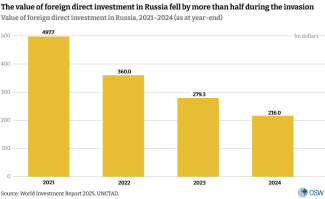
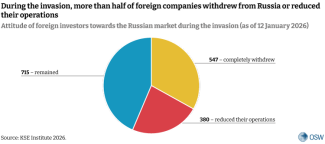
Since the collapse of the USSR, the countries of the current sanctions coalition - above all the EU and the United States - have driven the modernisation of the Russian economy. They accounted for around two thirds of foreign direct investment (FDI) in Russia. The invasion of Ukraine reversed investment trends. According to UNCTAD, accumulated FDI in Russia stood at approximately $500 billion at the end of 2021. By 2024, it had fallen to about $216 billion. Even countries that did not join the sanctions regime, including China, show little interest in replacing Western investment or strengthening their capital presence in the Russian market. They remain reluctant to invest in production in Russia and unwilling to share their technologies.
Restrictions and the withdrawal of Western companies from cooperation with Russia have reduced output in many sectors, including automotive and aviation industries. They have also increased costs and altered product ranges, in most cases towards less technologically advanced goods based on Chinese components. The development of the IT and internet services sector has slowed sharply following restrictions on Russia’s access to microelectronics and hardware. The Kremlin’s policy, including the takeover of companies in the sector and limits on citizens’ internet access, as well as the brain drain of a large share of specialists, has compounded the problem. As a result, the country’s level of technological development and infrastructure continues to deteriorate.
Spending on research and development in Russia remains low. Between 2017 and 2023 it accounted for around 1–1.1 per cent of GDP, well below the levels of technological leaders, 3.3 per cent in the United States and 4.9 per cent in South Korea. Although expenditure has increased since the invasion, reflecting sanctions and the need to replace Western technologies, this has had only a limited impact on overall innovation. A substantial share of these funds supports the needs of the Russian armed forces.
Recommendations
Russia should be cut off from as many technological goods and services as possible, particularly in the energy and defence sectors. The priority should be strict enforcement of existing sanctions and the application of secondary sanctions. EU customs statistics show sharp increases in exports, especially dual-use goods, to third countries such as Turkey and states in Central Asia. This likely reflects sanctions circumvention. Member states should strengthen cooperation between customs services and accelerate work on EU customs reform. Delays in establishing both the EU customs data hub and the EU Customs Authority undermine the Union’s economic security. A unified database covering customs operations across all member states would enable real-time analysis of trade anomalies at the EU level. It could become an effective tool not only against sanctions evasion by Russia but also against other forms of illicit trade, including drugs and weapons. Effective protection of the Union’s customs borders is critical for its credibility, particularly among third countries.
Member states also need common risk assessment principles for customs services to guide cargo inspections, including physical checks. Approaches currently differ widely, from a business-friendly model that avoids restricting foreign trade to a security-oriented approach that treats customs as a key instrument of national protection.
Closer cooperation is required between national and EU authorities, including OLAF. Cooperation should also be strengthened with businesses, NGOs that expose sanctions circumvention mechanisms, and the media. An active information policy should highlight the objectives and effects of sanctions. Social pressure on businesses, evident in the first months of the war, influenced Western corporate policy towards Russia.
Member states should also improve the effectiveness of prosecuting dishonest entrepreneurs to deter similar behaviour. Under EU Directive 2024/1226, from 2025 sanctions circumvention constitutes a criminal offence across the Union and should be punishable by substantial fines and even imprisonment.
3. Economic dependence on China
Comprehensive Western sanctions have increased Russia’s economic dependence on China, which is becoming progressively more costly for Moscow. China is now Russia’s main trading partner. In 2025, China accounted for around 30 per cent of Russian exports, compared with 16 per cent in 2021, and around 35 per cent of imports, compared with about 25 per cent in 2021. The real significance is likely higher, as some Chinese goods reach Russia via third countries.
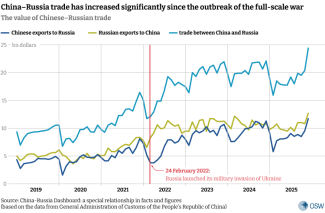
The relationship displays a pronounced asymmetry. In 2025, trade with Russia accounted for just over 3 per cent of China’s exports and around 5 per cent of its imports. China exports mainly processed and finished goods to Russia, including cars, smartphones, laptops, and household appliances, as well as spare parts and dual-use items that support Russia’s war effort. China’s share of Russian imports of machinery, industrial equipment and spare parts has risen to as much as 90 per cent. This is particularly visible in the passenger car market, now dominated by Chinese brands following the withdrawal of Western firms and the collapse of domestic production. In 2025, Chinese brands accounted for 51 per cent of new car sales in Russia, compared with 2 per cent in 2019. Despite a decline in quality, their average price has doubled over the past three years.
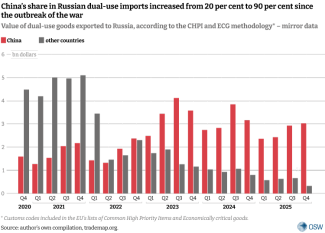
China, in turn, imports primarily raw materials from Russia. After the EU embargo in 2022, it became a key market for Russian crude oil, accounting for around 45 per cent of total exports, and coal, around 40 per cent. Beijing uses this strong Russian dependence to dictate terms and demand deeper price discounts.
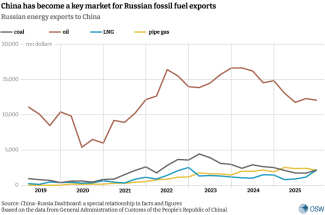
With limited access to Western financial markets, Chinese banks and the renminbi have strengthened their position in Russia and in its cross-border operations. By mid-2025, the renminbi accounted for over 30 per cent of Russia’s foreign trade settlements and almost 60 per cent of the liquid reserves of the National Wealth Fund. Following the invasion of Ukraine, the five largest Chinese banks expanded their presence in Russia, with their assets increasing 4.5 times in the first three years of the full-scale war.
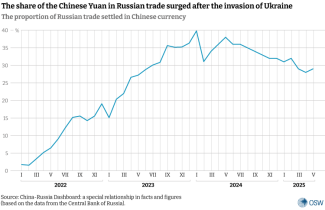
At the same time, Beijing shows little interest in supporting the development of the Russian economy. It remains reluctant to invest in Russia or share advanced technologies. China’s energy policy, focused on boosting domestic production and diversifying energy sources and suppliers, also limits the scope for further growth in Russia’s share of the Chinese fossil fuel market.
As the de facto strategic alliance between Russia and China deepens, differences of interest, particularly economic ones, have become more visible. This is evident in gas relations. After losing the European market, the Kremlin sought to increase gas deliveries to China and pushed for new pipeline projects, including the Power of Siberia 2 pipeline linking West Siberian gas fields with China via Mongolia. Long-running negotiations on the terms of this project have yet to produce results.
Access to the Chinese market remains heavily restricted for Russian agri-food products, especially grain. Despite its need for capital and technology, the Kremlin is limiting China's involvement in the development of the Northern Sea Route along Russia’s Arctic coast, which would significantly facilitate transport between Asia and Europe. As a result, the ambitious Arctic development programme has stalled following the imposition of sanctions. Some members of Putin’s elite have already felt the impact of Chinese competition. Sergei Chemezov, head of the state corporation Rostec, which controls AvtoVAZ and Kamaz, lobbied in mid-2024 to limit access for Chinese brands to the Russian car market. The government responded with a series of protectionist measures, notably raising the recycling fee on imported cars by up to 85 per cent. This reduced imports from China by 25 per cent year-on-year and increased the assembly of Chinese cars in Russia from fully manufactured Chinese components. It also led to higher prices and a 15 per cent year-on-year decline in demand.
Recommendations
The deepening of Russia–China ties appears durable and benefits both regimes. It supports export revenues and sustains production, including for military purposes. Paradoxically, however, Moscow’s growing economic dependence on Beijing partly aligns with Western interests. The asymmetry in the relationship allows China to impose its terms, increasingly exploiting Russian resources and weakening Russia’s long-term development prospects.
Given the strategic importance of the partnership for both regimes, Western leverage to break these ties remains limited. Any offers aimed at drawing Russia away from China would likely serve to strengthen Moscow’s position vis-à-vis Beijing and improve the terms of their cooperation.
Nevertheless, Russia’s economic dependence on China should feature prominently in Western information policy directed at Russian society and parts of the elite. Highlighting unfavourable terms of cooperation, the challenges faced by domestic producers unable to compete with Chinese imports, and the rising costs borne by consumers in the absence of Western competition could exacerbate social tensions. This is particularly relevant amid slowing growth and high inflation. Russian carmakers Kamaz, AvtoVAZ, and GAZ shifted to a four-day working week in the second half of 2025. In 2025, sales of lorries fell by 50 per cent and passenger cars by 15.5 per cent.
4. Labour shortages
Labour shortages represent one of the main constraints on Russia’s economic development and a significant driver of inflation. In November 2025, unemployment reached another historic low of 2.1 per cent. In some regions, including Moscow and the Yamalo-Nenets Autonomous Okrug, it stood at around 1 per cent. Officially, 1.6 million people were unemployed out of a labour force of 76.3 million.
According to official estimates by Rosstat and the Central Bank of Russia, between 1.5 and 2 million vacancies remained unfilled in 2025. Business assessments are far more pessimistic. The slowdown in economic activity in 2025 eased labour shortages and slightly reduced wage growth, but wages continue to rise much faster than productivity. Shortages are most acute among drivers, mechanics, engineers, and construction workers. By sector, agriculture and fisheries, construction and healthcare face the largest gaps.
Demographic factors largely explain these shortages. Russia’s population is ageing. The large cohorts born in the 1950s and 1960s have mostly left the labour market, and those born during the crisis years of the 1990s are replacing them. There are 7.5 million more 60-year-olds than 20-year-olds. The 2019 pension reform, which gradually raises the retirement age by five years to 60 for women and 65 for men by 2028, has only marginally improved the situation. The war has further strained the labour market through mobilisation, battlefield losses, and the emigration of many highly skilled workers seeking to avoid conscription and repression. Labour shortages have deepened due to a decline in labour migration, reflecting the Kremlin’s restrictive migration policy and the reduced attractiveness of working conditions in Russia.
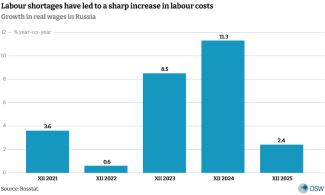
Recommendations
Demographic challenges across Europe have created serious labour shortages. The EU could attract skilled workers from Central Asia and the South Caucasus, regions that traditionally supply the Russian labour market, thereby dealing it a significant blow. Many migrants have experience working abroad and knowledge of Russian and, in some cases, English, which facilitates communication. This would require member states to implement an appropriate migration strategy. A key element should be support for vocational training in these regions in professions most needed in the EU. Some initiatives already exist. For example, RWTH Aachen University and the Swiss company Globogate Concept AG have launched a training programme in Tashkent for medical personnel for the German labour market.
Contrary to some views, especially among the Russian opposition, offering attractive employment conditions in the West to highly skilled Russians, particularly IT specialists, would not be advisable as a tool to deepen Russia’s labour market problems and weaken the regime. Preferential treatment for nationals of an aggressor state could generate tensions within migrant communities, including among Ukrainian migrant workers. High living standards for specialists in Russia raise their salary expectations. Moreover, migrants from Russia may pose security risks to the EU. Highly skilled professionals are particularly important in sensitive sectors such as banking, transport, and energy, where they could become targets for Russian intelligence services seeking to infiltrate émigré communities and use them for hybrid activities.
5. High inflation and the cost of credit
Rising production costs and supply constraints have driven up prices in Russia. Inflation proved particularly burdensome in mid-2025, when it exceeded 9.4 per cent, with the sharpest increases in services and food prices. While inflation boosted budget revenues, it eroded purchasing power and fuelled social discontent, hitting the poorest households hardest. Food and utility costs account for a large share of their spending.
The true pace of price growth remains contested. Many institutions, experts, and especially citizens accuse Rosstat of understating inflation. The methodology does not account for declining product quality following the replacement of Western goods with Asian alternatives. The authorities have an interest in reporting lower inflation, as it determines mandatory indexation of pensions and social benefits.
Rapid price increases in 2024 prompted the central bank to tighten monetary policy to curb demand. From mid-2024, it raised the key interest rate several times, reaching 21 per cent in October. This sharply restricted access to credit and discouraged investment, as deposits offered higher returns.
As a result, economic growth slowed from early 2025. Industrial output increased by 1.4 per cent in 2025, compared with 5.5 per cent a year earlier. Inflation began to ease in the second half of the year, allowing the Central Bank of Russia to cut the key rate to 15.5 per cent. Despite the reduction in the key interest rate, borrowing costs remain high. The economy has operated under double-digit interest rates for two years.
High interest rates have constrained corporate borrowing and development. Investment began to decline from mid-2025. With sanctions cutting off access to foreign capital markets, Russia must rely on domestic sources of financing. Over the past three years, almost 60 per cent of investment has been financed from companies’ own funds and around 20 per cent from the state budget. Bank loans accounted for only about 10 per cent. Government estimates suggest that around 70 per cent of investment spending is devoted to adapting to new economic conditions, including replacing Western machinery and trade routes, while only 30 per cent supports the expansion of production.
Access to capital remains particularly difficult for companies producing civilian goods. The government has increased tax burdens, while sanctions and labour shortages have raised production costs and reduced profits. The automotive sector faces serious challenges. High interest rates have also encouraged consumers to keep their money in deposits rather than purchase durable goods, especially cars.
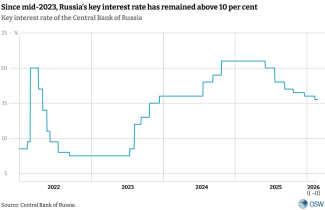
Recommendations
Financial sanctions against Russia should be tightened further. They increase the cost and duration of cross-border transactions, delay physical deliveries, and contribute to higher inflation and rouble instability. In 2024, the threat of US secondary sanctions against third-country financial institutions supporting Russia significantly affected trade flows and budget revenues. The strength of US financial sanctions reflects the dollar’s role in global trade, accounting for around 60 per cent of all transactions. However, the EU also holds leverage through the SWIFT system, which is used worldwide, including by entities involved in facilitating Russia’s sanctions evasion. The EU should consider disconnecting such entities from SWIFT, rather than focusing solely on Russian financial institutions. SWIFT could also play a role in relations with China, as the Chinese cross-border payment system CIPS relies on SWIFT for interbank communication.
SWIFT could assist financial institutions in detecting suspicious transactions by expanding information requirements, including the customs codes of traded goods.
European financial institutions should conduct thorough due diligence on transactions involving Russian companies and nationals, including those routed through third countries, and report suspicious activity. Following Russia’s inclusion at the end of 2025 on the EU’s list of high-risk third countries due to strategic deficiencies in its anti-money laundering system, such scrutiny has become obligatory. Efforts should also continue to place Russia on the Financial Action Task Force blacklist, which would subject Russian businesses to comparable restrictions in most countries worldwide.
6. rowing dependence on non-Western hydrocarbon importers and declining revenues
In exporting its energy commodities, Russia remains heavily dependent on demand from its key buyers: China and India. Three factors have reinforced this dependence: the loss or sharp reduction of access to Western markets, the sanctions regime, and logistical constraints. In the case of crude oil – the most important source of Russia’s export revenues – more than 80% of exported volumes go to these two countries. Russia sells this oil at a marked discount, which emerged after 2022 as a result of the factors outlined above and has translated into lower revenues.
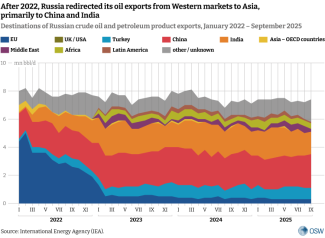
This situation makes Russia particularly vulnerable to market disruptions and depresses the prices of its commodities, particularly crude oil. The consequence is significant volatility in export revenues and a downward trend, particularly following successive rounds of tighter Western sanctions.
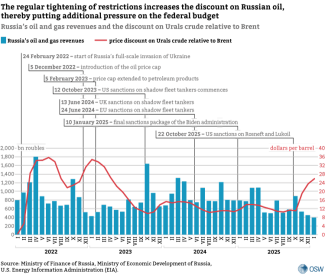
Recommendations
A further reduction in Russia’s commodity export revenues would require the expansion and active enforcement of restrictions by Western states, including the credible threat of secondary sanctions and tariffs. Such measures influence the behaviour of buyers of Russian commodities and help to reduce budget revenues. The continuous expansion of sanctions lists to include entities involved in transporting Russian oil disrupts logistical chains, raises export costs, and deepens the discount on Russian crude.
Russia’s dependence on buyers in countries for which access to Western markets remains important increases the scope for influence through sanctions instruments and political pressure. From the European side, closing the ‘refinery loophole’ from 21 January 2026 – that is, banning the import of fuel produced from Russian crude in third countries such as India and Turkey – will also require active monitoring to prevent circumvention. The current export structure leaves Russia particularly exposed to demand fluctuations in two or three destination countries, further strengthening the leverage of these instruments.
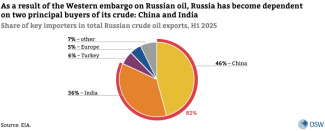
7. Limited access to technology and production stagnation
Limited access to technological know-how constrains Russia’s ability to maintain a strong position in the energy market, particularly under conditions of external pressure.
The Western technology embargo has significantly hindered the functioning of Russia’s energy sector, slowing its modernisation and growth. One indication is the increase in flaring of associated gas at production sites, despite lower levels of extraction. This points to mounting difficulties in maintaining infrastructure due to restricted access to Western technologies, which also negatively affect production levels. Moreover, after 2022 Russia’s inability to build new LNG plants using domestic technologies has become evident.
Under external pressure – such as Ukrainian strikes on Russian refineries – further weaknesses have emerged. Facilities have struggled to resume operations due to the inability to import Western spare parts and obtain servicing. Refinery outages have led to sharp declines in fuel production, heightening tensions in the domestic market and forcing the state to undertake costly interventions.
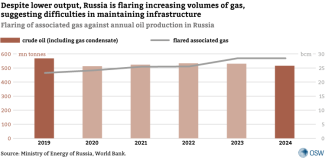
Map. Ukrainian attacks on refineries between 1 July 2025 and 1 March 2026
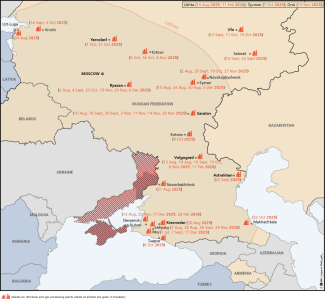
Recommendations
Maintaining external pressure on Russia’s energy sector is an effective way to deprive it of growth prospects and thereby weaken the Kremlin. Oversight of Western companies and their subsidiaries in enforcing the technology embargo and servicing bans remains essential, given Russia’s dependence in this area. This dependence becomes particularly acute when parts of Russia’s production capacity are taken offline as a result of depletion or external factors.
In this context, clearly defined sanctions provisions concerning the liability of companies from EU member states for circumventing sanctions through subsidiaries in third countries would be crucial. Continued sanctions pressure on Russia’s LNG sector is also key to preventing the realisation of Moscow’s ambitions to secure a dominant position in this market. In addition to maintaining the existing technology embargo, ending imports of Russian liquefied natural gas – planned for 2027 – would deepen the sector’s structural problems and further undermine its development prospects.
SUMMARY
Poland and Europe have a strategic interest in weakening the Putin regime as far as possible. The natural course of action towards Russia would therefore be to target the economic foundations of the war and compel members of the elite to recalculate the costs and benefits of supporting Putin. The continued existence of a regime capable of waging a full-scale invasion poses a far greater threat to Western states than the likely temporary destabilisation of Russia that could follow its collapse.
Policy should focus on targeting the regime’s relative strengths and advantages, whether these stem from its structural characteristics or from the West’s slow and ineffective response. The Putin system of power remains stable in part because the ruling elite and administrative apparatus have adapted to the realities of a full-scale war. It is therefore necessary to undermine their belief that a new phase of stabilisation is achievable and, above all, to weaken their conviction in Russia’s ultimate victory in Ukraine and in its confrontation with the West.
It is necessary to challenge the perception of the regime’s stability and of Putin’s effectiveness as a leader and as a guarantor of security and elite wealth accumulation. The prevailing fear within the elite of losing status, assets or even their lives if accused of disloyalty will persist as long as they believe the regime is durable, the Kremlin is ‘omnipotent’, and no alternative to the current leadership exists.
Maximising the costs of the war for Russia through battlefield defeats and tighter sanctions would reduce opportunities to profit from the war in an environment of persistently high corruption. The growing anti-Western resentment among the elite, driven by financial losses resulting from sanctions, could become an asset if policymakers develop a positive offer to members of the establishment. Such an offer should remain conditional on meeting strict but clear requirements, as outlined above.
[1] О. Вандышева, ‘«Татар явно обделили»: демограф Алексей Ракша об итогах переписи, которая «провалена полностью»’, Бизнес Online, 21 January 2023, business-gazeta.ru.
[2] Data on support for peace talks: ‘Конфликт с Украиной в январе 2026 года: внимание, поддержка российских вооруженных сил и идеи переговоров, представления о том, что делать, если добиться договоренностей не получается, о продолжительности и конечном результате военных действий’, Левада-Центр, 27. January 2026, levada.ru.
[3] ‘Хотят мира, не понимают целей «СВО» и не ждут её скорого конца: что думают российские военные о возможном перемирии’, Вёрстка, 29 April 2025, verstka.media.
[4] 15-я волна опроса «Хроник»: индекс влияния войны, россияне против повышения налогов, родственники участников войны почти перестали отличаться от остальных россиян, Хроники, October 2025, chronicles.report.
[5] ‘Россияне устали от войны и стараются не замечать ее’, The Moscow Times, 2 August 2024, moscowtimes.ru, after: web.archive.org.
[6] Data after: ‘Итоги 2025 года: главные события, оценки, сравнения с предыдущим годом’, Левада-Центр, 23 December 2025, levada.ru.
[7] Levada Center research: ‘Левада-Центр : Общий уровень тревожности и представления о наиболее острых проблемах российского общества: август 2024 года’, 4 September 2024; ‘Левада-Центр : Представления о наиболее острых проблемах российского общества: июнь 2025’, 16 July 2025, levada.ru.
[8] Data on salaries for 2024 in individual regions, see: ‘Средняя зарплата в России в 2026 году от Росстата’, GOGOV, 3 January 2026, gogov.ru.
[9] Rosstat data for П. Хрущёв, ‘Названы регионы России с самыми высокими и низкими зарплатами’, Газета.Ру, 15 October 2025, gazeta.ru.
[10] ‘Средняя пенсия в России’, GOGOV, 3 January 2026, gogov.ru.
[11] Data after: Р. Николаева, ‘В 2025 году число поступивших в вузы по квоте для участников войны против Украины и их детей удвоилось’, Важные истории, 27 January 2026, istories.media.
[12] BBC and Mediazona comparison: ‘Потери России в войне с Украиной на январь 2026 года. Статистика погибших в СВО’, Медиазона, zona.media.