Tech oligarchs in the US: the mutual dependence between the Trump administration and Silicon Valley
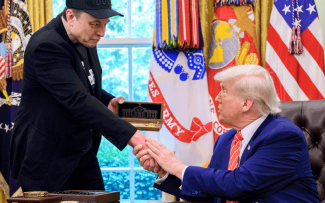
The development of advanced technologies is critical to the United States’ economic future and national security. Chief executives of the country’s largest technology companies have gained significant political influence, not only because of the financial resources they can contribute to election campaigns, but also thanks to the products, services and platforms they control. This makes the political shift that has taken place in Silicon Valley over recent years all the more significant. After years of aligning itself with the Democratic Party, the technology sector has increasingly turned towards the Republicans. The chief executives of companies such as Meta, Alphabet, Amazon and Nvidia are also seeking closer ties with President Donald Trump, raising questions about the extent of their influence on his administration. At the same time, public scepticism towards Big Tech companies is growing in the United States. Sections of the populist right, particularly the Make America Great Again (MAGA) movement, have also expressed concern about the growing influence of the so-called ‘tech oligarchy’ on American politics. As a result, cooperation between technology industry leaders and politicians could become considerably more difficult in the coming years, as the political costs of such partnerships increase.
The origins of big tech’s political engagement
The technology sector is one of the most important parts of the US economy. Its companies dominate the country’s stock market, and the entrepreneurs behind them rank among the wealthiest individuals in the United States. The sector’s continued development is of strategic importance, both for the country’s long-term economic growth and for maintaining an advantage over geopolitical rivals, particularly China. At the same time, the rapid development of technologies such as artificial intelligence poses significant risks, including challenges for the future of the labour market and cybersecurity. There are also growing concerns about the monopolistic practices of major technology companies, as well as their impact on consumers, particularly through social media platforms, and on the environment, notably through the construction of large-scale data centres.
The US government has therefore sought to regulate the technology sector and establish a framework for the development of key technologies. This has given rise to political challenges, as technology companies have a direct interest in shaping the political landscape. They pursue this through lobbying and by providing financial support to selected politicians. Given the scale of the resources at their disposal, these efforts can have a significant impact on the functioning of American democracy. Moreover, the ambitions of some chief executives extend beyond lobbying for laws and regulations that benefit their businesses.
For many years, leading figures in the US technology sector were primarily aligned with the Democratic Party. This reflected several factors. Most Big Tech companies were concentrated in California’s Silicon Valley, a region where support for the Democrats was particularly strong. The rise of the technology sector also coincided with Barack Obama’s electoral success. During his 2008 presidential campaign, Obama became the first candidate to use new technologies on such a large scale to communicate with voters, raise campaign funds and organise local events. Democrats were also more willing to embrace support from Silicon Valley because the financial crisis had fuelled public distrust of the country’s financial elites, who were associated with Wall Street, whereas technology entrepreneurs were presented as a more innovative alternative. As a result, Silicon Valley became an important source of campaign funding for the Democratic Party. Its importance grew further after court rulings created new opportunities for large corporations and the wealthiest Americans to finance political campaigns.[1] This led to a sharp increase in campaign donations and, consequently, in electoral spending. The combined cost of presidential and congressional campaigns was estimated at just under $6.9 billion in 2004, rising to $14.8 billion in 2024.
The close relationship between the technology sector and the Democratic Party lasted for more than a decade. Even during Donald Trump’s first term, most major technology companies kept their distance from his administration, although there were exceptions, such as Palantir co-founder Peter Thiel. Following the events at the US Capitol on 6 January 2021, leading social media platforms, including Twitter (now X) and Facebook, suspended the president’s accounts. During Trump’s second term, however, Silicon Valley’s approach has shifted dramatically. Technology leaders have not only sought to maintain close ties with the president, as reflected in the attendance of leading chief executives at his inauguration, but have also provided significant financial support for his political activities, donated to projects important to him, such as the construction of a ballroom at the White House, and taken up positions within his administration. Examples include Elon Musk and the so-called Department of Government Efficiency (DOGE), as well as investor David Sacks in his role as adviser on cryptocurrency and artificial intelligence.
Silicon Valley’s Conservative shift
Donald Trump’s re-election in 2024 changed how leaders in the technology sector viewed him. They could no longer regard him as a temporary political phenomenon. Throughout the election campaign, moreover, Trump repeatedly promised his supporters that he would seek retribution for what he described as the humiliations of recent years. There was therefore a real risk that some of his actions would be directed against the social media platforms that had suspended his accounts or against media organisations critical of him. Against this backdrop, the chief executives of the largest technology companies moved closer to Trump, in part to protect their own business interests. For example, a shift in The Washington Post’s editorial policy, together with a donation to the committee organising the presidential inauguration, reflected Jeff Bezos’s efforts to protect Amazon’s interests. Concerns about the future of his other company, Blue Origin, may also have played a role. The space company depends heavily on cooperation with NASA and the federal funding that accompanies it.
Maintaining close ties with the president and his inner circle also enables technology leaders to reduce the risks arising from the administration’s policies. Good relations with Trump can, for example, help companies secure favourable regulatory changes or exemptions from existing rules. This was the case when iPhones were exempted from the new tariffs imposed by the Trump administration on goods imported from China. Apple chief executive Tim Cook secured the president’s support on the issue just days after ‘Liberation Day’, on 2 April 2025, when Trump announced higher tariffs on all US trading partners. At the time, up to 90 per cent of all iPhones were manufactured in China, although Apple has since shifted part of its production to other countries, primarily India. Nvidia chief executive Jensen Huang also persuaded Trump to allow the sale of more advanced microprocessors used in artificial intelligence to China. A key turning point came with the renewed approval for exports of H20 chips. The administration had previously suspended their export to China, citing national security concerns and the need to preserve the United States’ technological advantage over Chinese companies, as it had done with earlier restrictions.
Silicon Valley’s growing distance from the Democratic Party also reflects the policies the party has pursued in recent years. The Biden administration sought to regulate the development of artificial intelligence through Executive Order 14110, issued in 2023 on the safe, secure and trustworthy development and use of AI, and to establish a regulatory framework for the responsible development of the cryptocurrency sector through Executive Order 14067, issued in 2022. These measures were driven by concerns about the risks associated with the unchecked development of these technologies. The negative effects of the growing use of social media, including increasing political polarisation, the spread of disinformation and mental health problems, particularly among younger users, also contributed to a broader shift in attitudes towards technological development. The optimism that characterised Democratic policymakers during the Obama years gave way to growing concern about the potential unintended consequences of new technologies. This shift in the Democrats’ approach, together with their attempt to address these risks through regulation, created a political opportunity for the Republicans. The Republican Party’s 2024 platform explicitly rejected the Biden administration’s approach in the section devoted to promoting innovation. Big Tech chief executives therefore saw backing Trump as an opportunity for the unrestricted growth of their businesses.
Cultural factors also contributed to Silicon Valley’s shift away from the Democratic Party. The party's increasingly influential progressive wing came to view many leading figures in the technology sector as negative symbols. Mark Zuckerberg, the chief executive of Meta, is a notable example. After years of facing criticism for failing to do enough to combat disinformation and hate speech on his platforms, he aligned himself with a political movement that explicitly regards such measures as censorship and advocates greater freedom of expression online. Elon Musk’s acquisition of Twitter and his changes to the platform’s content moderation policy may also have influenced this decision. Reducing content moderation contributed to lowering costs, while adopting rhetoric that opposed censorship provided a convenient response to criticism over the inadequate handling of disinformation and hate speech. Google co-founder Sergey Brin, meanwhile, began supporting the Republicans, including Trump, in response to proposals backed by progressive Democrats to impose additional taxes on California’s billionaires. The growing influence of the progressive wing within the Democratic Party has therefore also drawn the technology sector’s leaders closer to the Republicans.
A final factor behind the changing political preferences of leading figures in the technology sector is their desire to bring about fundamental change in society. Some of the industry’s most prominent figures have ambitions that extend beyond technological innovation. They often promote broader visions for reforming the state, some of which are at odds with the principles of democracy. From this perspective, Trump is seen as a disruptive force with the potential to fundamentally reshape the state. Peter Thiel viewed him in these terms as early as 2016 and, more recently, the world’s richest person, Elon Musk, has worked closely with Trump for similar reasons. Thiel advocates a state that does not hinder technological development, while Musk supports unrestricted freedom of speech, which motivated his purchase of Twitter, as well as lower public spending and fewer government regulations, which explains his involvement in DOGE. Thiel is also a mentor to Vice President J.D. Vance. Thiel helped finance Vance’s political career, enabling him to win a seat in the Senate. His influence over the future direction of the American state could therefore grow further if Vance becomes the Republican presidential candidate in the 2028 election.
Political benefits and media influence
During his first term, Trump adopted a much more sceptical approach towards Big Tech. It was during this period that the Department of Justice brought its antitrust case against Google. Trump also criticised what he described as ‘selective censorship’ on social media and sought to amend Section 230 of the Communications Decency Act, which protects social media platforms from legal liability for content posted by their users. He also publicly attacked individual companies, including Amazon, accusing it of tax avoidance. His attitude towards Big Tech reflected both the technology sector’s political sympathies at the time and the long-standing belief shared by many American conservatives that social media platforms restricted the free speech of users with conservative views.
During the 2024 election campaign, Trump capitalised on changing attitudes within the technology sector by presenting himself as a supporter of developing artificial intelligence and cryptocurrencies. This was a tactical move, as the Biden administration’s attempts to regulate these areas had met with resistance from the industry, prompting many companies to look for an alternative to another Democratic administration. The shift translated into substantial financial support for Trump. According to an analysis by Fox Business, the cryptocurrency sector alone contributed at least $238 million to his presidential campaign. Technology companies also continued to support him financially after he returned to office, donating to selected initiatives, such as the construction of a ballroom at the White House, and to organisations associated with the president. This is particularly significant because it strengthens Trump’s position ahead of the upcoming midterm elections and reinforces his control over the Republican Party. The financial resources at his disposal allow him to undermine politicians whom he considers disloyal by funding their opponents in Republican primary elections.
Support from the technology sector also allows the president to demonstrate the effectiveness of his economic and trade policies. Last year, Apple announced plans to invest $600 billion in the United States, including in domestic manufacturing capacity. Oracle, OpenAI and SoftBank launched Project Stargate, an initiative aimed at securing US leadership in artificial intelligence through the construction of new data centres. Apple has also invested in MP Materials, a US company that mines and processes rare earth elements, in response to Chinese restrictions on these critical materials. Major technology companies are also helping the US administration in other strategic areas. Technologies provided by companies such as Palantir are important not only to the US armed forces but also for implementing the president’s deportation policy.
Trump’s close ties with some of the most influential technology industry leaders also give him greater influence over the media landscape. This applies to both social media platforms, such as X and Facebook, and traditional media. During his first term, Trump relied primarily on favourable coverage from the Murdoch family’s Fox News, as well as smaller right-wing television networks such as Newsmax. A significant change came with the creation of a new media conglomerate by David Ellison, the son of Oracle co-founder Larry Ellison, one of the world’s wealthiest individuals. Last year, Ellison’s company, Skydance, acquired Paramount, thereby becoming the owner of the CBS television network. It is now completing its acquisition of Warner Bros. Discovery, which will give it control of assets including CNN. Jared Kushner, the president’s son-in-law, was involved in the transaction until a certain stage in the process.
The technology sector’s new ties with the administration have also created opportunities for the Trump family to expand its wealth. The most prominent example is World Liberty Financial (WLF), a cryptocurrency company linked to the president’s family, which, according to The Wall Street Journal, generated $1 billion in profits for family members in 2025. WLF has attracted considerable controversy. Democrats in Congress have launched an investigation into whether there is a link between the company’s partnership with Binance and Trump’s pardon of Binance co-founder Changpeng Zhao. Investments in WLF by a sovereign wealth fund from the United Arab Emirates have also raised concerns.
Is the tech oligarchy a threat to the United States?
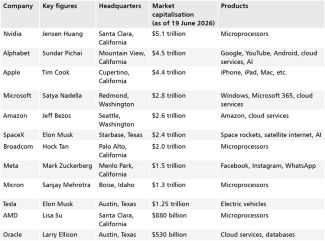
The technology sector’s growing influence over the Trump administration has fuelled concerns about the oligarchisation of the US political system. The term ‘tech oligarchy’ now frequently appears in the media to describe the most influential figures in the technology industry (see Appendix). Concerns about the growing political influence of the wealthiest Americans are not new. A historical parallel can be found in the ‘robber barons’, the leading industrialists of the late nineteenth and early twentieth centuries, who came to wield considerable influence over the country’s political system.
Concerns about oligarchisation also predated the rise of Big Tech in recent US history. They have centred primarily on the growing gap between the wealthiest Americans and the rest of society, the lack of transparency in campaign finance, which in practice allows unlimited donations to individual candidates, the prominent role of lobbying in US politics and the ability of large corporations to shape public opinion.[2] For decades, business elites have used these tools to support individual politicians, block regulations or influence their content, and shape public attitudes towards issues affecting their commercial interests.
The influence of technology industry leaders is similar in some respects, but it also has several new dimensions. Their control over social media platforms, internet search engines and artificial intelligence models gives them more powerful tools to shape public opinion. For some, these ambitions extend beyond adapting laws and regulations to suit their business interests. Some seek to reshape the state more fundamentally, in some cases by limiting or rejecting democracy itself. At the same time, the state has become increasingly dependent on technologies developed by their companies, whether for military capabilities, space exploration, communications or the future development of the economy through artificial intelligence. Court rulings, such as on the Citizens United case, have also made it possible to channel much larger sums into election campaigns. As a result, campaigns have become more expensive, and politicians have become increasingly dependent on wealthy business figures willing to finance them. Some scenarios for the development of artificial intelligence, which envisage the loss of many jobs and growing dependence on a small technocratic elite, suggest that the influence of technology leaders could increase even further.
The actions of Big Tech leaders may, however, encounter growing public resistance. Opinion polls consistently show declining trust in technology companies and their products, including social media platforms and artificial intelligence. Elon Musk’s attempt to play an active role in the administration through the so-called Department of Government Efficiency (DOGE) was unsuccessful. An anti-technology strand of populism has also emerged within the MAGA movement, represented by Steve Bannon, a former adviser to Donald Trump and now the host of the popular War Room podcast. US media have likewise portrayed the idea of a tech oligarchy in negative terms. As a result, cooperation between technology industry leaders and politicians could become considerably more difficult in the coming years, as the political costs of such partnerships continue to rise.
Appendix. The largest US technology companies
[1] In Citizens United v. Federal Election Commission (FEC) (2010), the US Supreme Court ruled that restrictions on corporations and trade unions financing political campaigns violated their right to freedom of speech. Later that year, in SpeechNow.org v. FEC, the D.C. Circuit Court of Appeals ruled that contributions to organisations engaged in political campaigning could not be subject to donation limits, provided those organisations did not coordinate directly with any candidate.
[2] J. Winters, B. Page, ‘Oligarchy in the United States?’, Perspectives on Politics, vol.7, no. 4, December 2009.