Magyar in Zakarpattia: a symbolic step towards normalising relations with Ukraine
On 24 November, Hungarian Prime Minister Péter Magyar paid his first official visit to Ukraine since taking office in May 2026, marking the first visit by a Hungarian head of government to Zakarpattia Oblast since 2015. In Uzhhorod, Magyar met Ukrainian President Volodymyr Zelensky, and the two leaders laid wreaths at a military cemetery to honour fallen Ukrainian soldiers. They then travelled to Berehove, where they visited a hospital and a Hungarian-language secondary school and met representatives of the local Hungarian community. Both leaders described the meeting as the beginning of a new phase in bilateral relations.
During the talks, the two sides agreed to expand energy cooperation through the supply of natural gas and diesel to Ukraine and greater use of Ukrainian gas storage facilities by Hungarian companies. The leaders also committed to expanding and modernising border infrastructure, opening new border crossings and launching direct rail services on additional routes. They further discussed cooperation on demining in Ukraine and bilateral trade. The Hungarian delegation delivered humanitarian aid, while Magyar pledged to establish a dedicated fund to support the Hungarian community in Zakarpattia. The prime minister welcomed the legislative changes on national minority rights adopted by the Ukrainian parliament to date, but called for faster implementation of the provisions of the bilateral agreement on this matter.
Magyar’s visit to Zakarpattia and his meeting with Zelensky represent a symbolic breakthrough in Hungarian-Ukrainian relations, although they do not necessarily mean that Budapest will abandon its existing demands vis-à-vis Kyiv or its opposition to providing financial support for Ukraine from the EU budget.
Commentary
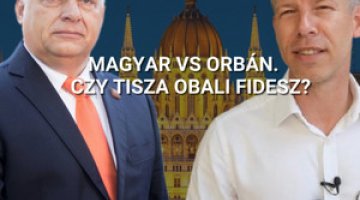
- Magyar seeks to normalise relations with Ukraine, moving away from the confrontational policy of his predecessor, Viktor Orbán, while maintaining a firm stance on the rights of the Hungarian minority. The new government aims to turn this issue from a source of political conflict into a means of rebuilding bilateral cooperation, while continuing to make its support for Ukraine’s EU integration conditional on Kyiv meeting its demands regarding the Hungarian minority. Magyar also wants to avoid giving the opposition party Fidesz grounds to accuse him of neglecting the interests of Hungarian communities abroad. Commitment to their welfare remains an important source of political legitimacy for any government in Budapest, regardless of its ideological orientation.
- Magyar has been working to re-establish Hungary as a constructive participant in the EU’s policy towards Ukraine and the enlargement process. Resolving the dispute over minority rights would allow Hungary to move beyond its role as an obstacle to EU decision-making and play a greater part in shaping the EU’s accession strategy. Pledges to expand cooperation with Ukraine and a willingness to pursue dialogue on its European integration are intended to project an image of Hungary as an open and engaged partner.
- Hungary emphasises that Ukraine must meet the EU membership criteria and fulfil its demands concerning the rights of the Hungarian minority in order to make further progress in the accession process. Budapest also maintains its opposition to the transit of Western military aid to Ukraine through Hungarian territory, refuses to contribute to the guarantees underpinning EU loans to Kyiv (the €90 billion agreed in the spring of 2026 and the €45 billion package currently under negotiation) and opposes earmarking a separate €100 billion envelope for Ukraine under the EU’s next multiannual financial framework for 2028–34.
- Ukraine has greeted the Hungarian prime minister’s announcement of a ‘new chapter’ in bilateral relations with both hope and caution. Kyiv welcomed his unequivocal condemnation of Russian aggression and his tribute to fallen Ukrainian soldiers, both of which marked a clear departure from Orbán’s policy, as well as his willingness to pursue joint cross-border projects. The agreements on gas and fuel supplies to Ukraine and on expanding opportunities for Ukrainian agricultural exports are particularly significant. However, Kyiv was more reserved in its response to Magyar’s call to reinstate the statue of the Turul – a mythical bird and one of Hungary’s national symbols – at Mukachevo Castle. Ukraine is implementing the provisions of its agreement with Hungary on minority rights and has also expressed its willingness to accelerate this process.
- Kyiv’s priority remains to ensure that relations with Budapest do not impede Ukraine’s integration into the EU. However, it has no intention of going beyond the obligations arising from EU requirements. Magyar’s remarks about the need to ‘earn’ membership and the ‘very long and difficult road’ ahead were interpreted in Kyiv as a signal that Hungary could obstruct progress in Ukraine’s accession process at later stages if Kyiv fails to meet Hungarian expectations.