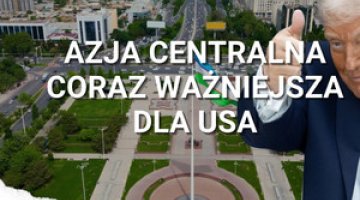
Marco Rubio’s visit to Uzbekistan highlights Central Asia’s growing importance to the US
On 19 October, US Secretary of State Marco Rubio visited Uzbekistan, accompanied by a delegation that included nearly 300 American business representatives. He attended a foreign ministers’ meeting in the C5+1 format, which brings together the five Central Asian states and an external partner. He also took part in a meeting of the US–Uzbekistan Business and Investment Council, during which he met President Shavkat Mirziyoyev. The two countries signed agreements worth a combined $12 billion. This was Rubio’s first trip to Central Asia. He also announced that President Donald Trump himself intended to visit Uzbekistan in 2027.
Last year’s presidential-level C5+1 summit in Washington was a clear sign of growing American interest in Central Asia. Since then, US administration officials, including undersecretaries of state and White House special envoys, have made 11 visits to the region. Washington is particularly interested in cooperation on critical raw materials. Growing US engagement offers Central Asian countries an opportunity to further diversify their economic ties and reduce their dependence on China and Russia. It also helps strengthen the region’s political standing and raise the C5’s international profile.
US engagement in Central Asia: from security to business
Historically, US engagement with Central Asia has focused on security, primarily in connection with military operations in neighbouring Afghanistan, which began in 2001. US forces were stationed in Uzbekistan until 2005 and in Kyrgyzstan until 2014. Central Asian countries also cooperated with US forces on counterterrorism operations, although Uzbekistan ended this cooperation in 2005 after Washington condemned the bloody crackdown on protests in Andijan. The US resumed military cooperation with Central Asian states following its withdrawal from Afghanistan in 2021. US military aircraft make refuelling stops in Turkmenistan, while the C5 countries purchase American military equipment and benefit from the Foreign Military Financing (FMF) programme and the Global Peace Operations Initiative (GPOI).
The decision to stop pressing Central Asian governments to pursue democratisation and improve their human rights records marks a significant shift in US policy towards the region. This change has become particularly evident since the start of Trump’s second term. Previously, these issues had played a major role in shaping US engagement. Economic cooperation now takes priority. Washington’s relations with Central Asia also form part of its broader rivalry with China. Washington aims to reduce China’s influence in Central Asia by expanding its engagement and tailoring it more closely to the needs of its regional partners. Its efforts focus particularly on transport and the raw materials sector, including critical raw materials. Closer trade and investment ties are also strengthening the political dimension of this cooperation, which Washington is pursuing regardless of the domestic situation in the C5 countries. Trump has invited Uzbek President Shavkat Mirziyoyev and Kazakh President Kassym-Jomart Tokayev to the upcoming G20 summit in Miami. Kazakhstan also joined the Abraham Accords last year.
Rubio’s visit to Uzbekistan can be seen as another step in Washington’s strategy towards Central Asia, which increasingly centres on trade and investment. The talks highlighted the importance of cooperation in such areas as critical raw materials, transport, advanced technologies, aviation and the space sector. Uzbekistan joined the US-led Artemis Accords, an initiative aimed at establishing non-binding principles for the peaceful exploration of space.
Further agreements, including bilateral deals, continue to be signed. Since last year’s presidential-level summit, the US and Kazakhstan have concluded 29 agreements worth a total of nearly $17 billion, primarily covering industry, energy, mining and digitalisation. These include a tungsten mining project involving investors linked to President Trump’s sons. The agreements signed between the US and Uzbekistan during Rubio’s visit are worth a combined $12 billion and cover areas including banking, transport, critical raw materials and the modernisation of agricultural technologies. Meanwhile, the B5+1 forum, which brings together business representatives from Central Asia and the US, continues to develop. This year’s meeting was held in Bishkek.
Uzbekistan takes centre stage
Although Kazakhstan initiated the C5+1 format with the US in 2013, Washington now appears to be giving priority to Uzbekistan. Despite announcing plans last year to visit all five Central Asian countries, Rubio has so far travelled only to Samarkand, where he met with Mirziyoyev but no other regional leaders. Trump may also visit Uzbekistan. Speaking after the summit, Rubio said that the two countries were considering launching a direct air service between Tashkent and Miami.
For Kazakhstan, which aspires to regional leadership, being overtaken by Uzbekistan in relations with Washington is an unwelcome development. As Central Asia’s largest country, Kazakhstan sees closer ties with the US as crucial not only to diversifying its economy but also to strengthening its political standing. Washington’s apparent preference for Tashkent most likely reflects Russia’s weaker economic influence in Uzbekistan than in Kazakhstan. Another factor may be that, unlike Kazakhstan, Uzbekistan is not a member of the Eurasian Economic Union, making it a less important economic partner for Russia.
Uzbekistan and Kazakhstan continue to play a more prominent role in US strategy towards Central Asia than the region’s other three countries. Kyrgyzstan and Tajikistan are relatively small markets with considerably less economic potential than their neighbours, while Turkmenistan pursues an isolationist policy. Moreover, China dominates the raw materials and transport sectors in all three countries, both of which are of particular interest to Washington. This helps explain why increased US political engagement – reflected, among other things, in invitations to the G20 summit and to participate in the Board of Peace – has been most evident in relations with Uzbekistan and Kazakhstan.
Outlook: economy first
The steady expansion of cooperation between the US and Central Asia reflects the region’s growing appeal to Washington as an economic partner. A key US priority is to forge partnerships in critical raw materials extraction to reduce its dependence on imports from China. Since November 2025, Washington has signed agreements in this field with all Central Asian countries except Turkmenistan, and further deals are likely to follow.
For Central Asian countries, closer cooperation with the US provides an opportunity to diversify their international relations, particularly their economic ties, and reduce their dependence on Russia and China. For Kazakhstan and Uzbekistan, stronger political ties with Washington, reflected in their participation in initiatives such as the Board of Peace, also help raise their international profile. Both countries hope that the attention they receive from US officials will also attract greater interest in their tourism sectors.
As Washington expands its engagement in Central Asia, its main competitor is China, which has a strong presence in the transport and raw materials sectors across all five countries. The C5 countries’ growing willingness to forge partnerships beyond the region, coupled with Washington’s offer of cooperation, is likely to strengthen the US position in Central Asia. The Trump administration’s new approach could help stimulate economic growth in the region without putting pressure on its authoritarian governments to undertake political reforms or pursue democratisation.