The Ukrainians are overwhelming Moscow’s air defence. Day 1672 of the war

Russian forces continued their offensive on most fronts in Donetsk Oblast, but failed to make significant progress. Between Dobropillia and Druzhkivka, and between Kostiantynivka and Chasiv Yar, however, there was a noticeable widening of the grey zone, which should be linked to the gradual withdrawal of Ukrainian forces from areas where the military significance of holding their positions had been lost and where they risked being cut off from their main forces. The reinforcement of Ukrainian forces in the Dobropillia area with sub-units of the 425th Separate Assault Regiment “Skelya” and the 225th Assault Regiment allowed for a brief stabilisation of the situation and the recapture of some positions. After 20 September, the Russians resumed their offensive there, entering the town from the south, whilst their sabotage and reconnaissance groups appeared in the areas to the west and north of it. The situation north of Lyman has relatively stabilised, although according to some sources, Ukrainian forces have attempted to cross to the eastern bank of the Zherebets River.
Russian advances have forced the expansion of the mandatory evacuation zone for families with children in Donetsk Oblast. It covers parts of Sloviansk and Kramatorsk, as well as nine other towns. The evacuation order covers 41.5% of the area of the former and 10% of the latter. According to the OSINT channel AMK Mapping, 1,451 km² of Donetsk Oblast – i.e. 5.47% of its total area – remains outside the combat zones, though within range of Russian air strikes.
The Russians have regained the initiative in the western part of Zaporizhzhia Oblast, where they have gradually begun to dislodge Ukrainian forces from positions they had previously recaptured. Stepnohirsk has once again become a combat zone. To stabilise the situation in Orikhiv, the Ukrainians have sent reinforcements there from other theatres of operations. So far, they have failed to halt the Russians, who, according to some sources, have launched an operation to outflank the town from the west as well. Russia is also reported to have made further advances in the north-eastern part of Zaporizhzhia Oblast.

Kyiv and Kyiv Oblast, as well as Odesa and Odesa Oblast, remain constant targets of Russian attacks. From the evening of 15 September until the morning of 22 September, drones and, at times, missiles struck local warehouses, industrial facilities, and energy and transport infrastructure (including port facilities) on a daily basis. Attacks took place several times a day. On 17 September, missiles struck Kyiv, damaging railway infrastructure and partially cutting off the left-bank part of the city from its water supply. 18 people were injured, including two children. In Kyiv Oblast, the Brovary, Bucha, Fastiv, Obukhiv and Vyshhorod raions were the main targets, with at least 100 facilities destroyed or damaged. In Odesa Oblast, the main targets were the ports of the so-called ‘Greater Odesa’ and Izmail on the Danube. OSINT sources also reported repeated Russian attacks using missiles and guided aerial bombs on the two main bridge links to the southern part of the region and, further on, to Romania at Maiaky and Zatoka (the latter of which is not open to passenger traffic). The strikes on the bridges are said to have taken place on 16, 17 and 19 September. Several more ships were also damaged; on 17 September, the captain of a Tanzanian-flagged vessel was killed and three seamen were injured.
Russian missiles once again struck Ukrainian steelworks. On 17 September, Zaporizhstal was hit, and on 22 September, ArcelorMittal in Kryvyi Rih. These plants, like Kametstal in Kamianske in Dnipropetrovsk Oblast, were not in operation; however, Russia’s aim appears to be their complete destruction, thereby preventing the resumption of production. According to the Financial Times (21 September), they accounted for 90% of Ukraine’s steel production, which effectively spells the collapse of the country’s metallurgical industry (the Russians had previously seized two destroyed plants in Mariupol). On 22 September, a missile attack once again targeted the disused refinery in Kremenchuk – whose remaining facilities are used for fuel storage – as well as the chemical plants in Pavlohrad and the industrial area in Dnipro. On 17 September, the Iskra plant in Zaporizhzhia was also hit (prior to the full-scale invasion, it had produced radar stations).
Zaporizhzhia remains the most frequently targeted major city in the immediate rear of the front line. Apart from the massive attack on 17 September, Russian drones or guided aerial bombs struck the city every day up to and including 22 September. Due to its proximity to the front line and the increasing range of small unmanned aerial vehicles, it is also being attacked with increased frequency by FPV drones. The main targets, apart from industrial facilities, remain warehouses, shopping centres and transport infrastructure; On 21 September, a historic university building was damaged. Dnipro was targeted on 17, 19, 21 and 22 September, and Kryvyi Rih on 19 and 22 September. Furthermore, Russian drones struck Kharkiv (17, 19 and 21 September), Kropyvnytskyi (16, 17 and 21 September) and Sumy (16, 18, 19 and 20 September), which were also subjected to artillery fire, indicating that the Russians had consolidated their control over areas lying some ten kilometres north of that city (on 20 September, university buildings in Sumy were also damaged). On 16, 18, 21 and 22 September, industrial facilities in Poltava Oblast were also attacked (in addition to the aforementioned refinery in Kremenchuk).
The Russians have intensified their attacks on the western part of Ukraine, where their main objective is to disrupt the transport of goods from Poland. Drones struck logistics infrastructure in Zhytomyr Oblast on two main roads leading from the border to Kyiv (in the Korosten and Zviahel areas) on 17, 20, 21 and 22 September. On 20 and 22 September, railway infrastructure in Vinnytsia Oblast was also damaged, and on 19 September, a facility in Khmelnytskyi Oblast was hit. On 17 September, a Russian drone struck once again in the vicinity of the Yahodyn border crossing in Volyn Oblast.
Further signs have emerged of a weakening of Ukraine’s air defences; outside Kyiv they are struggling to repel attacks by cruise missiles. The Russians used eight or nine Kalibr missiles, of which at most one was shot down, and at least 16 Oniks missiles (according to some sources, one was also shot down, whilst three may have missed their targets). Ballistic and hypersonic missiles remain, in effect, beyond the reach of air defences (due to a shortage of PAC-3MSE missiles and the limited number of Patriot systems). In total, from the evening of 15 September to the morning of 22 September, the Russians are reported to have fired at least 52 missiles, of which no more than two were shot down. The Ukrainian Air Force Command (UAFC) reported that only one missile (Kalibr) had been shot down, but did not specify the total number of missiles used by the Russians. According to the UAFC, during the period in question, the invaders also used at least 1,051 attack drones and their decoys, as well as small manoeuvrable missiles (drone-missiles) of the Banderol and Dan-T types (in three statements, the UAFC failed to provide the total number of these missiles, reporting only the number shot down). A total of 841 unmanned aerial vehicles and rocket-drones are reported to have been neutralised.

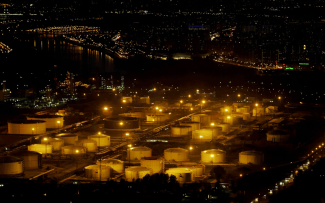
On 20 September, Ukrainian forces carried out the largest air strike against Russia since the start of the war. For the first time in several months, they managed to overwhelm Moscow’s air defences and score hits on its territory. Depending on the source, the attack involved between 1,300 and 1,600 strike drones of various types, as well as between 8 and 10 FP-5 Flamingo cruise missiles. 11 drones struck targets in Moscow and Moscow Oblast (according to the local authorities, 450 were neutralised in the area around the Russian capital). Two main processing units at the Kapotnya refinery in Moscow were damaged, resulting in the plant halting production, as was also the case with a storage complex in the town of Sofino, near Moscow. It cannot be ruled out that a drone also struck the combined heat and power plant in Dzerzhinsky, near Moscow. Due to the threat, over 400 flights from local airports were postponed or cancelled. Two civilians were killed and six were injured. A daily record was also set – the Russian Ministry of Defence reported that 1,951 Ukrainian drones had been neutralised.
On 17 September, Ukrainian drones struck a refinery in Yaroslavl, which suspended operations as a result of the damage. On 21 September, the Bashneft-UNPZ refinery in Ufa, Bashkortostan, was hit, followed a day later by the Kuibyshev refinery in Samara. Fires broke out at both facilities. On 16 September, Reuters reported that production had been suspended at the refineries in Saratov and Syzran, which had been attacked on 11 and 15 September respectively.
On 17 September, Rostov-on-Don’s Tsentralny Airport was the target of a massive attack. Two transport aircraft – an An-12 and an An-26 – and two Mi-8 helicopters were damaged or destroyed. A secondary detonation (of fuel or ammunition) was also reported. According to the Ukrainian General Staff, the day before, a Su-24 front-line bomber was hit at Saky air base in occupied Crimea, whilst in Russia’s Bryansk Oblast, two S-400 launchers, from which Kyiv had been shelled, were struck.
As part of the operation to destroy Russian air defences, codenamed ‘PPOpad-2026’, 300 targets were hit, as reported on 19 September by Robert Brovdi ‘Madgar’, commander of the Ukrainian Unmanned Systems Forces (USF). In the occupied territories and in Russia’s frontline regions, 162 missile launchers and rocket-artillery systems, 124 radars and 14 electronic warfare systems were reportedly damaged or destroyed. 26 targets were reportedly struck between 10 and 18 September. On 22 September, Brovdi announced that “as part of Operation ‘MoLoCHKa’, the USF had damaged and put out of action 300 vessels of the Russian ‘shadow fleet’”. 15 ships were reportedly struck between 12 and 22 September.

On 15 September, the Security Service of Ukraine (SBU) reported that it had foiled an assassination plot prepared by Russian special services posing as Ukrainian law enforcement agencies in Kyiv Oblast. This involved woman who had been recruited was instructed to place an improvised explosive device near a supermarket on the outskirts of Kyiv. On 17 September, the SBU reported the arrest in Odesa Oblast of a local resident recruited by the Russian services, who was allegedly planning an attack on the building of a state institution in Izmail.
On 16 September, the Ukrainian state railway company Ukrzaliznytsia warned that Russia was recruiting Ukrainian citizens to gather information on railway infrastructure and military transport. According to the company, potential operatives are offered money, amongst other things, for photographing railway facilities and providing their geolocation. A day later, the SBU announced the arrest in Dnipro of a local woman suspected of collaborating with the Russian secret services and gathering data on the deployment of Ukrainian military units in order to prepare Russian missile and drone attacks. On 18 September, the service announced that it had dismantled an FSB spy ring whose members had been passing on the coordinates of Ukrainian positions in Donetsk Oblast to Russia. On 21 September, it was reported that a Russian military intelligence (GRU) agent had been detained on the same charge in Donetsk Oblast.

On 17 September, Major General Viktor Nikoliuk announced his resignation as commander of the ‘East’ military group, which had ceased to exist following the creation of two new command structures – the ‘Centre’ and ‘Azov’ groups – led by Brigadier Generals Andriy Biletsky and Denys Prokopenko respectively.
On 18 September, Ukrainian Prime Minister Serhii Koretskyi announced the establishment, within the National Guard, of a Recruitment Centre for Foreigners and Stateless Persons, which is to coordinate the recruitment of foreign volunteers for contract service. He emphasised that recruiting them into the Defence Forces is a national priority, and that the aim is to increase the Ukrainian army’s manpower (see ‘Ukrainian Armed Forces pin hopes on foreign recruits’).

A report published on 17 September by the Multilateral Sanctions Monitoring Team (MSMT) estimated that Russia may have deployed up to 25,000 North Korean nationals in the production of unmanned aerial vehicles used against Ukraine. The workers are reportedly being sent to the Alabuga Special Economic Zone in Tatarstan, where attack drones based on Iranian Shaheds are manufactured. According to the group, the employment of North Korean nationals constitutes a breach of UN sanctions, and in order to circumvent them, the workers are formally registered in Russia as students: in 2025, Russia issued over 36,400 visas to North Korean nationals, of which approximately 35,800 were student visas. The Ministry of Science, Higher Education and Technology (MSMT) estimates that by the end of 2025, there were between 15,000 and 30,000 North Korean workers in Russia, and their work abroad could have brought the regime in Pyongyang up to $800 million a year, helping to fund its nuclear and missile programmes.

On 15 September, Ukraine’s Minister for Foreign Affairs, Andrii Sybiha, reported that since the start of the full-scale invasion, Russian attacks had damaged or completely destroyed over 500 locomotives, more than half of which were lost in 2026. He emphasised the importance of the railways for evacuations and the transport of essential goods. He appealed to Ukraine’s partners for urgent assistance in procuring locomotives compatible with a track gauge of 1,520 mm and for funding to accelerate the purchase of new rolling stock. According to Sybiha, maintaining the operational capability of the railways is essential for preventing a humanitarian crisis and for strengthening the country’s resilience. On 18 September, following the intensification of attacks on railway infrastructure, Ukrzaliznytsia announced new operating rules for the railways during yellow and red alert levels: at the yellow level, trains will continue to run, whilst at the red level, passenger services will be suspended and passengers and railway staff will be directed to shelters.
On 18 September, the Office of the United Nations High Commissioner for Human Rights (OHCHR) published a report on sexual violence linked to Russia’s full-scale aggression against Ukraine. According to the data, between 24 February 2022 and the end of July 2026, the OHCHR documented 1,004 cases of sexual violence, of which 89% were attributed to members of the Russian side – including the armed forces, prison service and security agencies – and 11% to the Ukrainian side. The majority of victims of crimes committed by Russians were men, particularly detainees and prisoners of war, whilst cases involving women and children were mainly recorded in the occupied territories of Ukraine. As regards the Ukrainian side, almost half of the documented violations against Russian prisoners of war and prisoners who were third-country nationals consisted of threats of sexual violence.

On 16 September, Dmytro Lubinets, the Ukrainian Parliament’s Commissioner for Human Rights, reported that the deportation or forced displacement of approximately 20,000 Ukrainian children had been officially confirmed. A significant proportion of this operation is reportedly being funded by the Russian state-owned company Gazprom. According to the spokesperson, the children’s names, dates and places of birth are being changed, the Russian language is being imposed on them, and they are being enrolled in the Yunarmiya organisation.

On 15 September, the Finnish Ministry of Defence announced its 34th package of material aid for Ukraine, worth approximately 290 million euros. As is customary, no details were disclosed. In monetary terms, this is the second-largest package provided by Finland to date.
On 16 September, European Commission President Ursula von der Leyen announced her intention to allocate unused funds from the SAFE programme towards the purchase of arms for Ukraine. This involves a loan of approximately €3–4 billion from a pool of €150 billion, which has not yet been allocated to any country under the SAFE mechanism.
On 17 September, Poland’s Deputy Minister of National Defence Stanisław Wziątek stated that Warsaw was preparing a further military aid package for Ukraine worth around €50 million. It is to focus on arming F-16 fighter jets, in particular 30 mm ammunition for the onboard gun. A day later, Poland announced its accession to the anti-ballistic missile coalition.
On 18 September, during a meeting with Ukrainian President Volodymyr Zelensky, Romanian President Nicușor Dan announced that, as part of a joint NATO initiative, his country would supply Kyiv with interceptor missiles for the Patriot air defence systems. Furthermore, the meeting discussed accelerating the joint production of drones under a Romanian contract worth 200 million euros, funded by the SAFE programme.
On 18 September, the US State Department approved the sale of various air defence systems to Ukraine for a maximum of $2.68 billion, to be funded by contributions from European countries. The authorisation covers: unlicensed copies of missiles for the S-300 systems, GAM-67 Crossbow missiles, anti-aircraft systems with extended-range laser-guided missiles, improvised Erector 1.5 launchers, modernisation kits intended for unspecified launchers, RPS 202 unmanned aerial vehicle (UAV) countermeasure system radars, deployable mast trailers, spare parts, consumables and accessories.
On 22 September, the presidents of France and Ukraine signed an agreement for the supply of air defence radars and anti-aircraft missiles to the Armed Forces of Ukraine. No details were disclosed.