Russian strike on Ukrainian maritime transport. Day 1609 of the war

Russian forces are continuing their advance towards Kramatorsk and Sloviansk, capturing further positions to the east of these towns. According to some sources – including Ukrainian ones – Russian assault units are reported to be operating 5.5 km from Kramatorsk airport, and have also managed to stabilise the front line to some extent. Russia’s aim is to ultimately drive the defenders out of the ridge line stretching between Bakhmut and Siversk on the eastern side and out of Druzhkivka, Kramatorsk and Sloviansk on the western side. Gaining control of this area would give Russia a dominant position over the urban area, making it easier to attack it with FPV drones and exposing it to direct, precision artillery fire. Ukraine’s growing awareness of the threat is indicated by an appeal from the head of the Donetsk Regional Military Administration, Vadym Filashkin, to the population to evacuate, stating that there are no longer any safe places in Donetsk Oblast. The appeal coincided with an intensification of Russian attacks on Kramatorsk, mainly using guided aerial bombs (Russian: KAB).
Russian forces are attempting to capitalise on their successes north of Kostiantynivka, and the first groups of their troops are reported to have reached Oleksiievo-Druzhkivka – the main settlement before Druzhkivka. The Russians’ operations are said to be aided by the urbanised terrain along the roads leading to this town, and further on to Kramatorsk and Sloviansk on both sides of the Kryvyi Torets River. Russia has also made slight advances to the south and east of Dobropillia, as well as in Lyman – most of which is currently a combat zone – and in the Kupiansk area, along with the border regions of the Kharkiv and Sumy oblasts.

The Russians carried out further attacks on Kyiv, exploiting the weakness of Ukrainian air defences in order to strike facilities involved in the production of so-called long-range missiles and drones, their components and their storage sites. The attack on 16 July was limited to a logistics and the production complex in Darnytskyi District and warehouses in the western part of the city. Depending on the source, Russia used between 10 and 17 missiles (two or three of which were shot down) and an unspecified number of attack drones. Two people were killed and six were injured. On 19 July, a massive strike took place, resulting in damage across five districts of the city. NASA FIRMS satellite imagery confirmed extensive fires at four industrial sites and two warehouse complexes. A fire also broke out at warehouses in the Bucha area near Kyiv. A number of other facilities were also damaged, including the Lukianivska metro station. One person was killed and 17 were injured. Depending on the source, the Russians fired between 41 and 51 missiles and, according to Ukrainian Air Force Command (UAFC), 18 of these were shot down, while, according to OSINT data, it was at most a few. They also noted that, in order to repel both attacks, Ukrainian air defences used PAC-3 MSE interceptors from the Patriot systems, which proved significantly less effective than previously (on 19 July, the Ukrainians reportedly used 16 of them). This would suggest that the problems with defending against Russian missile attacks are not solely a consequence of an insufficient number of interceptors, but also of the degradation of the defence system and modifications made to the Russian missiles.
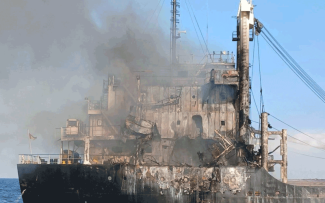
Russian forces continued to strike Ukrainian port infrastructure and its support facilities, as well as the vessels using them. On 19 July, the head of the Odesa Regional Military Administration, Oleh Kiper, reported that the region’s ports were being attacked daily by 50–60 missiles and drones. Between 12 and 19 July, 18 people were killed and 69 injured (including six children) as a result of Russian strikes on Odesa Oblast. Odesa was regularly targeted, as were the ports of Chornomorsk (16, 18 and 20 July) and Pivdennyi (19 July). Attacks on port infrastructure and ships also took place in Mykolaiv (16, 17 and 18 July). Every day, between three and five ships were damaged in ports and at sea, with crew members on some of them sustaining injuries. The most tragic incident occurred on 19 July, when the Russian air force struck the Guinea-Bissau-flagged bulk carrier ‘Golden Leo’ with missiles. Of the seventeen-strong crew, ten seamen were killed and the rest were injured. The day before, one person was killed and three were injured on the bulk carrier ‘Venturo’, flying the flag of Antigua and Barbuda. On 21 July, the Romanian authorities reported damage to the Liberian-flagged gas tanker ‘Gas Lisbon’ as it was heading for the port of Reni at the mouth of the Danube. These incidents confirmed that Russian attacks on shipping are far more destructive than the similar Ukrainian attacks.
On 17 and 19–21 July, further large-scale attacks were carried out on Ukrainian gas infrastructure. The targets were facilities in the Kharkiv, Poltava and Sumy oblasts. Naftogaz reported serious damage to some of them, mainly in Kharkiv Oblast, resulting in reduced production.
Ukraine’s support facilities in frontline regions remain a constant target of Russian air strikes. Further damage to energy, industrial and transport infrastructure, as well as storage facilities, was reported from, amongst others, Kryvyi Rih (14 and 18 July), Kharkiv (15, 16, 17, 19 and 20 July), Sumy (15, 17, 19 and 20 July), Zaporizhzhia (15, 16, 18, 19 and 20 July), Dnipro (17 July) and Kherson (18 July). Mainly due to Russia’s increased use of KABs, the attacks on Sumy on 15 July (three people killed, 21 wounded), Zaporizhzhia on 16 July (seven killed, 20 wounded) and 19 July (three killed, including a child, and 42 wounded, including eight children), and Kharkiv on 19 July (four killed, 20 wounded) were particularly bloody. On 15 July, a petrol station deep within Ukraine – in Zhytomyr Oblast – was attacked for the first time, and in total, over 20 such facilities were destroyed or damaged during the period in question. According to the UAFC, from the evening of 14 July to the morning of 21 July, the Russians deployed a total of 765 attack drones, of which 649 were neutralised. Ukrainian military sources (apart from the UAFC, this mainly means the General Staff) also reported 71–73 ballistic, cruise and hypersonic missiles, of which 24–27 were shot down. According to OSINT data, the Russians used nearly 30 more missiles – in particular, the Ukrainian military had underestimated the number of missiles used in attacks on port infrastructure, whilst a dozen or so were reportedly shot down. The Ukrainians are also still identifying the small-calibre S8000 Banderol manoeuvrable missiles, which Russia is increasing its use of, as drones.

Ukrainian forces continued to strike at Russian shipping, as well as the energy infrastructure and logistics networks in occupied Crimea. According to Robert Brovdi “Magyar”, commander of the Unmanned Systems Forces, between 15 and 20 July, as part of Operation MoLoCHKa, 67 vessels of various categories were struck in the Black Sea and the Sea of Azov; however, he did not publish the customary report on the results of operations on 21 July (between 6 and 14 July, 116 vessels were hit). Over the two weeks of the operation, the Kerch ferry crossing is said to have lost 75% of its capacity (according to “Magyar”, four ferries were taken out of service, two of them completely). Furthermore, the Security Service of Ukraine (SBU) reported that three tankers from the so-called ‘shadow fleet’ had been hit in the Black Sea (two on 16 July and one on 19 July), whilst the General Staff of the Armed Forces of Ukraine reported the sinking of two Project 10410 Svetlyak patrol vessels belonging to the Russian FSB Border Guard Service (on 17 and 18 July). Satellite images confirmed the sinking on 14 July in Gelendzhik of the FSB Project 22460 Okhotnik patrol vessel named ‘Izumrud’. The Ministry of Foreign Affairs in Astana criticised the attacks on oil tankers refuelling with oil from Kazakhstan at the KTK terminal (on 17 and 19 July, Ukrainian drones reportedly attacked four of these vessels).
The parallel operation ‘Crimea Shutdown’ (‘Кримський рубильник off’) is reported to have so far resulted in strikes on 104 energy infrastructure facilities on the peninsula and in other occupied territories. Among the facilities damaged were the combined heat and power plant in Sevastopol (15 July), as well as substations in Kerch and Yedy-Kuiu (18 July; known as Lenine until 2023) and in Alushta (20 July), resulting in intermittent power cuts across parts of the peninsula. On 17 and 18 July, a railway station, the port and fuel depots in Kerch were also targeted, with fires breaking out at these sites. Furthermore, on 18 July, fires were reported at Hvardiiske Air Base. Ukrainian military sources reported that various types of military installations, including radar stations, had been damaged in the attacks on Crimea. OSINT observers, however, noted a reduction in the intensity and/or effectiveness of Ukrainian attacks on the main land link to the peninsula – the R-280 ‘Novorossiya’ route.
On 18 July, Ukrainian drones struck the warehouses of Wildberries, Russia’s largest online retailer. Fires broke out at facilities in Elektrostal in Moscow Oblast and Kotovsk in Tambov Oblast. However, a strike on Podolsk, near Moscow, has not been confirmed. At least eight company employees were killed. The attack also caused a fire at a fuel depot in Noginsk in Moscow Oblast. A day later, drones caused a fire at a fuel depot in Stavropol. On 16 July, the Engels airbase in Saratov Oblast was targeted, where a Ukrainian drone damaged a Tu-95MS strategic bomber (satellite images did not confirm reports that one aircraft of this type had been destroyed and another damaged). A refinery in Yaroslavl was also reportedly hit, but there is no information on the results of the attacks. Reuters, however, confirmed that, as a result of the attack on 14 July, the Gazprom Neftekhim Salavat refinery in Bashkortostan had suspended production.
The Ukrainian drone attack on Russia on 20 July – the largest since this spring – did not result in any significant consequences. According to Russian data, over 917 drones were used in the attack (that is the number declared to have been neutralised), including – according to Moscow’s mayor, Sergey Sobyanin – 85 on the approaches to the Russian capital. In total, over 400 drones were reportedly heading in its direction.

On 15 July, the SBU reported the arrest of an FSB agent in Kyiv Oblast who was allegedly gathering intelligence to prepare Russian missile and drone attacks on the Kyiv and Cherkasy oblasts. On 20 July, a resident of Zaporizhzhia was detained; he was alleged to have been passing on information about the locations of Ukrainian units and the details of their commanders. On the same day, the SBU reported that a resident of the Chuhuiv Raion, who had been recruited by the FSB to assist in targeting Russian attacks on Ukrainian military facilities, had been arrested in Kharkiv Oblast. On 21 July, the SBU reported that it had foiled a double attack being planned by the Russian security services in the centre of Ivano-Frankivsk. According to the SBU, a local unemployed man recruited by the Russians placed two remotely detonated devices in the car park of a housing estate. The first bomb would have exploded amongst civilian cars, and the second upon the arrival of police officers and the emergency services.

On 14 July, the Ukrainian Ministry of Defence announced that it had received ten mobile, air-conditioned light aircraft hangars from Denmark for the storage of fighter jets. Thanks to this new delivery, the number in service with the Ukrainian Armed Forces has risen to 25, and a further 15 are expected to be delivered by the end of the year. In total, Denmark is to supply 40 of them.
On 14 July, a joint statement by the President of Ukraine and the President of the French Republic announced that Kyiv had placed an order for four Franco-Italian SAMP/T NG air defence systems, five GM400 radars, one GF300 radar and one Kronos radar. This purchase is to be financed under a €90 billion EU loan for the years 2026 and 2027. France has also committed to modernising (before the end of this year) the two SAMP/T already in use by Ukraine to the new NG standard (namely by replacing the radar) and to sending a further two SAMP/T batteries to Ukraine, which will be returned once the newly purchased SAMP/T NG systems have been delivered. At the same time, France and Italy have decided to bring forward the delivery of the agreed number of Aster 30 missiles to October 2026.
On 14 July, Bulgarian Prime Minister Rumen Radev announced that his country would no longer participate in the ‘coalition of the willing’. He stated that his country would not provide further military or financial assistance to Ukraine, as it believes that the path to resolving this conflict lies in diplomatic efforts rather than military escalation.
On 16 July, the Canadian government signed a contract with General Dynamics Land Systems–Canada (GDLS–Canada) for the purchase of a total of 225 new LAV 6.0 ACSV wheeled armoured personnel carriers, 35 of which will be transferred to Ukraine. The total value of the contract is US$1.42 billion; no details have been provided regarding the portion allocated to Ukraine or when deliveries are due to take place. To date, Canada has pledged a total of 180 LAV 6s, of which it has delivered just 39 to Ukraine.
On 16 July in Kyiv, the outgoing British Prime Minister Keir Starmer announced that his country would provide €300 million to support Ukraine’s purchase of 16 new JAS-39 Gripen E/F fighter jets. London thereby intends to finance part of the production of components for these aircraft, which takes place in the UK.
On 17 July, the European Commission (EC) announced the launch of the EU–Ukraine Drone Alliance, which aims to strengthen cooperation between companies, start-ups, research centres and the armed forces of EU member states and Ukraine in the development and deployment of drones and anti-drone systems. This follows on from a letter of intent signed two days earlier in Kyiv by President Volodymyr Zelensky and EC President Ursula von der Leyen. The document is intended to form the basis for a future defence agreement, the ‘Drone Deal’, between Ukraine and the EU. The initiative comprises 18 founding members – nine companies from Ukraine and nine from the EU, including the Polish firm WB Electronics/WB Group.

Zelensky’s decision not to offer the incumbent defence minister a continuation in that post led not only to a political crisis (see ‘Zelensky vs Fedorov: Ukraine’s Defence Minister dismissed’), but also exposed divisions within the command structure of the Ukrainian Defence Forces over the conflict between the defence minister and the commander-in-chief. On 16 July, the deputy commander of the Ukrainian Air Force, Colonel Pavlo “Lazar” Yelizarov, announced that he had submitted a request to be discharged from the Ukrainian Armed Forces. He described Fedorov’s removal as a serious blow to the country’s defence capabilities. Public support for the former minister was also expressed by the Commander of the Joint Forces, General Mykhailo Drapatyi, who assessed that Fedorov had made a genuine attempt to reform the inefficient military system. Meanwhile, on 19 July, the Commander of the Territorial Defence Forces, General Ihor Plakhuta, and the Commander of the Missile and Artillery Forces, Major Andriy Malinovskyi, were among those who spoke favourably of the Commander-in-Chief, General Oleksandr Syrskyi. The Commander of the Assault and Airborne Forces, General Oleh Apostol, called on military personnel to refrain from participating in political disputes, whilst the Commander of the Ukrainian Navy, Vice-Admiral Oleksiy Neizhpapa, stated that only the President has the right to assess the Commander-in-Chief’s performance.
On 16 July, Zelensky appointed Yevhenii Khmara (who had been acting head of the SBU and commander of the SBU’s Special Operations Centre ‘A’ since January this year) to temporarily assume the duties of Minister of Defence in place of Fedorov. Oleksandr Poklad, the former deputy head, was appointed acting head of the SBU.
On 17 July, Zelensky announced that he had offered Ihor Klymenko, the former Minister of Internal Affairs, the post of Secretary of the National Security and Defence Council. Klymenko had previously reportedly turned down an offer to replace Fedorov as defence minister (see ‘Ukraine: new government overshadowed by a controversial dismissal’). On the same day, Ivan Vyhivskyi, the former head of the National Police of Ukraine, was appointed acting head of the Ministry of Internal Affairs. He was succeeded in his previous role by Maksym Tsutskiridze, his former deputy.
On 14 July, Herman Smetanin announced his resignation as Director-General of the state-owned defence conglomerate Ukroboronprom. His resignation is most likely linked to the Russian attack on an ammunition depot belonging to one of the companies in Vyshneve and the dismissal of two heads of state-owned companies in connection with breaches of ammunition storage regulations. (see ‘Ukraine deals a blow against shipping in the Sea of Azov. Day 1602 of the war’).

On 18 July 2026, Botswana’s Ministry of International Relations reported a sharp rise in the number of the country’s citizens being recruited by Russia to take part in the war against Ukraine. The ministry warned citizens against accepting unverified job offers abroad, pointing out that those recruited are misled and then forced to take part in combat operations. According to data from the Ukrainian Ministry of Foreign Affairs, 1,780 people from 36 African countries are taking part in hostilities on the Russian side.

On 20 July, the Main Intelligence Directorate of the Ukrainian Ministry of Defence (HUR) reported that, over the past decade, the number of residents in the occupied parts of the Donetsk and Luhansk oblasts had fallen by almost a third, with the population of the Donbas dropping from over 7.3 million before the start of the Russian aggression to around 3.75 million. The demographic crisis is caused by the hostilities, limited access to medical and social services, repression, unemployment, forced Russification and the conscription of the local population into the Russian army. According to HUR, Russia is carrying out the resettlement of its own citizens to the occupied territories: there are reportedly 200,000–300,000 Russians who have been brought to Crimea and Sevastopol, and by 2042 the occupying authorities plan to send a further 130,000 people to Sevastopol alone. This process is being facilitated by the persecution of the local population for their Ukrainian identity or refusal to accept a Russian passport, the seizure of homes and businesses, the dismantling of Ukrainian education and cultural spaces, and financial and housing incentives for Russian military personnel and officials.