Ukraine launches massed drone attacks on Russia. Day 1483 of the war

Russian forces continued their advance in Donetsk Oblast. They captured most of Hryshyne, north-west of Pokrovsk, and drove the defenders out of further settlements east of Dobropillia (on the eastern side of the railway line running from Pokrovsk). They also made slight advances west of Pokrovsk, in Kostiantynivka and its outskirts, towards Sloviansk, and in the arc north of Lyman. According to some sources, the town has been outflanked from the south, and the Russians have managed to physically cut off the road linking it to Sloviansk. The command of the Ukrainian ‘East’ group, responsible for the defence of the Donbas, indirectly acknowledged the loss of Pokrovsk and Myrnohrad for the first time. On 15 March, it reported that positions were being held on the northern outskirts of both towns, rather than – as had been the case in previous statements – within their boundaries. According to OSINT sources, including Ukrainian ones, the Ukrainians were driven out of Pokrovsk and Myrnohrad in late December and early January although, according to some of these reports, the northern parts of these towns remained in a grey zone at times.
In Zaporizhzhia Oblast, the Russians pushed the Ukrainians back from Huliaipole and made further advances westwards. The Ukrainians were almost completely driven out of the areas east of the railway line from Berdiansk to Dnipropetrovsk Oblast, which the Russians crossed in two places, expanding their bridgeheads towards Huliaipilske and Liubytske. Subsequent Ukrainian counterattacks in Dnipropetrovsk Oblast were unsuccessful, and have decreased in intensity. Ukraine also failed to establish lasting control over the areas where, in February, they had managed to penetrate Russian positions up to the border with Zaporizhzhia Oblast. On 16 March, President Volodymyr Zelenskyy stated that through the actions taken – previously presented by Kyiv as a Ukrainian counter-offensive – the Armed Forces of Ukraine had thwarted an enemy offensive operation that the Russians allegedly intended to launch in March.

On 14 March, Russia carried out a massive air strike, the main targets of which were Ukraine’s energy infrastructure and logistics in Kyiv and Kyiv Oblast. Once again, the Trypilska Thermal Power Plant and the 750 kV Kyiv substation were hit. Damage was also reported at warehouses located north of the Ukrainian capital. In total, 184 facilities of various types were reportedly damaged, and there were further interruptions to electricity, heating and gas supplies. Damage to energy infrastructure also occurred in the Kharkiv, Cherkasy, Dnipropetrovsk, Kirovohrad and Zaporizhzhia oblasts. Furthermore, a train was hit in Kharkiv Oblast, and industrial infrastructure in Mykolaiv Oblast. According to the Ukrainian Air Force Command, Russia used 430 unmanned aerial vehicles (including 250 ‘Shahed’ attack drones) and 68 missiles in the attack. A total of 402 drones and 58 missiles were reportedly neutralised, including all 49 of Russia’s cruise missiles.
Russian forces continued to destroy Ukraine’s infrastructure in the frontline regions, primarily using drones for this purpose. Energy facilities were damaged, among others, in Zaporizhzhia (12 and 16 March) and the Kharkiv (12 and 16 March), Dnipropetrovsk (13 March), Chernihiv and Odesa (17 March). On 10 and 11 March, Naftogaz’s transmission infrastructure in southern Ukraine was damaged (the company did not disclose details), and on 12 March, an oil pumping station in Snihurivka in Mykolaiv Oblast. Strikes on railway infrastructure took place in Sumy Oblast (14 and 17 March, with two trains affected) and the Chernihiv and Dnipropetrovsk oblasts (15 March), whilst port infrastructure was targeted in Odesa Oblast (13, 16 and 17 March). Attacks on industrial and storage facilities on 11 March in Kharkiv resulted in civilian casualties (two people killed and seven wounded), as did those on 14 and 17 March in Zaporizhzhia (one person killed and 19 wounded on the 14 and eight wounded on the 17). On 11 March in Shostka, Sumy Oblast, the police headquarters was destroyed, resulting in 40 staff and officers being injured. According to Ukrainian data, from the evening of 10 March to the morning of 17 March, Russia deployed a total of 1,235 unmanned aerial vehicles (including 740 strike drones) and 71 ballistic and cruise missiles (including the massive attack on 14 March). Ukraine claimed it neutralised 1,124 drones and shot down 58 missiles.

On 10 March, the German Ministry of Defence announced that, since spring 2025, it had trained over 600 Ukrainian soldiers in the operation of RCH-155 self-propelled howitzers. Berlin had pledged to supply a total of 54 of these systems (the first 18 as early as November 2022), but has so far failed to deliver a single one.
On 13 March, the Ukrainian Ministry of Defence announced that German Defence Minister Boris Pistorius’s initiative to transfer a total of 35 PAC-3 MSE missiles for the Patriot air defence systems to Ukraine had been successful. The delivery of five of these missiles from Bundeswehr stocks was conditional on a declaration that other European countries would provide a further 30. The deliveries are to be made in the coming days.
On 15 March, in an interview with RBC-Ukraine, President Zelensky stated that this year France would provide Kyiv with a modernised SAMP/T NG medium-range air defence system, which will be capable of countering ballistic missiles. He noted that this would not be a mere donation of weapons, as the donated equipment is intended for battlefield testing, including the SAMP/T NG’s new capability to engage short-range ballistic missiles. France has neither corroborated nor denied these statements. To date, Ukraine has received two SAMP/T batteries from France and Italy.
On 17 March, the UK Ministry of Defence announced that in February 2026 it had supplied Ukraine with 3,500 unmanned aerial vehicles, 18,000 rounds of artillery ammunition and 3 million rounds of small arms ammunition.

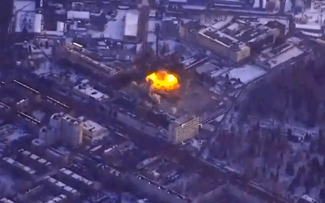
On the evening of 10 March, Storm Shadow cruise missiles struck Bryansk, with their main target being the Kremniy El electronics plant, which supplies integrated circuits for Russian missiles. According to the General Staff of the Armed Forces of Ukraine (GSAFU), the main production hall and storage facilities were damaged (no satellite images confirming this have been published as yet), which is expected to halt production for around six months. Local authorities reported that six people were killed and 42 injured as a result of the attack on the city. A day later, Ukrainian drones struck the KuibyshevAzot chemical plant in Togliatti, Samara Oblast, where a fire broke out, and on 13 March, the Uralchem chemical complex in Kirovo-Chepetsk, Kirov Oblast. On 17 March, an aircraft maintenance facility in the town of Staraya Russa in the Novgorod Oblast was attacked.
Ukrainian drones struck a number of facilities at a Russian fuel complex in Krasnodar Krai, damaging some of them. On 12 and 15 March, these attacks caused fires at the fuel depot in Tikhoretsk (satellite images confirmed that two fuel tanks were destroyed in the first attack), on 14 March at the Afipsky refinery (according to some sources, one of the processing units may have been damaged there), and on 16 March – at the fuel depot in Labinsk. On 14 March, drones also struck the port of Kavkaz on the Russian side of the Kerch Strait, and in the Kerch area damaged the ‘Slavyanin’ ferry and the ‘Avangard’ vessel, which maintain the connection with occupied Crimea. The General Staff of the Armed Forces of Ukraine also reported damage to the infrastructure of Maykop air base in Adygea (the attack is said to have taken place on 13 March, though its effects have not been confirmed by other sources). According to local Russian sources, Ukrainian drone attacks on compressor stations on the Black Sea coast on 11 and 12 March were unsuccessful. It is also highly likely that the attack on the refinery in Slavyansk-on-Kuban on 17 March failed to achieve the expected results.
Defenders have stepped up attacks on occupied Crimea, targeting mainly elements of the air defence system. On 11 and 13 March, drones struck Sevastopol and its surroundings, including Kacha air base. The second of these attacks is said to have been one of the largest since February 2022 – according to Russian sources, around 60 drones were shot down over Sevastopol. According to Ukrainian sources, on 14 March, the ‘Deep Strike’ unit of the Special Operations Forces destroyed an Iskander missile launcher. A day later, the General Staff of the Armed Forces of Ukraine reported that several radar stations and S-400 missile launchers had been hit.
Ukrainian forces carried out massive attacks on Moscow and Moscow Oblast. The largest of these took place on 15 March, when over 100 drones were reportedly shot down on approach to the Russian capital. The following day, Ukraine carried out one of the largest-scale drone attacks on Russian territory, using – according to Russian sources – at least 494 drones (that is how many were reportedly shot down), including 46 in the vicinity of the capital. According to Moscow Mayor Sergei Sobyanin, a total of 199 drones flying in or towards the city were neutralised between 14 and 16 March. The Russian Ministry of Defence reported that on the night of 17 March, the Russian capital was attacked by a further 40 drones, bringing the total number neutralised over Russian territory to 206. The Ukrainians did not score any hits in Moscow or its vicinity, but the attacks forced the temporary suspension of operations at local airports.

On 11 March, the Security Service of Ukraine (SBU) reported the arrest in Donetsk Oblast of a man suspected of directing Russian air strikes against Ukrainian positions. According to the SBU, his task was to gather information on the deployment of the Ukrainian Defence Forces, primarily regarding backup command posts, logistics centres and drone units in Kramatorsk and the surrounding area. The suspect carried out reconnaissance independently and then marked the detected locations on Google Maps, sending them to a Russian handler. On 13 March, in Dnipropetrovsk region, the SBU reported the arrest of two FSB collaborators who were allegedly coordinating Russian missile and drone strikes on Dnipro and Kryvyi Rih, and on 17 March, a similar arrest – this time of a sailor from the State Border Guard Service of Ukraine – took place in Odesa. He was allegedly coordinating Russian air strikes on Ukrainian military positions in the city.
On 12 March, the SBU reported that a terrorist attack in the centre of Rivne had been foiled. Officers reportedly apprehended the perpetrator whilst he was planting an improvised explosive device near a café. He was a recruited resident of Zhytomyr with a drug addiction. According to the SBU, he came to the attention of the Russian services whilst looking for ways to make money on Telegram. He was then sent to Rivne where, in a rented flat and following instructions from Russian coordinators, he prepared the explosive device.
According to the Ukrainian Centre for Countering Disinformation (CCD), Russian propaganda has once again stepped up its campaign regarding Ukraine’s alleged sale of Western weapons on the black market. According to the CCD’s statement, pro-Russian accounts are circulating a video styled to resemble a production by the US Institute for the Study of War (ISW), which claims that the weapons were destined for the Middle East, and that Ukraine’s offer of assistance in combating Iranian drones is allegedly intended to ‘sweep the scandal under the carpet’. According to the CCD, this is not a new operation, but a repetition of one of the main Russian propaganda narratives employed since the start of the full-scale invasion in 2022. Throughout this period, no credible evidence has been presented of Ukraine trading in Western weapons, and international partners are constantly monitoring the use of the supplied armaments. It was emphasised that inspections to date have revealed no violations.
The SBU reported that an assassination attempt on General Andriy Biletskyi, commander of the 3rd Army Corps, had been foiled following the arrest on 13 March of a Russian intelligence agent operating within the Ukrainian Armed Forces. Charges were brought against a drone operator from one of the brigades in Kharkiv Oblast, who was alleged to have passed on information regarding Biletskyi’s whereabouts, necessary to carry out a drone-missile attack on him. To this end, the suspect was alleged to have exploited access to classified information and spoken to Biletskyi’s colleagues. At the same time, he planned to pass on to the Russians data on the location of his own brigade’s headquarters and training centre, which would also become the target of a separate attack. According to investigators, the man was recruited by the Russian services through his ex-wife, who lives in the occupied part of Zaporizhzhia Oblast and is believed to be working for Russia.

On 11 March, the Coordination Headquarters for the Treatment of Prisoners of War reported that, in the four years since the start of the full-scale war, 8,050 Ukrainian citizens had been brought back from Russian captivity. During this time, over 70 prisoner exchanges were carried out, thanks to the constant, often unseen work of the institutions responsible for negotiations, the identification of individuals and the organisation of returns. In February this year, President Zelensky reported that around 7,000 Ukrainian prisoners of war remained in Russian captivity, and that over 4,000 Russian soldiers were being held by the Ukrainian side.
On 13 March, the Office of the Prosecutor General of Ukraine uncovered a corruption scheme involving the command of one of the Ukrainian armed forces units and civilian administration officials in Dnipropetrovsk Oblast, linked to the construction of defensive lines. Five suspects are alleged to have organised the purchase of materials for fortifications at inflated prices, causing damage to the state exceeding 14 million hryvnias (approx. $320,000). The investigation is also set to cover other officials and possible further abuses amounting to tens of millions of hryvnias.

On 16 March, a Russian drone crashed near the Independence Monument in the centre of Kyiv. It was likely shot down in the final phase of its flight by Kyiv’s air defences. According to unofficial information from experts at the industry website Defense Express, it was a new version of the Lancet loitering munition with a greater-than-standard range, utilising autonomous artificial intelligence. For Lancets used on the front line, this range is 50 km; however, there have already been reports of attempts to use them at a distance of 90 km, and even 136 km (the distance from Belarus to the centre of Kyiv is 90 km, and from Russian territory it is over 200 km). The website assessed the emergence of this type of weapon as a serious threat to Ukraine. The Ukrainian Ministry of Defence denied the reports by Defense Express. Serhiy “Flash” Beskrestnov, an adviser to the defence minister, suggested that fragments or debris from the Lancet could have been transported by a Shahed-type drone as part of a Russian special (dis)information operation.
On 12 March, the CCD reported that Russia was recruiting former Wagner Group mercenaries to crew ships in the so-called ‘shadow fleet’, used to transport Russian oil in circumvention of international sanctions. According to the journalistic investigation cited by the CCD , at least 17 Russians without maritime qualifications have been identified as crew members on these vessels – 12 of them have links to the Wagner Group or Russian military intelligence. Their task is reportedly to control the crews and counter attempts by Western states to seize or inspect the tankers. The CCD assesses that the Kremlin is using the so-called shadow fleet not only to circumvent restrictions and maintain revenue from raw material exports, but also to carry out sabotage operations against European states.
On 12 March, the European Parliament adopted a resolution accusing Russia of the fraudulent and forced recruitment of thousands of foreign nationals – primarily from African countries, but also from Cuba and countries in South and Central Asia – to take part in the war against Ukraine. It was noted that Russia uses recruitment networks which use social media for this purpose, particularly in poorer regions of Africa. People from these countries are lured with promises of legal work, education or Russian citizenship, but upon arrival in Russia their documents are confiscated and they are forced to sign military contracts or sent to the front under pressure and threats. Separate mention was made of hundreds of African women who were reportedly lured to work on drone assembly lines in Russia under conditions described as dangerous and exploitative. The resolution was passed by 479 MEPs, with 17 voting against and 43 abstaining. According to the Ukrainian government, more than 1,700 citizens of African countries may be fighting on the Russian side.