Looking inward: regional cooperation in Central Asia
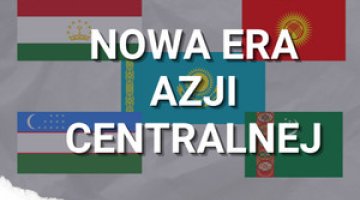
From 15–17 November, the seventh consultative meeting of the five Central Asian leaders was held in Tashkent. During the meeting, they announced, among other initiatives, the ‘New Central Asia’ plan, which envisions visa-free travel, as well as the idea of establishing a Community of Central Asian States – an organisation aimed at promoting regional integration. Several agreements on multilateral cooperation were also signed. For the first time, the President of Azerbaijan, Ilham Aliyev, participated as a full member. His country has become a full member of the format established in 2018, which has therefore been transformed from C5 into C6.
The frequency with which representatives of the countries in this part of Asia have been meeting in recent years indicates a strengthening of regional cooperation, as well as a high likelihood of its institutionalisation. The creation of the first regional organisation since these states gained independence has now become possible. This rapprochement is further demonstrated by their increasing coordination of policies towards external partners, particularly within the C5+1 formats.
Intensification of cooperation
Until 2017, cooperation in Central Asia without the involvement of external actors occurred only rarely and in isolated instances. This resulted from both external and internal factors – including the sceptical attitudes of local leaders and pressure from Russia. The first consultative meeting of the region’s heads of state took place in 2018. Since then, the event has been held annually, and additional meetings between representatives of these countries at levels below that of the presidency have also taken place frequently.
As a consequence of Russia’s invasion of Ukraine and the shift in attitudes towards Moscow, cooperation among Central Asian states has expanded significantly. Russia – previously the dominant partner, especially in matters of security – is now increasingly viewed as a threat to the integrity and independence of the region’s countries, and the narrative portraying it as a historical coloniser has also been gaining traction.
The countries of Central Asia are diversifying their foreign relations, with China playing a major role alongside Turkey, the Gulf states, and Western partners. The so-called C5+1 formats are gaining increasing importance. Within these frameworks, the presidents or foreign ministers of all five republics meet with a single partner from outside the region (so far this has included, among others, the US, the EU, Germany, and India), presenting themselves as a group with coherent objectives and policies. This approach indicates that they are seeking cooperation in order to safeguard the interests of the entire region. They are also cooperating more closely on intra-regional matters, which stems both from pragmatic considerations and from cultural proximity.
A key area of cooperation is the energy sector. One example is the trilateral agreement signed in September this year in Cholpon-Ata by Kyrgyzstan, Kazakhstan, and Uzbekistan, under which water drawn from Kyrgyzstan’s Toktogul reservoir is to be exchanged for electricity supplied by Kazakhstan and Uzbekistan. Initiatives of this kind could help strengthen ties among the individual states of the region: Kyrgyzstan and Tajikistan are rich in water resources, which other countries lack, while Kazakhstan, Uzbekistan, and Turkmenistan possess surplus electricity.
Recent years have witnessed a marked intensification of trade among the Central Asian republics. In 2024, intra-regional trade reached approximately $11 billion – double its 2017 level. At the Tashkent summit, the states set a goal of raising this volume to $20 billion. Mutual investments have climbed to $840 million. Kazakhstan, whose GDP exceeds that of the other four states combined, remains the region’s undisputed economic leader, although Uzbekistan is playing an increasingly significant role in advancing this cooperation.
The rapprochement among the Central Asian states has also been facilitated by the resolution of border disputes – the most difficult of these, concerning the Fergana Valley, was settled at the beginning of 2025 (see ‘Central Asia: a region without border disputes?’). Cross-border movement by citizens of individual states is now considerably easier than it was in the previous decade: Uzbek and Kyrgyz nationals may travel within the region using only their identity cards. The Central Asian authorities are considering extending this arrangement to all the states in the region. Railway lines between the countries are being modernised, and tourism is becoming increasingly popular – for example, citizens of Kyrgyzstan, Tajikistan, and Kazakhstan now constitute the largest groups of visitors to Uzbekistan.
Different approaches to integration
The processes of expanding cooperation and advancing integration are being led by the presidents of Kazakhstan (Kassym-Jomart Tokayev) and Uzbekistan (Shavkat Mirziyoyev). For these states, the intensification of relations with their neighbours is particularly important not only for economic development but also for strengthening their position on the international stage as the region’s leading powers. It was they who initiated the consultative summit format.
At the sixth consultative meeting of Central Asian leaders (August 2024, Astana), all states signed the ‘Central Asia – 2040’ concept. Prepared by Kazakhstan, it envisages a further expansion of cooperation in trade and industry with the aim of fostering the development and diversification of local economies. The strategy’s specific objectives include the implementation of infrastructure projects (the China–Kyrgyzstan–Uzbekistan railway, the development of the Middle Corridor), cooperation in education and student exchanges, the development of the IT and new technology sectors, and joint efforts to advance the region’s energy transition. At the seventh meeting, held in November this year, it was the President of Uzbekistan who proposed the creation of a formal regional organisation.
Turkmenistan – one of the most isolated countries in the world – had until recently been reluctant to participate in integration processes to the same extent as its neighbours. It avoids membership in international organisations and, in previous years, was the least engaged in relations with regional partners. Meetings below the presidential level addressing issues of key importance to Central Asia were often held without representatives from Turkmenistan. This approach is consistent with the country’s policy of ‘permanent neutrality’, formally recognised by the United Nations. However, the November summit in Tashkent, as well as the preceding meeting in the Turkmen resort of Awaza – both attended by representatives of all six states – may indicate that Ashgabat is beginning to open up to cooperation to a greater extent. During the summit, President Serdar Berdimuhamedow concluded numerous bilateral and multilateral agreements, primarily concerning trade but also cooperation in agriculture, healthcare, and communications. Turkmenistan possesses some of the world’s largest natural gas reserves, currently exporting gas predominantly to China (which accounted for 81% of total foreign sales of this resource, according to the latest reliable data from 2022). Agreements concerning raw materials and energy could help diversify the national economy and have a positive impact on its development. Should processes leading to the institutionalisation of regional cooperation begin, Ashgabat would most likely decide to participate in order to reduce its dependence on Beijing and Moscow.
Towards institutionalisation?
Following Azerbaijan’s formal inclusion in the consultative meeting format, the political region of Central Asia can now be defined as comprising six states. Baku’s continued participation within the structures of any prospective regional organisation is almost certain. This scenario is further supported by Azerbaijan’s linguistic (with the exception of Tajikistan), cultural, and religious affinities with the Central Asian states, as well as by geographical proximity – Kazakhstan and Turkmenistan share a maritime border with it. Cooperation among the six partners is likely to deepen, particularly in the areas of infrastructure projects and the extraction and transit of natural resources.
The prospect of establishing a regional organisation with its own secretariat is drawing ever closer. However, certain issues would need to be resolved to prevent this process from losing momentum. First, it is essential to adopt a coherent policy towards external actors, particularly those in the immediate neighbourhood – such as Afghanistan, with which the Central Asian states are linked through transport and energy projects. The region is currently working to develop such a strategy (see ‘Pragmatism beyond divides: Central Asia’s engagement with Afghanistan’). If the Community of Central Asian States were to be established, representatives of Kabul could participate in its summits at least as honoured guests, similar to Azerbaijan’s previous participation in C5 meetings.
Secondly, such an organisation would inevitably be exposed to the influence of dominant regional powers, above all Russia. For Moscow, greater autonomy on the part of Central Asian governments and economies represent an unwelcome scenario, and it may seek to counter this through economic and political pressure or by intensifying hybrid activities.
Thirdly, intra-regional obstacles – such as Turkmenistan’s policy of ‘permanent neutrality’ and the rivalry between Uzbekistan and Kazakhstan for regional leadership – must not be allowed to outweigh shared interests. The countries of the region are, however, increasingly aware of the positive impact that integration has on their development and security, and they can therefore be expected to pursue it despite the attendant difficulties and challenges.